
DEI summit venues and the accessibility audit to demand
A DEI summit that isn't accessible is a contradiction the whole room can see. Before you sign, run the venue through a physical audit the sales manager can't spin. Here's the checklist I walk with, from the loading dock to the restroom signage.
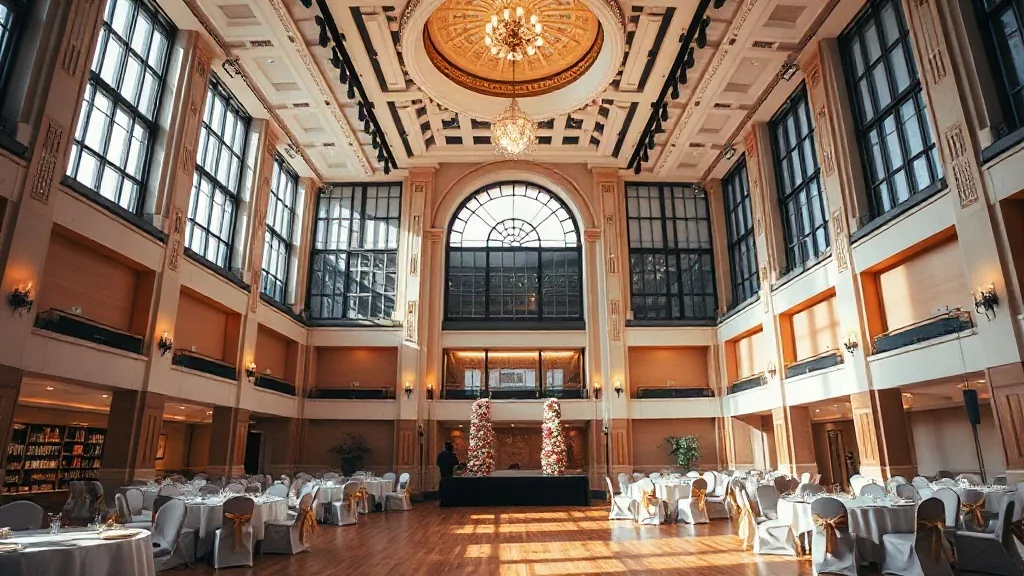
The worst moment I’ve watched at a DEI summit was a wheelchair user getting hoisted up three steps to a stage by two volunteers while 300 people applauded, because the venue’s “accessible” stage ramp was a plywood board with a 1-in-6 slope stored in a closet nobody had checked. The client had booked the room on the sales manager’s word. Nobody walked it. That’s the whole failure right there.
I came up through AV, so I think about venues as physical systems, not brochures. For a DEI summit the accessibility of the space is the message. You can’t program belonging into a room people can’t get into. So I run every candidate through an audit before contract, and I make the venue prove it, not describe it.
Do the audit in person, on the actual route
A sales manager will tell you the ballroom is ADA compliant. That’s a legal floor, not a plan, and compliance on paper says nothing about the path a real attendee takes. I walk the route an arriving guest actually uses, from the accessible parking spot or drop-off, through the entrance, to registration, to the session room, to the restroom, to the stage. Every transition is a place something breaks.
On that walk I’m timing and measuring, not nodding. Here’s what I check.
The arrival and path of travel
Accessible parking has to be close and van-accessible, meaning an 8-foot access aisle, not a standard stripe with a sign. I count the spaces and I check the distance to the entrance. A DEI summit for 250 people needs more than the two spots the code minimum gives a small building.
The entrance can’t route wheelchair users to a side door by the dumpsters while everyone else takes the grand stair. If the “accessible entrance” is a separate, lesser door, that’s a message, and I say so to the client. I want the main entrance to work for everyone or I want a genuinely equivalent one.
Interior path of travel: 36-inch minimum clear width, no thresholds over half an inch, and elevators sized for a power chair with a companion. I ride the elevator. I measure the door. At convention centers the freight-to-floor path usually works because they move equipment through it, but the guest-facing route can still funnel through a revolving door that no chair uses.
The stage, the part everyone forgets
Back to that plywood ramp. Stage access is the single most common accessibility failure at a summit, because the stage is a temporary build and the ramp is an afterthought. ADA slope is 1-in-12 maximum. A 24-inch-high stage therefore needs a 24-foot ramp run plus landings, and most venues do not have that ramp and don’t have the floor space to deploy it next to the seating.
So I decide the stage height around access, not the other way. Frequently I spec a 12-inch stage or a floor-level presentation area with a riser only for sightline cameras, because a lower stage means a shorter, legal ramp that a speaker who uses a chair rolls up without a spectacle. I put this in the AV scope. If you want the full pre-event walk I run, the AV walkthrough checklist with twenty-seven things has the stage and cable-path items I’d otherwise forget under pressure.
The parts the sales team can’t fake
Restrooms: I count accessible stalls against the expected headcount and I check the actual door-pull and the sink knee-clearance, not the ADA placard on the door. A single accessible stall for a 200-person summit means a line, and a line is its own barrier for someone with limited mobility or a medical need.
Gender-neutral options: a DEI summit should offer at least one all-gender restroom, and many older hotels and resorts don’t have one. Sometimes the fix is converting a single-occupancy restroom with signage for the event. I get that agreed in writing.
Hearing access: this is where my AV background pays off. I spec an assistive listening system feeding directly off the mix, not a courtesy pair of headphones at the back. For a summit I also budget ASL interpreters, two per language, rotating every 20 minutes, with a lit and staged position in clear sightline of the audience, and I budget CART captioning on the main screens. That’s real money, roughly $1,200 to $1,800 a day for a two-interpreter ASL team and $150 to $250 an hour for remote CART, and it belongs in the first budget, not the value-engineering conversation.
Food, because dietary access is access too
A DEI summit feeds a room with the widest range of needs you’ll cater all year. Halal, kosher, vegan, gluten-free, and serious allergies will all be present, and “we’ll have a vegetarian option” is not a plan. I collect requirements at registration and I hand the conference centers catering team a real count, then I check that the accommodated meals are as good as the default, plated the same, served at the same time, not a sad tray wheeled out late. For the mechanics of gathering this without chaos, I use the method in how to collect dietary restrictions for 200 people.
Put it in the contract
None of this survives on a handshake. I attach an accessibility rider to the contract that names the specifics: the ramp slope and length, the number of accessible stalls, the all-gender restroom, the assistive listening system, the ASL staging position, the CART feed, and the dietary accommodation standard. If the venue balks at committing in writing, that tells me what the day would have been.
For scoping the technical side around all of this, the how to scope AV for a conference breakdown covers the signal path that the assistive listening and CART feeds hang off of, and it keeps me from discovering on show day that the ALS was never patched.
An accessible DEI summit isn’t a compliance checkbox. It’s the difference between an event that means what it says and one the room quietly stops believing. Walk the route. Measure the ramp. Sign the rider.
Send me your expected headcount, the mobility and communication needs you already know about, and your two venue finalists, and I’ll walk the audit route with you before anyone signs.


