
The Fire Alarm Mid-Gala-Dinner (False) — How to Get 380 People Back to Their Tables
At 8:04pm, during the entrée course, the fire alarm pulled 380 people out of the ballroom and onto the sidewalk. The alarm was false. Getting them back took 22 minutes and a specific approach.

Here is a thing nobody tells you about fire alarm evacuations: the hard part is not the evacuation. The evacuation is actually easy — an alarm goes off, a trained floor staff moves people toward exits, the guests follow. It works remarkably smoothly. People are, in a genuine emergency, cooperative.
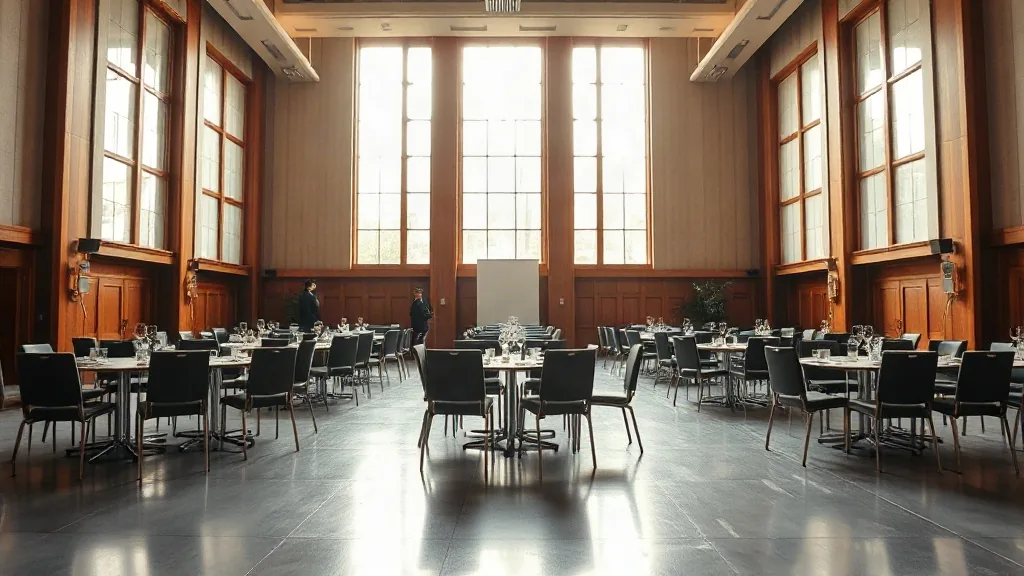
The hard part is getting 380 people back inside once the alarm is confirmed false. Because by that point, they are on the sidewalk, they are no longer in “event mode,” several of them have wandered to the hotel bar, the entrée course is cooling on the plates inside, someone has spilled their drink and the jacket is ruined, and the collective mood has shifted from celebration to inconvenience.
Getting that mood back is a leadership and logistics problem that nobody teaches you in event school.
This happened to me in Chicago, in November, at a pharmaceutical company’s annual recognition gala. The alarm pulled at 8:04pm. We were cleared to re-enter by 8:26pm. I had twenty-two minutes on the sidewalk to decide how we were going to walk back in.
What triggered it
A linen that had been too close to a candle warming plate in the kitchen — not our event space, the hotel’s kitchen adjacent to a different ballroom — had smoldered enough to trigger a heat detector. The hotel’s fire panel alarmed all zones as a precaution. The smolder was identified and extinguished within six minutes. The remaining sixteen minutes were the fire department completing their sweep to confirm before authorizing re-entry.
This information was conveyed to me at 8:12pm by the hotel’s director of operations, who found me on the sidewalk. I now knew: false alarm, no fire, re-entry coming, estimated eight to twelve more minutes.
The sidewalk decision
I had 380 people on a Chicago sidewalk in November. The temperature was 31 degrees. Several guests had not grabbed coats. The hotel had opened the lobby doors immediately upon evacuation, so a portion of the guests had already migrated inside — better than the sidewalk, warmer, but not the event.
I pulled my assistant and the hotel event coordinator together. I said: “When we get clearance, we have two minutes to communicate re-entry to everyone. I need a plan for the entrée course — do we serve what’s there, re-fire, or make a catering decision?”
The catering director had been hovering. He said: the soup course was done. The entrée plates that had been staged were cooling. He could either re-plate and re-heat with a fifteen-minute delay, or he could bring the current plates out quickly and accept that the temperature was going to be below ideal. Third option: he had dessert fully staged and could move straight to dessert service, treating the entrée as a casualty.
I asked: “What did we lose in terms of presentation quality on the entrée if you bring it out now?”
He said: “It’ll be warm, not hot. The plating is still clean. It’s the sauce temperature more than anything.”
I said: “Bring it out within eight minutes of re-entry. Nobody is going to send back a warm plate after standing in thirty-one degree weather.”
He agreed. That turned out to be the right call.
Getting 380 people back inside
Clearance came at 8:26pm. The hotel’s general manager made an announcement over the hotel PA from the lobby — the system reached the lobby and the sidewalk through exterior speakers — informing guests that the building was clear and re-entry was authorized.
That announcement produced a general drift toward the entrance. Not a purposeful return. A drift. This is the problem.
I went to the hotel’s band, who had been playing during cocktail hour and were now somewhere in the lobby. I found the bandleader and asked him to start playing immediately — not in the ballroom, in the lobby, near the main staircase. Something upbeat and recognizable. He said, “Right now?” I said, “Right now.”
He played the opening bars of “September” by Earth, Wind and Fire.
I am not overstating this: the effect on the lobby was immediate. People turned toward the music. People started moving. The energy of the sidewalk group shifted from scattered to directed. I was at the ballroom entrance flagging people in, the hotel staff was moving through the lobby crowd, and the music was doing what music does — making a dispersed crowd feel like a group again.
Eight minutes after clearance, approximately 310 of the 380 guests were back at their tables. The remaining 70 trickled in over the following six minutes.
The entrée and the announcement
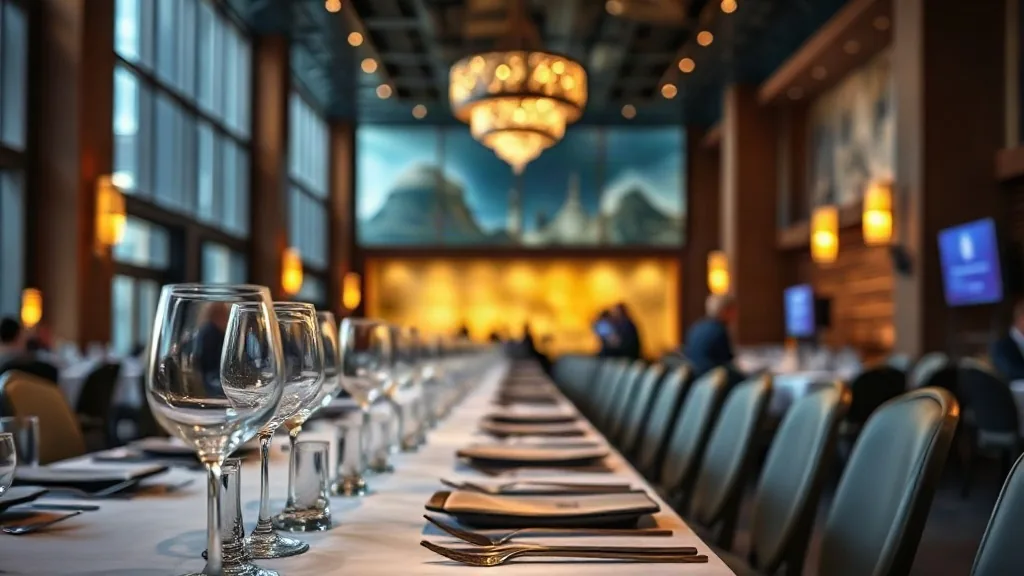
The catering team, true to the director’s word, had the entrée plates on tables within eight minutes of re-entry. I watched the first table receive their plates and noted the reaction: no complaints, appreciative body language, a couple of people who laughed at the speed.
The client — the VP of Human Resources, who had been through the evacuation with characteristic composure — made a brief acknowledgment from the mic stand at the front of the room at 8:38pm. She said: “To our facilities team and the Chicago Fire Department, thank you for taking care of us. To everyone who stood outside in thirty-one degrees: you will all receive an extra blanket in your rooms tonight. Now let’s eat while it’s still warm.”
The room laughed. The award ceremony continued at 9:00pm and ran ninety minutes. Three of the award recipients referenced “the interruption” in their acceptance comments in a way that made it part of the evening’s narrative rather than a disruption.
What I take from this
One: The false alarm is a mood problem, not a logistics problem. The logistics — re-entry, food service, program restart — are solvable in under thirty minutes. The mood — 380 people who have been inconvenienced and whose internal state has shifted from celebration to mild frustration — is what you’re actually managing. Everything I did on that sidewalk was mood management.
Two: Music is the fastest way to move and re-energize a crowd. This is not an event industry insight, it’s a basic fact about human psychology. Live music in the lobby, audible from the entrance, gave the dispersed crowd something to move toward. If we hadn’t had a band on site, I would have used the DJ or a portable speaker. The specific content of the music matters less than the fact that it exists and it is warm.
Three: The client’s acknowledgment from the mic is the final act of recovery. The VP’s two-sentence moment — acknowledging the interruption, making a small joke, pivoting immediately to the program — was the moment the evening fully resumed. I had scripted three options for her during the evacuation and she chose the best one. If she had not said anything, the interruption would have hung in the room through the awards ceremony.
Four: The catering decision matters more than it seems. Cold food would have compounded the mood problem significantly. The decision to go warm-but-now rather than hot-but-fifteen-minutes-later was the right one, and the catering director’s honest assessment of what we were working with gave me the information I needed to make it. Know your catering team well enough to have that conversation in six minutes on a sidewalk.
Five: Headcount on the sidewalk. I knew within three minutes that we had 380 outside, using my assistant’s clicker count. That number told me we had not lost anyone significant — no one had walked home or gotten a car. Headcount during an evacuation is not just a safety protocol. It’s information you need for the re-entry plan.
Chicago is a gala city that I know well — the properties have experienced teams and the ballroom infrastructure is excellent. If you’re planning a recognition gala in Illinois, the conference centers in Chicago, Illinois have event directors who’ve handled exactly this kind of situation.
Also: I wrote about the fire marshal who shut us down twelve minutes before doors — same composure required, very different timeline.
Send me the brief and let’s build an event that can absorb a false alarm without losing the night.


