
Hospitality-Industry Events for Hospitality People (Different Rules)
Planning an event for hotel GMs, restaurant operators, and hospitality executives is the planning job that exposes every weak link you have. These people notice everything. Here's how to not get eaten alive.

There is a specific kind of professional anxiety that comes from planning an event for an audience who does your job better than you. I have planned corporate events for three different hospitality industry associations — a hotel general managers’ conference, a restaurant group’s annual leadership meeting, and a hospitality technology company’s customer conference where 70% of the attendees ran hotels or food & beverage operations. All three produced this anxiety. All three were, ultimately, the most valuable feedback experiences of my career.
The hospitality industry runs on service quality, and its professionals are trained to notice service quality — the water glass that isn’t topped, the room temperature that’s three degrees too warm, the one-beat-too-long pause before the check-in acknowledgment. When these professionals attend a corporate event, they are not turning that training off. They are watching everything. And they talk to each other about what they notice.
Planning an event for hospitality people requires a different level of execution attention than almost any other industry, and the venue selection has to account for it.
What hospitality professionals actually notice
The service interaction
Before anything else, a hotel GM or restaurant operator will notice how the venue staff executes the service. The training level of the wait staff, the timing of the water service, whether the venue’s room captain knows the menu, the speed of the bar during the reception — these are not background details for this audience. They are the foreground.
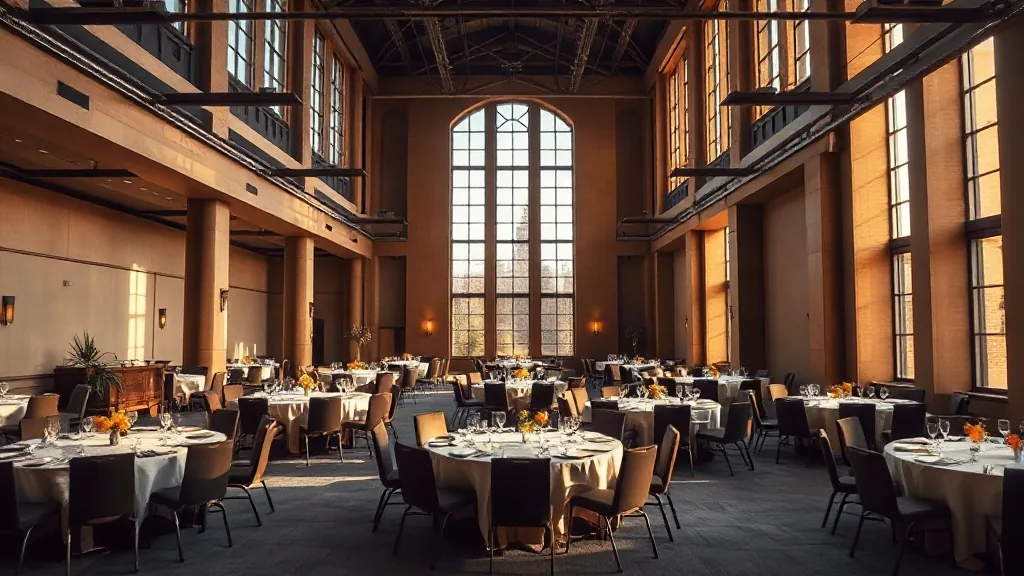
I vet the venue’s service team more rigorously for hospitality industry events than for any other client. I ask to meet the event captain. I ask whether the wait staff are employees or contracted through a staffing agency. I ask about the training program. I watch how the manager interacts with the staff during the site visit. These questions produce useful answers and also signal to the venue that this client will notice.
The room setup
A hotel GM will look at the room setup and see every deviation from the standard. The chair that’s two inches off the tablecloth line. The napkin folded differently from the others. The centerpiece that’s three inches too tall for conversation sight lines. They will not complain about these things; they will simply catalog them, and the catalog will form their assessment of the venue’s quality.
I spend more time on room setup for hospitality industry events than any other category. I’m on-site when the room is set. I walk the room. I fix things. This is not standard practice for my other event categories; it is mandatory for these.
The F&B quality
Restaurant operators and hospitality executives have a deep, specific understanding of food and beverage quality. They know the difference between freshly prepared and held-over. They know when the proteins are overcooked by two minutes. They can tell you the approximate food cost of the plate they’re eating.
For hospitality industry events, I negotiate F&B specifications in more detail than for any other client. Not just the menu — the preparation method, the holding times, the service temperature. I do a food tasting before confirming the menu for a hospitality industry event, which I recommend for all clients but require for this one. And I negotiate the right to observe the kitchen briefly before service, which most hotel catering operations will grant if asked professionally.
The pacing
Hospitality professionals know how a well-run event should flow. They know what the optimal time between the last session and the dinner service is. They know how long cocktail hour should run (45 minutes maximum; after that, people are bored and too well-lubricated). They know when a gap in programming is a comfortable breath and when it’s a staffing failure.
My run-of-show for a hospitality industry event is more precise than for any other client. Minutes matter. I brief the venue more specifically on timing, and I check in with the event captain every thirty minutes during the program.
Venue selection for hospitality industry events
The venue choice for a hospitality industry event has to survive the informed scrutiny of people who manage venues for a living. This means the venue cannot be coasting — it has to be genuinely running well. A hotel ballroom that’s “fine” for a pharmaceutical conference will be catalogued as underwhelming by a hotel GM audience.
I look for one of two things:
-
A venue with exceptional execution. A well-run hotel with a strong event team that can perform at the level the audience expects. For hospitality association conferences that happen in hotel properties — which is the majority — the property selection is critical. I ask specifically: who is the event captain, what is their tenure, and can I speak with them during the site visit? A venue with a strong captain who has been in that role for three or more years is a strong signal.
-
A venue that’s interesting enough to be evaluated on its own terms. A warehouse loft venue, a historic mansion, a rooftop facility — something the hospitality professionals haven’t managed themselves, and can appreciate as an experience rather than critique as a service delivery. The unusual venue reframes the evaluation.
For a hotel GM conference held in Florida — which is a natural geography for both the attendee base and the association meetings — conference centers in Florida is the starting point. The properties with dedicated conference wings and strong service reputations — several in the Orlando and Tampa corridors — have worked with hospitality industry groups enough to know what they’re being evaluated on.
For restaurant and food & beverage industry events, the venue category shifts. A restaurant-focused event often benefits from a venue adjacent to great food — a culinary district, a market hall, a venue where the F&B is genuinely interesting rather than standard hotel catering. Restaurants in Florida and conference centers in Florida together cover the range.
The technology question
Hospitality technology is an active sector — property management systems, revenue management, point-of-sale, guest experience software — and hospitality tech company events often include customers who are hotel and restaurant operators. The venue’s technology infrastructure will be noticed and assessed by this audience.
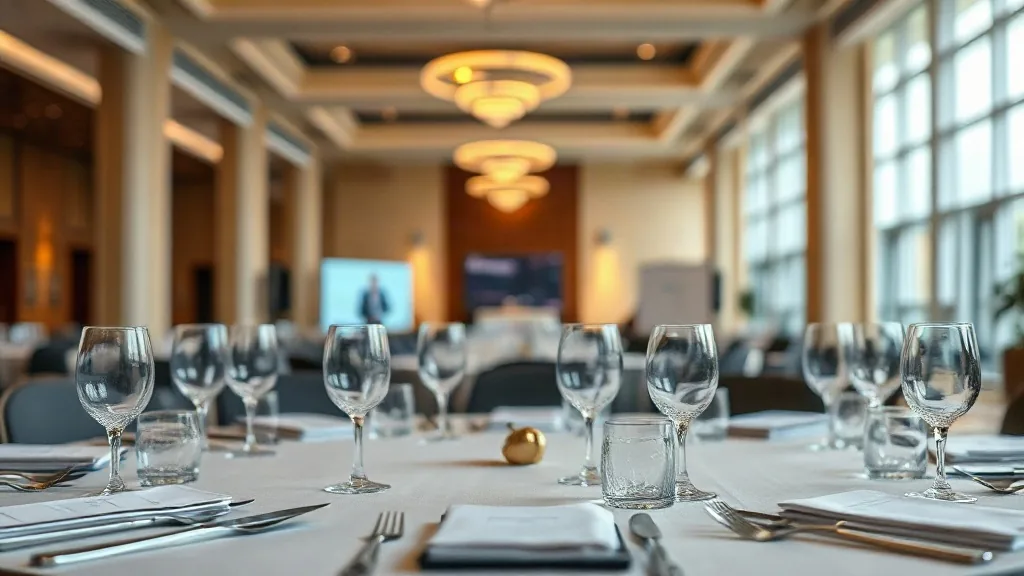
When I’m planning a hospitality tech event, I ask the venue about their own PMS (yes, really), their guest-messaging platform, and whether they’ve integrated any AI-driven tools into their operations. The answers give me a read on the venue’s own technology maturity, which will be part of what the audience notices and talks about.
The calibration conversation
Early in the planning process for any hospitality industry event, I have a conversation I call the calibration conversation. I ask the client’s events lead: “What’s the best hospitality industry event you’ve attended, and what made it the best?” And: “What’s an event you’ve attended where you thought — as a hospitality professional — that the execution missed?”
The answers to those two questions define the quality level I’m aiming for and the specific failure modes I need to avoid. For a hotel GM conference, the answers often mention the service quality of the venue and the pacing of the program. For a restaurant group event, the answers are almost always about the food.
The calibration conversation takes fifteen minutes and saves three later conversations where I’m correcting the direction.
The hospitality and hotels conference center directory covers Florida’s broad range, and the Tampa Bay beach corporate venues guide covers the waterfront options that hospitality industry events often prefer for the setting. For comparison in service-quality focus, the law firm holiday party hierarchy guide is another event type where the audience’s professional standards significantly shape the planning requirements.
Send me the event type, the association or company, the headcount, and an honest read of your audience’s quality expectations — and I’ll tell you which venue can actually survive their scrutiny.


