How to Book a University Venue for a Corporate Event
University event spaces offer subsidized rates and high-quality facilities, but academic-calendar blackouts, alumni affiliation requirements, limited AV infrastructure, and catering exclusives with food service contractors create constraints that require more lead time than most planners expect.

Universities host some of the most underrated corporate event spaces in the country. Conference centers, performing arts halls, professional school auditoriums, and historic campus buildings are available to outside organizations at rates that are 20 to 50 percent below comparable commercial venues. The reason isn’t charity; it’s that universities have event infrastructure built for academic conferences and alumni programming, and off-peak availability represents revenue they’d otherwise leave on the table. The constraints are real and the booking process is slower than a hotel, but the value case is genuine.
What types of university spaces work for corporate
Universities have several distinct space categories:
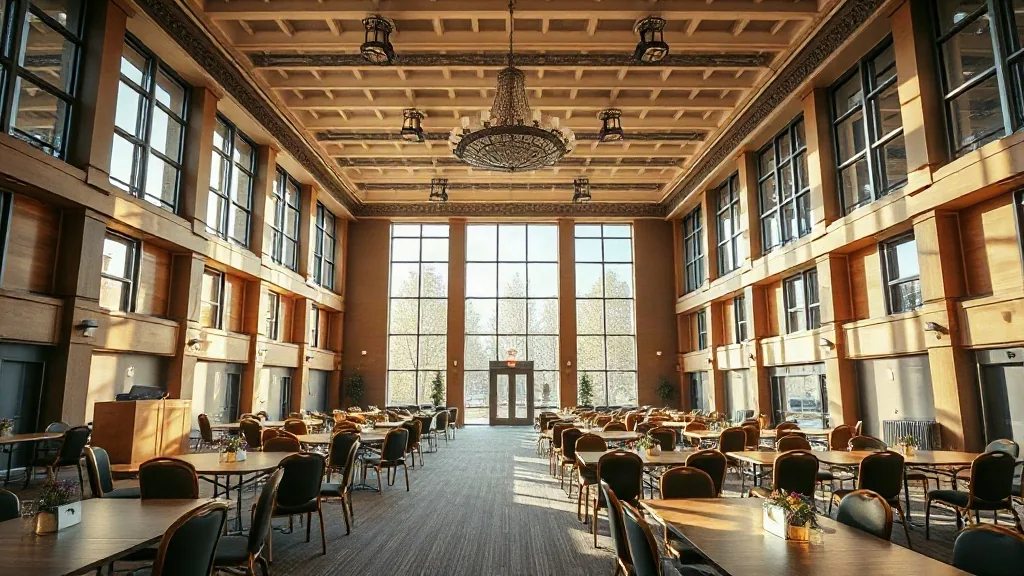
Dedicated conference centers: Many large research universities have purpose-built conference facilities with hotel-quality meeting rooms, breakout spaces, and catering. These are the most corporate-ready university venues and often the most expensive (though still below hotel equivalents).
Professional school facilities: Law schools, business schools, and medical schools have auditoriums and classroom clusters designed for 50 to 500 attendees. These spaces often have high-quality tiered seating, built-in display systems, and breakout room adjacency.
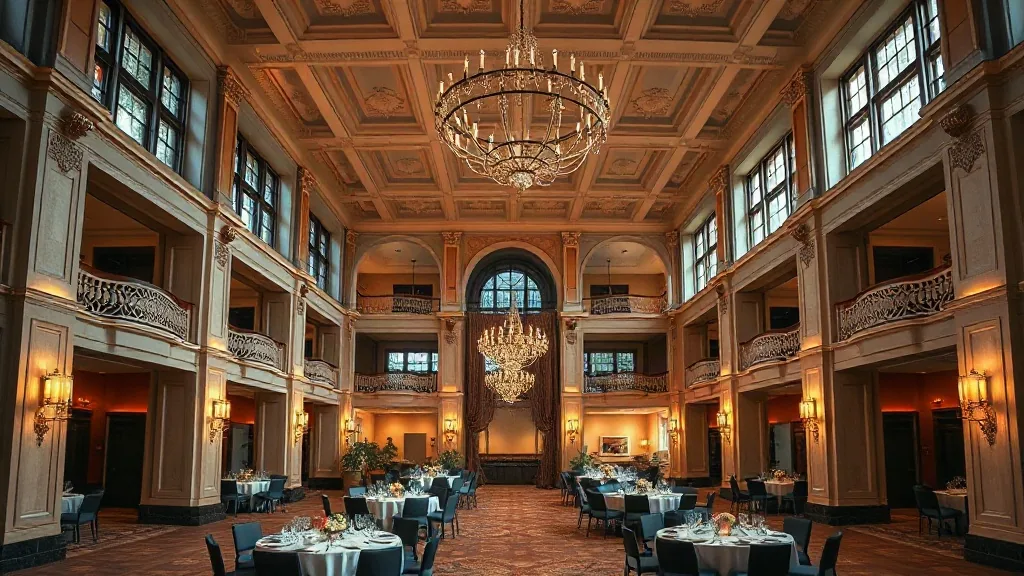
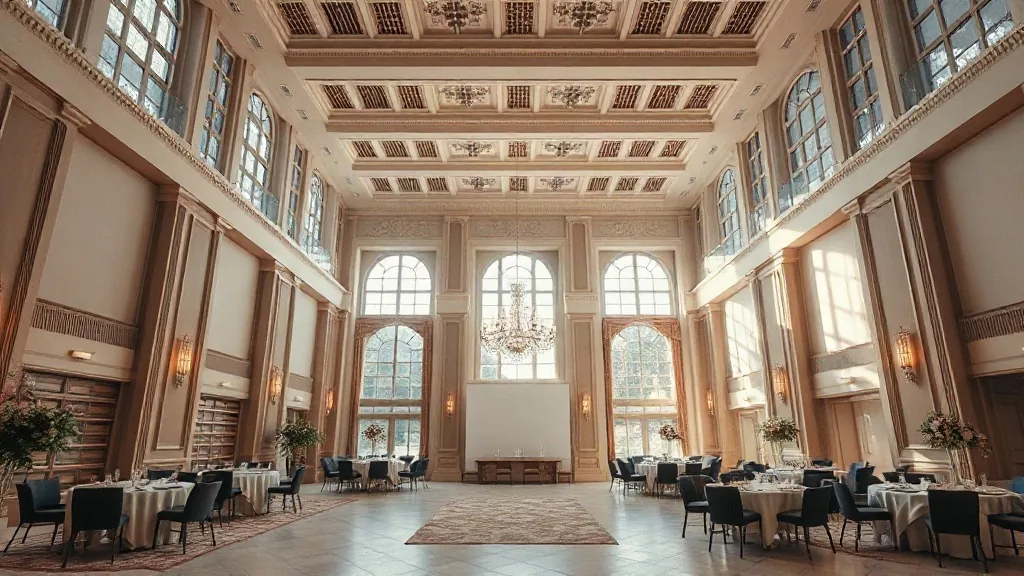
Historic halls and buildings: Universities own historic buildings that aren’t practical for academic use but work well for corporate receptions, galas, and dinners. Faculty clubs, historic mansion-style president’s residences, and landmark halls often fall into this category.
Student union event spaces: Large ballrooms and event halls in student unions are often available for external corporate bookings, especially during breaks. These are the most accessible and typically the least expensive.
For corporate events that require multi-day training programs, conferences, or educational formats, professional school facilities are the best match. For receptions and dinners, historic halls and faculty clubs work well. For large-format presentations, the main auditoriums are competitive with performing arts centers in quality.
Academic calendar blackouts
This is the constraint that catches planners most often. University spaces are unavailable during key academic periods:
- Move-in weekend (late August): Most universities are completely unavailable the last week of August and first week of September. Student move-in takes priority over all other bookings.
- Orientation (first week of academic year): Heavy campus programming limits external access.
- Finals periods (mid-December and late April/early May): Some spaces are restricted; others are fine.
- Graduation weekend: Total blackout at most institutions. Major graduation ceremonies take priority.
- Homecoming weekend: High-demand period; some spaces available but at premium pricing.
The reliable windows for corporate bookings:
- October through early November (post-orientation, pre-finals)
- Late January through March (winter semester in session, minimal special events)
- Summer (June through early August) at most institutions
Confirm the academic calendar for your target institution before you start planning. Calendars are published on university websites; request the events team’s blackout list directly.
Alumni affiliation requirements
Some universities require that the booking organization have a demonstrated relationship with the institution: an alumni sponsor on the corporate team, a research partnership, a donor relationship, or a hiring relationship with recent graduates.
This requirement is more common at elite private institutions than at public universities. A state university typically has no affiliation requirement for external corporate bookings. A private research university with a selective events program may require an alumni connection or a faculty or administrative sponsor.
Ask the university’s conference services or event rentals office directly: do you require an institutional affiliation for external corporate bookings? If yes, what qualifies? If your company has hired graduates from the institution or has an existing research partnership, that’s often sufficient.
Parking and transportation logistics
University campuses present parking challenges that don’t exist at hotels or conference centers. Campus parking is managed by the transportation office, not the events team, and guest parking is not automatically guaranteed with an event booking.
Get a confirmed guest parking arrangement before your event date. Options typically include:
- Reserved surface lot for event dates (often $5 to $15 per vehicle, prepaid)
- Parking permits issued to attendees in advance (works for 50-person events; chaotic for 200+)
- Shuttle service from an off-campus lot or nearby hotel
For events above 100 people, a shuttle from a coordinated parking location is usually more manageable than on-campus parking. The university’s transportation or events office can often recommend the nearest off-campus lot with shuttle history.
Catering exclusives and food service contractor quality
Most universities have an exclusive food service contract with a major food service company (Aramark, Sodexo, or Chartwells are common). This contract covers all food and beverage service on campus. You cannot use an outside caterer.

The food quality at university catering operations varies significantly by institution. Large research university catering programs, particularly those serving professional school functions regularly, tend to be good. Smaller institution catering programs that primarily run cafeterias and student dining halls are less consistent.
Ask to see the event catering menu and pricing for your event type. Ask whether a chef consultation is available for custom menu design. Many university catering operations have the capability for higher-end event menus; you have to ask for them.
Budget: university catering for corporate events runs $55 to $110 per person for a lunch or dinner event, which is typically 20 to 35 percent below equivalent hotel catering.
AV standards compared to hotel
University AV infrastructure varies more than at hotels. Business school auditoriums at major research universities (Wharton, Booth, Darden, Haas) have built-in display systems, distributed audio, and recording capabilities that match or exceed purpose-built conference centers. A 200-seat business school auditorium at a top-10 MBA program has a better house system than most hotel ballrooms at the same price point.
University conference centers outside professional schools are more variable. Some have invested in modern AV; others have equipment that hasn’t been updated since 2014. Ask specifically: what display size, projector lumens, and wireless microphone count does the space include? Ask whether the AV system is managed by university IT (often responsive and competent) or by the facilities team (less specialized).
If the university’s in-house AV isn’t adequate, you’re bringing an outside vendor. Most universities allow this with approval. The process for approving outside AV vendors varies by institution; some require a vendor list submission 30 days in advance, others just need a COI.
Browse university venues for corporate events by state, or compare to conference centers for purpose-built facilities without academic calendar constraints.
For a direct format comparison, University Venue vs Conference Center for a Multi-Day Training Program covers the AV standards, blackout dates, and cost comparison in detail. For nonprofits using university rates specifically, The Nonprofit Director With a $30K Event Budget shows how university member-rate programs and discounts apply.
The booking contact and timeline
University event bookings typically go through the conference services office, the university’s event management office, or, for specific buildings, the facility manager for that building. Don’t start with the department chair or the dean’s office; they’re the wrong entry point for a facilities booking.
For professional school buildings (business school, law school, medical school), contact the school’s events or communications office directly. These spaces have their own booking processes separate from central conference services.
Timeline: submit your inquiry 6 to 12 months before your event for peak-season dates. Summer university events can sometimes be booked with 3 to 4 months of lead time. Allow extra time for facilities that require a formal application or a faculty/administrative sponsor.
What’s your target event date, your approximate headcount, and whether your organization has any existing university relationship? Those three factors determine which institutions are accessible and at what price point.