How to Book a Warehouse Venue for a Corporate Event
Warehouse venues are blank-canvas spaces that require you to source every element independently, including catering, AV, furniture, lighting, climate control, and sometimes restroom infrastructure. This guide covers the full vendor stack, what separates a production-ready warehouse from a problem, and how the total cost compares to a hotel ballroom.

Warehouses converted for events are the extreme version of the blank-canvas format: high ceilings, wide-open floor plans, usually excellent load-in logistics, and a rental fee that looks cheap until you fill it with everything a corporate event actually needs. I’ve booked warehouse events that ended up at $95 per head all-in and some that ended up at $180 per head for the same format. The difference was entirely in how well the venue had invested in event infrastructure versus how much I had to bring in.
What makes a warehouse venue different from a loft
Industrial lofts and warehouse venues overlap significantly, but warehouses typically offer:
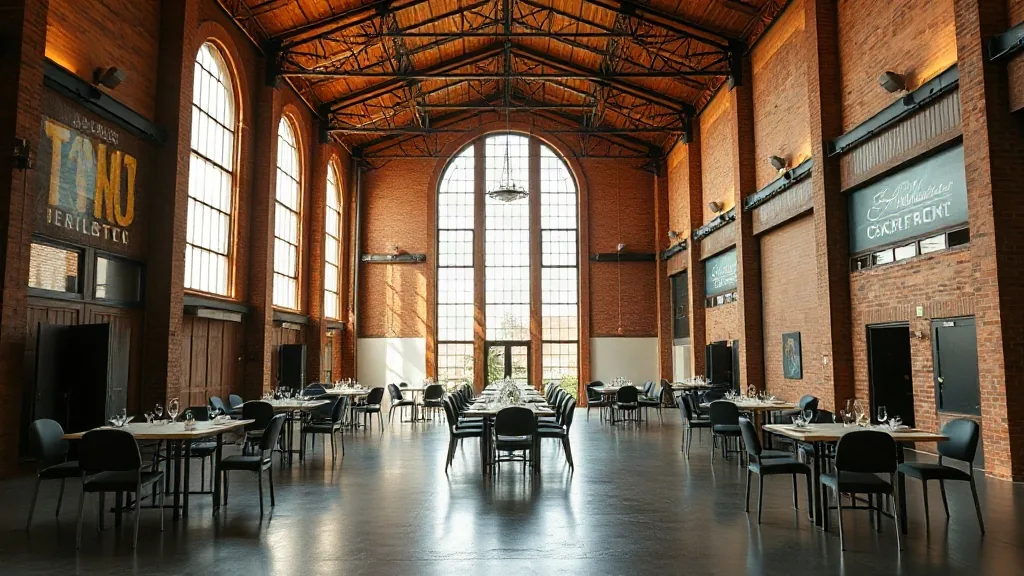
- More square footage (10,000 to 50,000 square feet versus the 3,000 to 10,000 of most lofts)
- Higher ceilings (18 to 30 feet is common, versus 12 to 18 in converted lofts)
- Better load-in access (grade-level roll-up doors, loading docks, trailer access)
- Less architectural character (most warehouses are functional boxes; lofts often have character elements)
- More flexibility for large-format production (rigging height, floor plate size)
The format works for large-scale corporate events: 300 to 1,500 guests, company galas, large product launches, holiday parties, and user conferences that need an exhibition floor.
For events under 200 people, a warehouse is often more space than you need and the cost to heat/cool and furnish it appropriately doesn’t justify the rental.
The full vendor stack in a warehouse
The inventory of what you need to source for a warehouse event is longer than almost any other venue type:
Catering: No in-house kitchen, no in-house catering. You need a caterer with a mobile kitchen setup or access to a commissary kitchen nearby. Confirm the warehouse has: a prep area, adequate electrical service for catering equipment, a water source, and a grease disposal plan. Budget $80 to $130 per person depending on format.
AV: The high ceilings and wide floor plate create both advantages (rigging height, no sightline obstructions) and challenges (sound reflections off concrete walls, large distances between speakers and audience). Plan for a distributed sound system with delay fills rather than a single cluster. Budget $5,000 to $20,000 depending on event size and production complexity.
Furniture: Tables, chairs, linens, specialty furniture, cocktail tables, lounge groupings, bar structures. A 400-person dinner requires approximately 50 60-inch rounds, 400 chairs, 50 table settings of linens, and a bar setup. Furniture rental for that scope runs $4,000 to $10,000.
Lighting: Warehouses with high ceilings are dark. Ambient lighting (uplights, string lights, canopies of festoon), practical lighting for tables (candles, table lamps), and production lighting for stage or presentation areas. Budget $2,000 to $8,000 depending on scope.
Climate control: This is the largest variable cost in a warehouse. An unconditioned 15,000-square-foot warehouse in July in Atlanta can reach 105 degrees inside. Cooling a warehouse to guest comfort requires commercial HVAC equipment sized for the space. Portable commercial AC units run $300 to $600 per unit per day; you may need 8 to 15 units for a large warehouse. Generator to power them: additional $800 to $1,400 per day.
Restrooms: Many warehouse venues lack guest-grade restroom infrastructure. A converted warehouse with 4 industrial bathrooms can’t serve 400 guests. Restroom trailers (upscale, climate-controlled) run $700 to $1,200 per day for a 400-person event.
Security: Warehouse venues in industrial districts often require more security than a hotel ballroom. Budget for perimeter security plus entrance staff.
What separates a production-ready warehouse from a problem
Production-ready warehouse venues have made specific investments that reduce your vendor stack:
- Commercial HVAC installed specifically for event use (not repurposed industrial cooling)
- Dedicated event electrical panels with 400+ amps of service
- Permanent restroom facilities rated for event-scale guest capacity
- In-house furniture inventory included in the rental
- Rigging points engineered and rated for production loads
- Loading docks with grade-level access for catering trucks
When evaluating a warehouse venue, ask specifically about each of these. A venue that has invested in permanent HVAC and restrooms saves you $3,000 to $8,000 in temporary infrastructure. A venue that has none of these saves you nothing on infrastructure costs while charging you for the aesthetic.
Comparing warehouse total cost to a hotel ballroom
The correct comparison is total cost per head, not venue rental fee. A warehouse at $8,000 rental for 400 guests ($20 per head) with $80,000 in vendor stack ($200 per head total) compared to a hotel ballroom at $175 per head all-in (room, catering, AV, minimal decor) is $200 vs $175. The warehouse costs more.
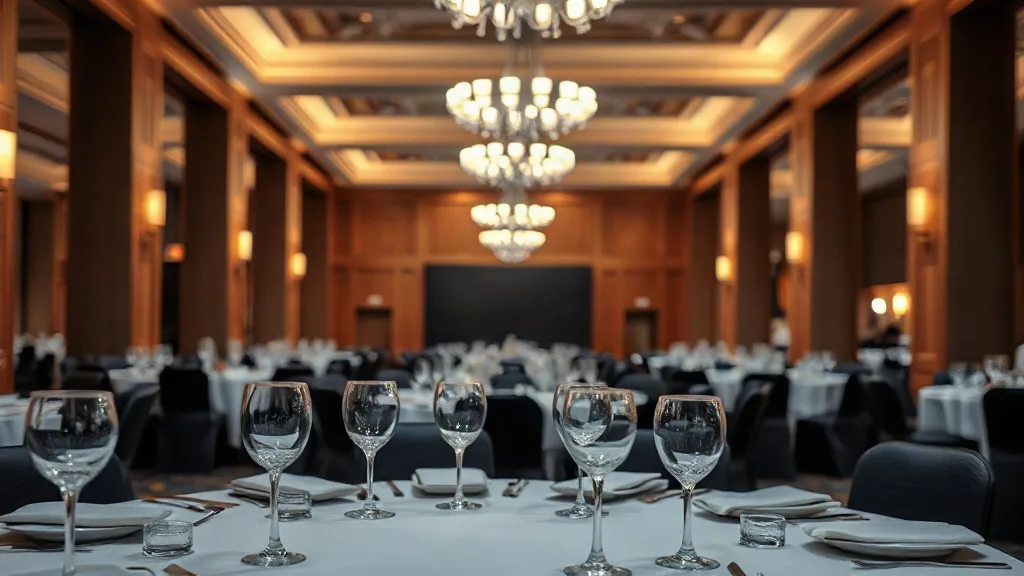
This math changes when: the warehouse has invested in infrastructure (saving $20,000 in rental costs), your event has specific production needs the hotel can’t meet, or the aesthetic difference between the warehouse and the ballroom genuinely produces higher-value outcomes for your event goals.
Questions to ask before signing
Before committing to a warehouse venue, walk through this checklist with the venue’s sales or operations contact:
- What is the total electrical service amperage and panel configuration?
- Is there commercial HVAC, and what is its rated capacity for guest load?
- How many toilets are available for event guests, and are they in a dedicated guest-access area?
- What is the load-in window (day before, hours before event start)?
- What are the venue’s COI requirements and which entities need to be named as additional insured?
- Are there rigging points, and what is the rated weight capacity?
- What is the building’s floor load rating in the event area?
The facilities manager or building operations contact can answer questions 1, 2, 6, and 7 more accurately than the sales team. Ask to speak with them directly during the site visit.
Vendor access and coordination
Warehouse events with 6 or more vendors arriving for setup need a coordinated load-in schedule. Catering trucks, AV production vans, furniture delivery, lighting trucks, decor vans, and floral delivery all need access to the loading dock or roll-up doors, often simultaneously.
A load-in schedule that assigns time slots and dock positions to each vendor prevents the single biggest operational failure in large-warehouse events: 4 trucks arriving at the same door at the same time, blocking each other for 90 minutes while setup falls behind.
Build the load-in schedule before you brief vendors. Give each vendor their assigned window and dock position in the pre-event briefing call.
Browse warehouse venues for corporate events by city, or compare to event venues for a broader category that includes other blank-canvas formats with varying infrastructure levels.
For furniture and decor planning in this format, How to Source Furniture Rentals for a Blank-Space Event covers the 40 percent of the typical quote that’s inflated. For the hotel ballroom vs warehouse comparison done in detail, Hotel Ballroom vs Converted Warehouse for a 300-Person All-Hands gives you the specific tradeoffs.
What’s your event size, the time of year, and whether you’re in a climate where summer cooling or winter heating is a concern? Those factors determine how expensive the infrastructure gap is.