Hotel Ballroom vs Converted Warehouse for a 300-Person All-Hands
Ballrooms win on AV and catering infrastructure. Warehouses win on atmosphere and per-head cost. The decision comes down to load-in logistics and what happens at the bar.

I ran a 300-person all-hands in a converted warehouse in Atlanta last March. The client saved $22,000 versus the hotel ballroom they’d used the year before. They also watched their AV crew spend six hours on a Sunday rigging lighting that a ballroom would have handled in 90 minutes. Whether that trade was worth it took a direct conversation with the CFO.
Here’s every real tradeoff between the two formats, based on what that event actually cost.
AV Infrastructure: the Warehouse Reality
Hotel ballrooms are built for production. They have rigging points rated for 1,200-2,000 pounds in the standard grid, house audio that can serve 300 people at 85 dB without distortion, and built-in theatrical lighting infrastructure that makes a basic general session fast and cheap to execute.
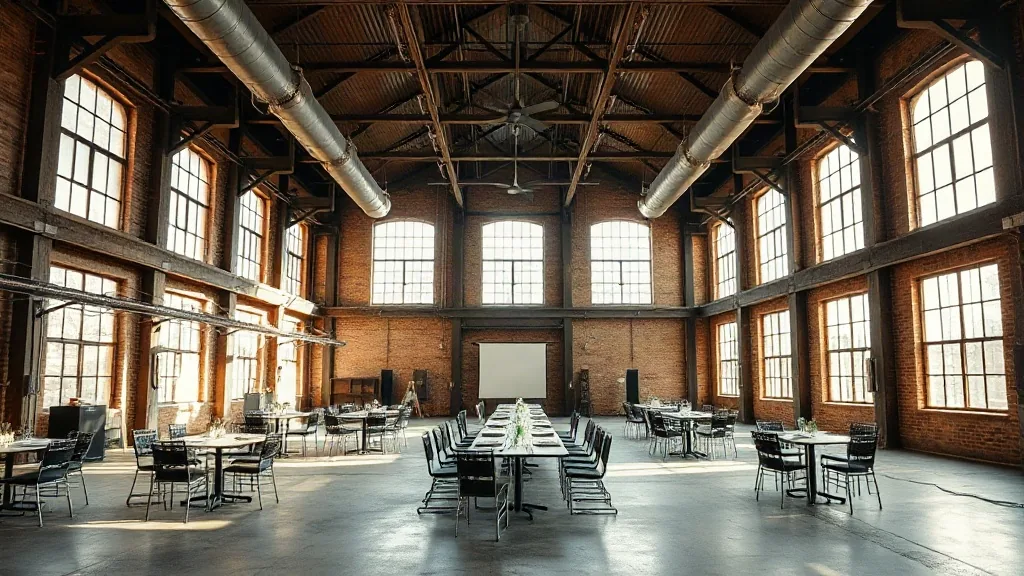
A converted warehouse has none of that. It has beautiful bones and terrible infrastructure. The rigging points, if they exist, are for industrial use and may not be rated for theatrical loads. The ambient ceiling noise from HVAC systems running through exposed ductwork can push you into directional speaker arrays to cover the room intelligibly. I’ve paid $6,000-$11,000 more in AV labor at warehouse venues for the same production scope I run in a hotel for $14,000-$18,000 total.
One specific number: a 300-person general session in a hotel ballroom with hotel in-house AV runs $12,000-$19,000 in Atlanta depending on the property. The same production scope in a warehouse with a third-party AV vendor who has to truck in everything runs $19,000-$28,000.
Catering Exclusivity: Where Hotels Win by Default
Hotel ballrooms have in-house catering. You may not love the menu or the pricing, but the kitchen is 40 feet from your room, the staff know the space, and the service ratio for a 300-person seated lunch is built into the system.
Converted warehouses are almost always catering-optional. You find your own caterer. That sounds like freedom. It’s also responsibility for the kitchen tent or commissary setup, the staffing coordination, the dishware rentals, and the liability rider your caterer needs to enter the building. Catering coordination adds 3-5 hours of planning work per vendor that doesn’t exist in a hotel.
The cost comparison on catering itself is roughly neutral. A hotel F&B minimum for 300 people at lunch and dinner runs $24,000-$38,000 at a full-service Atlanta property. An external caterer at a warehouse at comparable service quality runs $20,000-$32,000. You save some money but pay in coordination overhead.
Load-In Logistics: the Warehouse Is Not Designed for You
| Factor | Hotel Ballroom | Converted Warehouse |
|---|---|---|
| Loading dock height | Standard 48” truck height | Varies, often not designed for event trucks |
| Elevator capacity | Freight elevator standard | May not exist; ground-floor access varies |
| Vendor access window | Typically 6am on event day | Negotiated; often 8am or later |
| AV rigging time | 2-4 hours with house points | 5-9 hours with portable truss |
| Catering setup time | 2-3 hours with in-house kitchen | 3-5 hours with external setup |
| Strike time | 2-3 hours | 3-6 hours |
The load-in window matters if your event starts at 9am. A hotel ballroom can accept vendors at 6am and be show-ready by 8:30am. A warehouse with a negotiated 8am access window has 90 minutes of runway. That’s not enough for a 300-person general session with a full production setup. You either negotiate earlier access (which may cost an additional rental fee of $1,500-$3,000) or you accept that opening remarks start late.
Per-Head Cost Comparison
For a 300-person single-day all-hands in Atlanta:
| Line Item | Hotel Ballroom | Converted Warehouse |
|---|---|---|
| Venue rental | $3,500-$7,000 | $6,000-$14,000 |
| F&B (lunch + dinner + breaks) | $28,000-$42,000 | $24,000-$36,000 |
| AV (production, not streaming) | $14,000-$19,000 | $19,000-$28,000 |
| Lighting and power add-ons | $0-$2,000 | $3,000-$8,000 |
| Furniture (tables, chairs, linens) | Included | $4,000-$9,000 |
| Total range | $49,000-$72,000 | $56,000-$95,000 |
The warehouse can be cheaper if you negotiate well on the rental and bring in a lean catering package. It can also be 30% more expensive if you price every vendor properly. I’ve seen clients go into a warehouse event thinking they were saving money and find out at final invoice that they spent more.
The ballroom floor is more predictable. Your variance band is narrower.
What the Warehouse Is Actually Good For
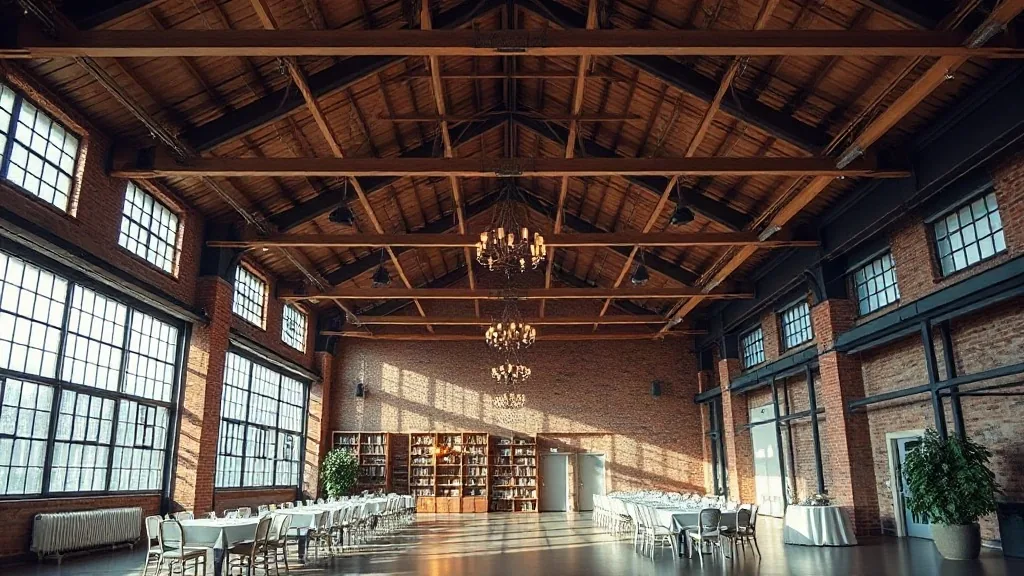
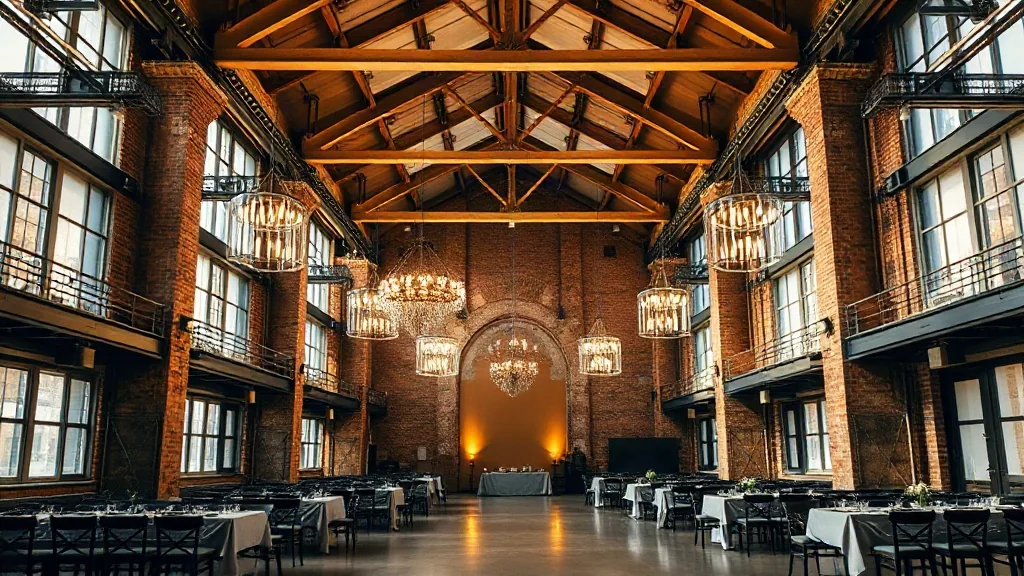
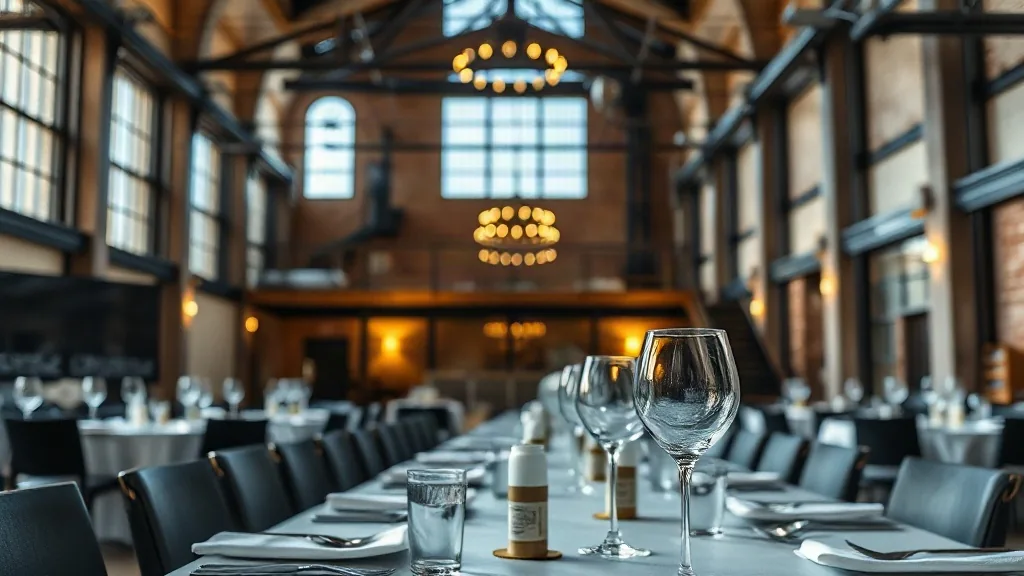
Atmosphere and brand signal. A converted warehouse in a creative district reads differently than a hotel ballroom to a 300-person all-hands audience. If you’re a company that talks about culture and authenticity and then books a generic ballroom, there’s a disconnect. Some leadership teams care about that. Some don’t.
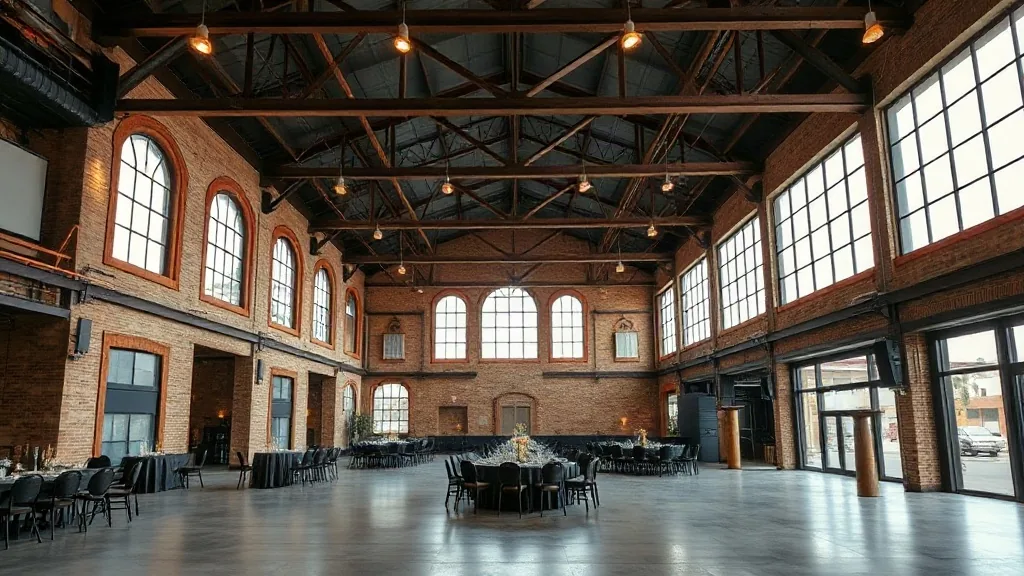
Warehouses are also better for events with multiple activation zones. A single hotel ballroom is a single room. A 15,000-square-foot warehouse can run a general session in one corner, a catered lunch in another, and breakout workshops in sectioned-off bays. That format works well for an all-hands with hands-on programming.
If your event is primarily a presentation format, the warehouse costs more and looks better. If it’s an experiential format with stations and movement, the warehouse earns its cost premium.
Decision Checklist
Before you commit to either format, answer these five questions:
- Do you have an AV vendor you’re bringing in, or are you using in-house? (If bringing your own, warehouse logistics may cancel the cost benefit.)
- What’s the event format: presentation, mixed, or experiential? (Presentation favors ballroom.)
- Is your load-in starting before 8am? (If yes, negotiate access timing explicitly.)
- Is catering coming from an external vendor? (Yes means 4+ hours of additional coordination.)
- Is your company’s culture signal better served by the ballroom or the warehouse? (Honest answer required.)
Two “warehouse” answers to those five questions means the warehouse is probably right. Four “ballroom” answers means stop shopping and book the hotel.
Browse industrial loft and warehouse venues to compare what the format actually looks like in your city. And before you sign anything, read our guide on how to brief an AV vendor and what load-in windows actually mean.
What’s your headcount, your event format, and your city? That’s where the real math starts.