
How to Brief an AV Vendor: the Production-Sheet Format That Gets Accurate Quotes
Vague AV briefs produce quotes with a $15,000 to $40,000 spread. The problem is not that vendors are guessing; it's that you gave them nothing to anchor on. A six-field production sheet narrows that spread to under $4,000 in most cases. Here is the format and how to fill it out before the first call.

I spent four years on the vendor side of AV before I crossed over to event consulting. The most common reason a quote came in $20,000 higher than a client expected was not greed. It was that the brief said “AV for 200-person conference” and nothing else. We were quoting for every scenario the room might require, because we had no information to exclude any of them.
A production sheet fixes this. It’s not a technical document. It’s six fields that tell a vendor exactly what they’re building so they can price it, not guess it.
Why the range is so wide without a brief
For a 200-person general session, a bare-bones AV package runs $8,000 to $14,000: two projection screens, a PA system, a confidence monitor, two wireless microphones, and basic lighting. A full-production package for the same room runs $35,000 to $55,000: LED wall panels, eight-camera mixed-record output, broadcast-grade streaming rig, stage lighting with dimmer board, speaker IMAG, and a dedicated video director.
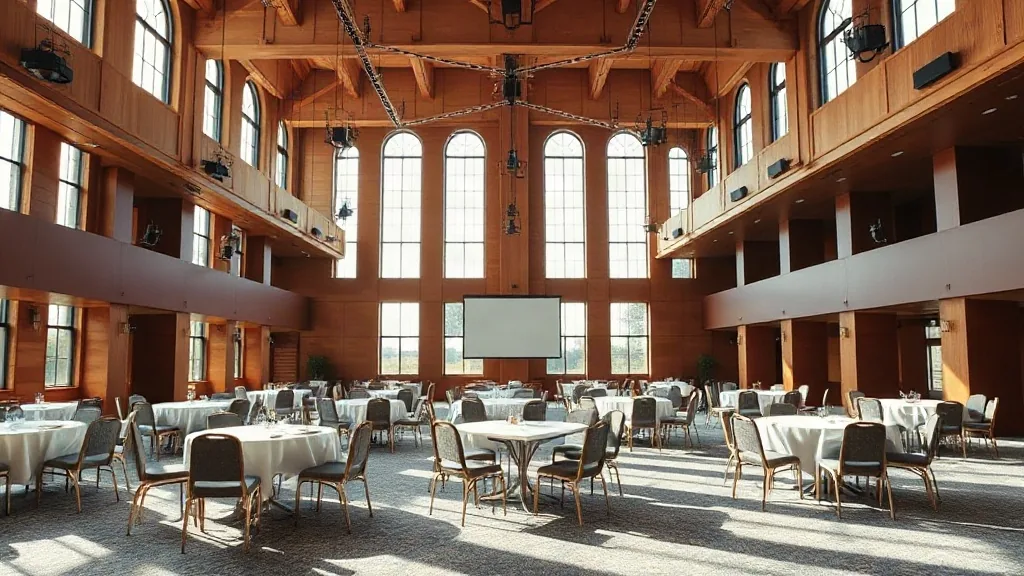
Both are legitimate setups for a 200-person event. A brief that doesn’t distinguish between them forces the vendor to quote somewhere in the middle or high, because quoting low and missing scope is a worse business outcome than quoting high and losing the bid. So you get a $30,000 quote and you have no idea why.
The six-field production sheet
Field 1: Screen count and placement
How many screens? Where? Front projection, rear projection, or LED panels? Side screens for audience beyond the 60-degree sightline?
Example entry: “2 screens, front projection, 10-foot diagonal each, center stage. No side screens.”
That single line eliminates 30% of the pricing variables.
Field 2: Microphone setup
Podium mic, handheld wireless, lavalier, or panel? How many speakers on stage at once? Audience Q&A mics?
Example: “1 lavalier for keynote speaker, 1 handheld for Q&A. No panel mics. 2 aisle mics for audience Q&A.”
Field 3: Recording and streaming
Is the event recorded? For internal archive only, or for live distribution? If streaming: platform (YouTube, Zoom webinar, custom), expected concurrent viewer count, who handles encoding.
Example: “No livestream. Single-camera record for internal archive, edited cut delivered within 5 business days.”
Or: “Livestream to Zoom Webinar, max 400 concurrent. Vendor handles encoding. Internal record also required.”
The streaming line alone accounts for $6,000 to $18,000 of cost variation depending on camera count and bandwidth requirements.
Field 4: On-screen graphics and presentation format
Who is running slides? One presenter with a single deck, or multiple presenters with their own machines? MacBook or PC? Do slides advance from the stage or from a separate operator position?
Example: “4 presenters, each bringing a MacBook. Slides advance from stage clicker. No video playback embedded in slides.”
Or: “1 AV operator runs all slides from a production table at the back of the room. 3 video segments embedded, each under 4 minutes.”
The second example needs an operator; the first does not. That’s a half-day labor line item the vendor can add or remove from the quote.
Field 5: Lighting
Stage wash only, or full theatrical lighting? Are there breakout rooms that need separate lighting? Is the venue’s house lighting sufficient for the general session, or does it need supplemental fixtures?
Example: “Basic stage wash, no theatrical. Breakout rooms use house lighting. Ballroom house lighting is adequate.”
Or: “Full stage package: spot, wash, color. Separate lighting in 4 breakout rooms. No gobo or special effects.”
Most ballroom AV packages include a basic stage wash. Full theatrical lighting is a separate scope that adds $4,000 to $12,000.
Field 6: Load-in window and rigging access
When can the vendor access the space? Are there rigging points in the ceiling, or does everything need to be floor-supported? Is the room available the day before for a full set and pre-show check?
Example: “Access from 7am day-of. No rigging points; all equipment must be floor-supported. 30-minute tech check with speakers at 8am.”
Or: “Access from 2pm day prior. Rigging points rated at 600 lbs per point. Full tech rehearsal evening before.”
Rigging access determines whether the vendor can fly screens and truss, or has to build ground-supported alternatives. Ground support costs more and takes more floor space. The vendor needs to know this before quoting.
The call after the brief
Send the production sheet before the first call, not during it. The call then becomes a 20-minute confirmation, not a 60-minute discovery session. You’ll spend the first 10 minutes on the sheet line by line. You’ll spend the next 10 on questions they have about the venue.
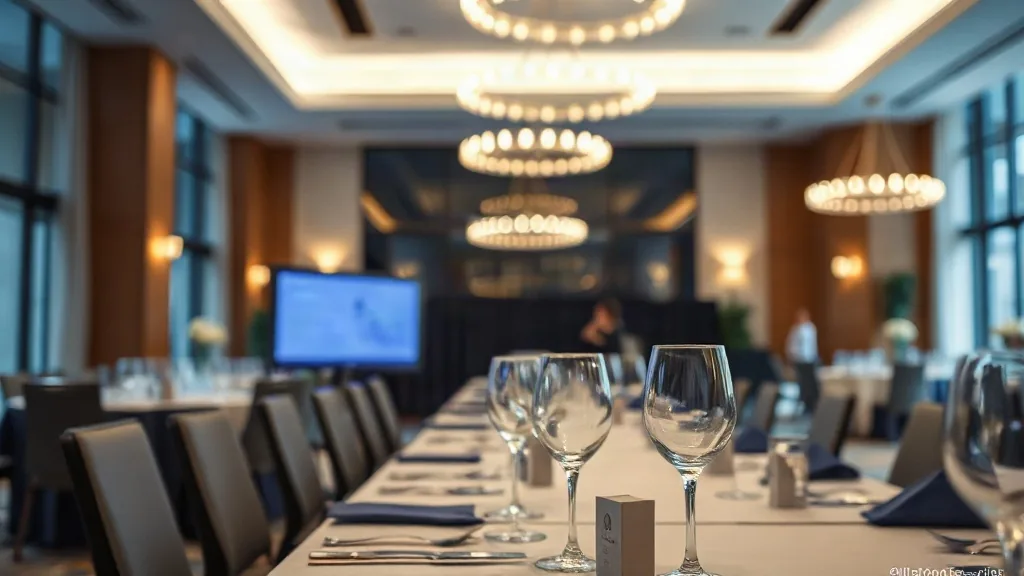
If you haven’t done a site visit yet, tell the vendor that. Ask them if they want to do a walk-through before quoting, or if the production sheet is enough. For standard hotel ballrooms they’ve worked before, the sheet is usually sufficient. For unusual spaces, like lofts, theaters, or outdoor venues, a site visit changes the quote by 20-40%.
Conference centers often have standardized AV inventories that make some of this simpler; ask for their in-house AV spec sheet before you brief an outside vendor, because the delta between in-house capability and what you need determines whether an outside vendor is worth the coordination overhead. Theaters and performing arts centers have house systems that may cover 80% of your needs at a fraction of an outside vendor’s rate.
What to compare across three quotes
Once you have quotes from three vendors based on the same production sheet, compare:
- Day-of labor hours and rate per technician
- Equipment depreciation or rental vs owned gear (owned is usually better quality)
- Overtime policy (what happens if the event runs 30 minutes long)
- Whether a dedicated AV contact is on-site through teardown
The lowest quote is rarely the right choice. But it should be within $5,000 of the middle quote if all three vendors are working from the same brief. A $15,000 spread after a detailed production sheet is a signal that one vendor misread the scope or is cutting corners you haven’t found yet. Worth a phone call before you award.
You can read more about how to scope AV for a conference and how to run a venue site visit to build on this. What’s your event format, and have you priced AV with a production sheet before? If not, the six fields above will change your next quote conversation.


