
Why I Check the Venue's Water Quality Before Signing the Contract
A $20 TDS meter from Amazon changed how I evaluate venues. Bad water means bad coffee means a bad first 90 minutes of Day 1 — and bad coffee at a 200-person offsite costs more than the meter did.

I own a $22 TDS meter I bought on Amazon two years ago and it has saved me from booking three venues I would have regretted. TDS stands for Total Dissolved Solids — it’s a measure of mineral content, chlorine, particulates, and other stuff dissolved in water. It reads in parts per million. You dip the probe in a glass of tap water for about 30 seconds and get a number.
Here’s why a corporate event planner cares about that number.
The coffee problem
Day 1 of any multi-day corporate offsite or conference starts with coffee service. Almost always. For a 200-person event, that’s somewhere between 40 and 60 gallons of brewed coffee, plus espresso pulls for the people who want it, plus hot water for tea. All of it passes through the venue’s water supply.
High-TDS water — anything above 300-400 ppm — produces noticeably worse coffee. The mineral content competes with the coffee’s extraction and leaves a flat, slightly metallic taste. This is not a coffee-snob problem. It is a legitimate first-impression problem. The first 90 minutes of your conference or offsite is the window when attendees are forming their view of whether this was worth showing up for. Bad coffee signals low attention to detail, even when the actual culprit is the city’s municipal water supply and nobody’s fault.
I noticed this pattern in 2022 at an event in Phoenix. We’d brought in a specialty coffee vendor — a good one, someone I’d used six times before — and the coffee was noticeably worse than every other event I’d run with them. The vendor called me the next morning to apologize and told me the venue’s water had registered at 480 ppm on his equipment. He’d done the best he could. The city’s water was fighting him the whole time.
I bought a TDS meter the following week.
The venues that score high (and why)
In the 40-plus venues I’ve tested since then, here’s what I’ve found:
Conference centers in the Pacific Northwest — Portland, Seattle, the Eastside tech suburbs — consistently read between 80-180 ppm. The watershed hydrology in the Cascade Range produces genuinely low-mineral water. Coffee at these venues is reliably excellent. This is one reason, not the only one, that I recommend Pacific Northwest venues for high-stakes offsites when the audience includes people with opinions about coffee. Meeting spaces in Oregon punch above their weight on this metric.
Phoenix, Scottsdale, Las Vegas venues tend to run 400-600 ppm. The Colorado River basin water that supplies these cities is high in dissolved minerals from the geological formations it passes through. I now include a water-filtration rider in my contracts for events in these cities — most venues have under-counter filters they’ll connect if you ask specifically. If they don’t, I budget for the coffee vendor to bring their own filtration system, which adds $400-800 to the vendor fee and is worth it every time.
Chicago is interesting. The city’s water (Lake Michigan source, well treated) tests around 140-190 ppm and produces good coffee. Some suburban venues in the area pull from different sources and can test significantly higher. Worth checking even in a market you think you know. Conference centers in Illinois have the same city-good, suburb-variable pattern.
New York City tap water is famously low TDS — historically around 30-50 ppm — and is the reason New York pizza dough and New York bagels taste the way they do. Venues in Manhattan that use city water make excellent coffee. The one exception: older buildings where the pipes haven’t been updated since the water last touched pristine chemistry. Old galvanized or copper pipes add their own chemistry. I test in NYC even though I know the supply is good.
Miami and South Florida — my home market — ranges from 200-350 ppm depending on the Biscayne Aquifer supply and the specific municipal treatment plant. Manageable, usually. Meeting spaces in Florida vary enough that I test routinely.
How to actually use this on a site visit
Bring the meter. Order it online, it’s $18-25 on Amazon and arrives in two days. On your venue walkthrough, ask to see the catering prep kitchen. Run the tap for 30 seconds to clear the line. Fill a small cup. Dip the meter.
Numbers I work with:
- Under 100 ppm: exceptional. Coffee will be outstanding.
- 100-250 ppm: good to excellent. Standard coffee service will be fine.
- 250-400 ppm: acceptable. Ask about filtration. Request that the coffee vendor runs a filtered line if it’s a high-stakes event.
- 400+ ppm: problem. Demand a filtration solution in the contract or find a different venue. This is not an overreaction — I’ve seen 600 ppm readings in hotel banquet prep kitchens and the coffee was undrinkable.
The conversation with the venue
When I bring out the meter on a site visit, about half of venue coordinators recognize it immediately and know what I’m doing. The other half asks. My explanation is always the same: “Coffee quality is one of the first things attendees notice on Day 1, and water quality determines coffee quality. I test routinely. If the reading is high, I’ll want to discuss filtration options — most venues have a solution.”
No venue has ever refused to let me test. Several have volunteered that they already have under-counter filtration on the coffee service lines. Those venues go to the top of my shortlist, because it means someone in their ops team had already thought about this.
The venues that get defensive about the test — “our water is perfectly fine” — are the ones I’m most skeptical of. Not because the water is necessarily bad. Because the defensiveness about a simple question tells me something about how they handle operational feedback in general.
It’s not just coffee
High-TDS water affects ice quality (cloudy, off-flavor ice in cocktail service), the taste of any beverage made with the water (teas, infused waters, some sodas), and even the rinse quality on glassware — in very hard-water venues, wine glasses can come out with a white mineral film that makes everything look cheap.
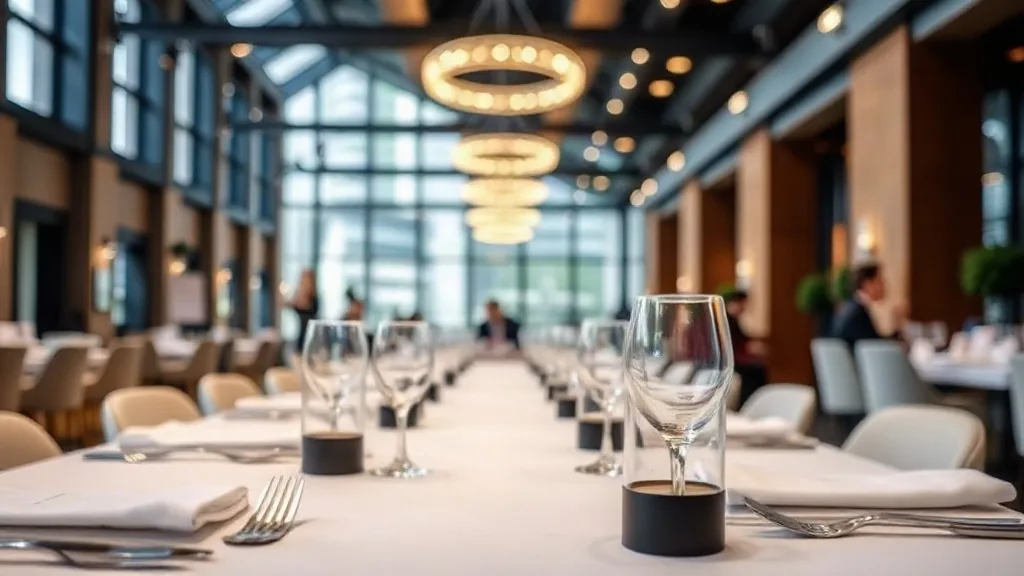
I had an event coordinator at a client tell me, after one of our events, that it was “the first conference where the ice tasted right.” She’d apparently been to enough events where it didn’t that it registered as noteworthy. The ice tasted right because I’d checked the water.
The venues I’d book based on this metric alone
Purely on water quality — not factoring in AV infrastructure, capacity, or F&B program — here are the venue categories I’d prioritize:
-
Purpose-built conference centers in the Pacific Northwest — the watershed water makes everything taste better. Seattle and Portland conference centers are where I’d start.
-
Brewery venues that have invested in water filtration — breweries are obsessive about water chemistry because it directly affects their product. A brewery venue that does events has almost certainly installed filtration systems that exceed anything a hotel banquet prep kitchen has. The breweries-and-distilleries venues category is underrated for this reason.
-
High-end resort conference facilities — the Four Seasons, Ritz-Carlton-tier properties have water filtration as a matter of brand standard. Not because they thought about it specifically for coffee — because they thought about it for the spa and the restaurant, and the event spaces benefit.
-
Any venue where you can specify a water-filtration rider in the contract. This is a non-negotiable line I now add to every contract in a high-TDS market. The venue installs or enables under-counter filtration for the catering prep area. Cost is usually zero or under $200. Value is immeasurable.
The actual ROI
I’ve spent $22 on a TDS meter and maybe 45 minutes total in the past two years running tests. In that time I’ve avoided three venues I’d have regretted, negotiated filtration riders into six contracts, and earned one piece of feedback from a client that specifically mentioned the coffee as a highlight. The math is not complicated.
Start with the meeting-spaces directory to build your venue shortlist. Then bring the meter.
The water test fits naturally into the broader pre-booking audit: the smell test post covers HVAC and kitchen-vent signals that often co-appear with water-quality problems. And the 4pm Tuesday vibe check is where I run all three tests — water, smell, and ops culture — in a single unannounced visit.
Send me the brief and I’ll tell you which markets I’d flag for water-quality attention before you even start the site-visit process.


