
The 4pm Tuesday Vibe Check — What I Look for Before I Book
Walk into your venue unannounced at 4pm on a Tuesday afternoon. What you see in 15 minutes tells you more about weekend execution than any site-visit tour ever will. Here's exactly what I look for.

I started doing the Tuesday vibe check by accident in 2018. I had a meeting at a venue in Atlanta to review contract language, and I showed up 45 minutes early because I’d miscalculated the Midtown traffic. The venue’s sales coordinator wasn’t there yet. The front-of-house manager was on break. So I sat in the lobby and watched.
In those 45 minutes I saw: a stock delivery arrive with two boxes short, handled by a single line cook who had to make three calls before figuring out what to do; a table in the side dining room that had been set for an event but had a chair with a broken leg that nobody was doing anything about; and a member of the facilities staff who walked through the event corridor twice, looked at a wall-mounted fire extinguisher, looked away, and kept walking — the extinguisher was two months past its inspection date, which I noticed later when I walked past it myself.
The event I booked there three months later ran fine. But those 45 minutes told me more about how that venue operated than the two formal site visits that preceded them.
Now I schedule the Tuesday visit deliberately, for every venue above a certain spend threshold. Here’s the framework.
Why Tuesday at 4pm
The selection of Tuesday afternoon is specific and intentional.
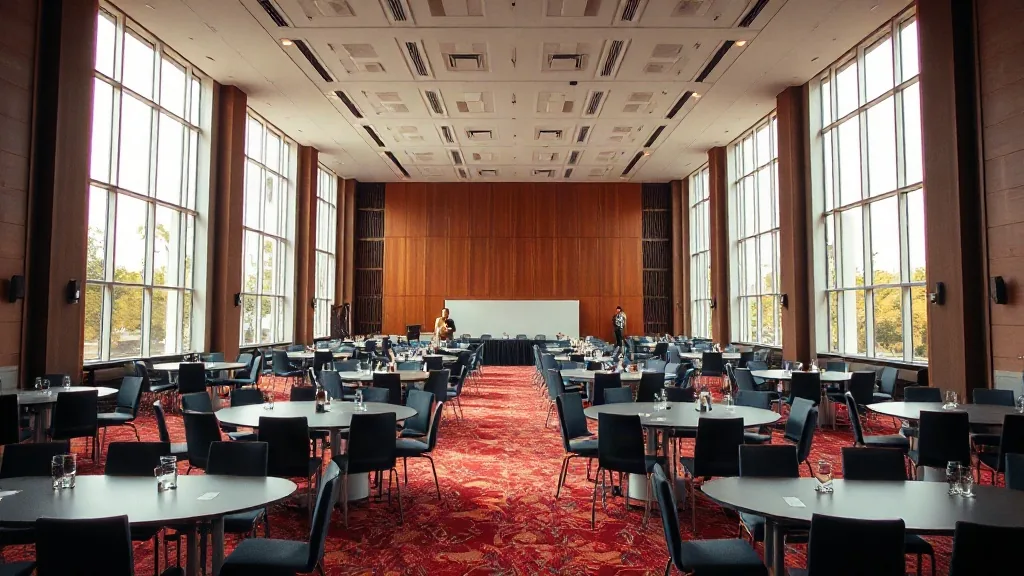
Most venues don’t have events on Tuesday mid-afternoon. The week starts with Monday recovery from weekend events. Wednesday and Thursday are where mid-week corporate events cluster. Friday through Sunday is high-volume. Tuesday at 4pm is the genuinely quiet middle of the week — the moment when the venue is running at baseline, not performing.
Afternoon shift is a tell. The morning crew — the ones who set everything up, who are there for inspections, who are on during the pre-noon management walkthrough — is generally more polished. The 2-6pm window is often managed by a reduced team between the lunch setup and the evening prep. The quality of that reduced team, and how they’re operating in the absence of management energy, is what you actually need to know.
It’s unannounced. Or as close to it as I can make it. If I’ve done a formal site visit already, I call ahead to say “I’m going to stop by to take some notes on the space.” That’s vague enough that the venue doesn’t stage a performance but specific enough that they don’t turn me away at the door. If it’s a first look, sometimes I walk in as a prospective client, which is entirely legitimate — I am a prospective client.
The 14-point checklist
I go through this in order, mentally, during the 15-30 minutes I’m in the venue.
Ops and facilities
1. What are the non-event staff doing? Are they moving purposefully, doing setup or maintenance or prep? Or are they stationary, on phones, doing nothing visible? Purposeful motion doesn’t mean hurrying — it means the staff has tasks and they’re working them. Stationary-and-scrolling on a mid-week afternoon is a tell.
2. Is there a clipboard or a tablet anywhere on the floor? Not a metaphor — I’m literally looking for evidence of a checklist culture. Venues that run well have someone on the event floor with a physical or digital checklist, even when no event is running. They’re completing pre-event inspection items, inventory verification, or post-event follow-up. If there’s no checklist in sight on an active-prep afternoon, the venue is running on experience and memory, which is fine until something non-standard happens.
3. How does the loading dock look? If the venue has a loading dock or delivery entrance I can see, I look at it. A loading dock that’s organized — designated areas for in-progress, waiting, and completed deliveries — tells me the venue has a vendor-management protocol. A loading dock that’s chaotic on a non-event day is going to be a problem when six vendors arrive in a two-hour window.
4. Inspect one table setup (if there is one). If a table is set for an upcoming event, I look at it as I walk past. Is the linen straight? Are the settings aligned? Is any glassware water-spotted? This is mid-week setup work, not final polish — I’m not grading for perfection. I’m looking for attention at a basic level.
Equipment and infrastructure
5. Check the nearest AV rack or panel. This isn’t always accessible to a visiting prospective client, but I ask. The venue coordinator who shows me around will usually take me past the AV closet or the back-of-house panel on a site walkthrough. I’m looking for cable management (labeled, bundled, not a chaos of unlabeled cables), indicator lights (green = good, anything else = investigate), and cleanliness (dusty AV equipment is under-maintained AV equipment).
6. Find the nearest visible fire extinguisher. I check the inspection tag date. This is a one-second look as I walk past. If the extinguisher is more than a year past its last inspection, the facilities maintenance culture has gaps. If the extinguisher is missing, I’m done.
7. Check bathroom fixtures. I use the restroom during every site visit — this is obvious — and I specifically check the fixtures for deferred maintenance. A loose faucet handle. A toilet with a running fill valve. A towel dispenser that’s jammed. These are the small-maintenance items that get logged and postponed. If there are three of them in one visit, there are twenty more I’m not seeing.
8. Test the HVAC. Stand in the main event space and listen. The HVAC noise floor (see also: my water-quality post) should be low enough that normal conversation doesn’t require raised voices. I also note what the HVAC is doing — is it running, and is it cooling/heating the space to a comfortable level? A venue that runs its HVAC at minimum on mid-week afternoons to save energy will often struggle to bring a packed event space to a comfortable temperature quickly.
Staff interactions
9. How does the first staff member I encounter greet me? Not looking for a performance. Looking for acknowledgment. If I walk into a venue lobby and a staff member walks past me without making eye contact or saying anything for more than 90 seconds, the guest-facing culture has a gap. That gap matters when 200 of my client’s guests are walking in.
10. What does the person at the front desk or check-in position know? I ask a question — “When’s the next event here?” — that requires them to know the venue’s upcoming calendar. If they don’t know, or have to check somewhere other than a shared reference, the internal communication structure is fragmented.
11. When I ask to see the event space, what happens? Does someone come immediately? Does someone call around looking for who’s available? Does someone say “just go ahead, it’s on the second floor”? The first answer is good. The second is acceptable. The third — go ahead without an escort — means nobody has made the connection between site-visit experience and event-execution culture.
The kitchen (when visible)
12. What does the kitchen smell like at 4pm? At 4pm, most venues with on-site catering are in afternoon prep for an evening event. The kitchen should smell like active cooking — not the greasy-vent smell of inadequate exhaust, not the nothing of a cold kitchen, but the active smell of food preparation in progress. A cold kitchen at 4pm at a venue that advertises event catering tells me they’ve brought in drop-delivery rather than on-site cooking.
13. What’s the organization level on visible prep surfaces? I rarely see into kitchens directly, but sometimes I get a sight line through a service door. If the visible prep surfaces are organized — labeled, dated, clean perimeter — the kitchen is being run correctly. If the visible prep surfaces look like controlled chaos, the kitchen staff is managing by instinct rather than system.
14. The radio. What’s playing on the kitchen radio. I know this sounds like the kind of detail that shouldn’t matter, and I’ve written about it separately. The short version: venues where the kitchen radio plays something neutral and relatively quiet are running a professional kitchen culture. Venues where the kitchen radio is turned up enough to be audible in the corridor, playing something aggressive, have a kitchen team that isn’t thinking about the event on the other side of the wall.
What to do with what you find
If I find three or fewer of these checkpoints in a concerning state, I flag them, note them, and raise them in the contract conversation. Specific checkpoints have specific remedies:
- HVAC: require a pre-event test with a thermometer reading target
- Fire extinguisher: require certificate of recent inspection in the contract package
- AV equipment: require a full pre-event test with my AV vendor present the day before
If I find four or more concerning checkpoints, I don’t book. The pattern of small-maintenance issues across multiple systems in a single 30-minute visit represents a facilities culture problem, not a list of fixable items.
The venues that consistently pass
The venue types that most consistently score 12+ of 14 checkpoints in good shape, in my experience:
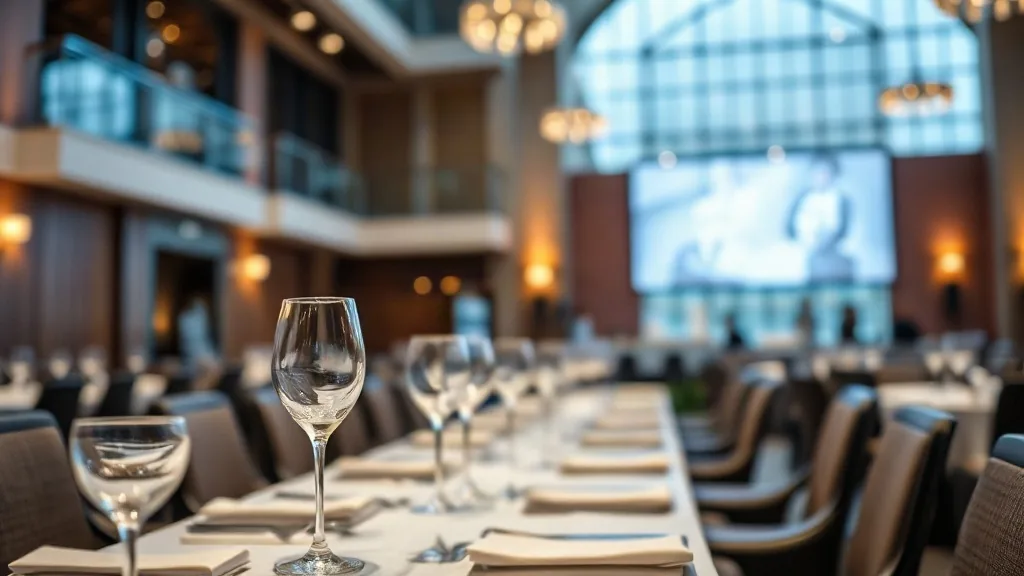
Purpose-built conference centers — maintained to institutional standard because they run events every day. Conference centers are the category I’d start with for any event where execution reliability is the primary requirement.
Hotel conference facilities at full-service properties — because the hotel’s facilities infrastructure covers the event spaces too, and hotel operators are paranoid about guest experience in ways that standalone venues aren’t.
Venues that specifically serve corporate clients Monday through Friday — they’re not running down their ops team on weekends and asking them to be fresh on Monday. Meeting spaces in Atlanta and the broader Southeast corporate event market have a good number of these.
Venues with a dedicated event-ops manager (not the sales coordinator, an actual operations manager) who can be reached directly. When I can identify who runs the building and talk to them on a 4pm Tuesday, I have a much clearer picture of what I’m buying.
The shortlist approach
I use the Tuesday visit to cut my shortlist, not to build it. I build the shortlist from the full meeting-spaces directory and from referrals. I narrow to two or three finalists with formal site visits. Then I do the Tuesday visit to choose between them.
Send me the shortlist and the dates. I’ll tell you which one I’d visit on a Tuesday — and what I found the last time I walked through.


