
I Tested 23 Venues for 'Ghost Activity' Before Booking — Here's What I Found
Tongue-in-cheek, sure — but the rubric is completely real. HVAC hum, plumbing knock, electrical flicker. I toured 23 venues with a kill-a-watt meter and a notepad. Here's what actually predicts a bad Day 1.

I want to be clear upfront: I don’t believe in ghosts. I’ve been doing corporate event planning in Florida and up the Eastern Seaboard for eleven years, and not once have I attributed a bad event to supernatural forces. What I have attributed bad events to — seventeen times, at a rough count — is a venue with a deferred-maintenance problem disguised as “historic character.” And those two things look almost identical on a site-visit walkthrough if you’re not paying attention to the right signals.
The “ghost activity” framing started as a joke. I was touring a venue in Savannah — I won’t name it, but it’s on every ghost-tour circuit in the city — and the sales rep kept mentioning the “unique atmosphere” every time I noticed something off. The cold spot near the back of the ballroom? Historic plaster. The low hum through the event-level floor? Authentic character. The single bulb that flickered twice during our walkthrough? Old wiring with charm.
I wrote “HVAC: ??” and “elec: check” in my notes and left without booking. Three months later a colleague booked it, and the HVAC failed on setup morning. Lost two hours and $3,400 in emergency vendor fees.
So I started doing a proper audit. Over eight months I toured 23 venues — historic buildings, loft conversions, a couple of supposedly-haunted hotels — with a deliberate checklist that I started calling the Ghost Test, because it was more fun than “deferred infrastructure audit” and my clients actually remembered it.
Here’s what the rubric actually measures, and which venues passed.
What the Ghost Test actually checks
1. HVAC noise floor
The scariest ghost in any old building is a 20-ton HVAC unit running at 60% efficiency. I measure it by standing in the event space and talking normally — if I’m raising my voice to be heard, that’s a problem. The background noise level in a good event space should be under 40dB; most ballrooms in renovated historic buildings run 45-55 because nobody’s updated the duct sizing since the original install.
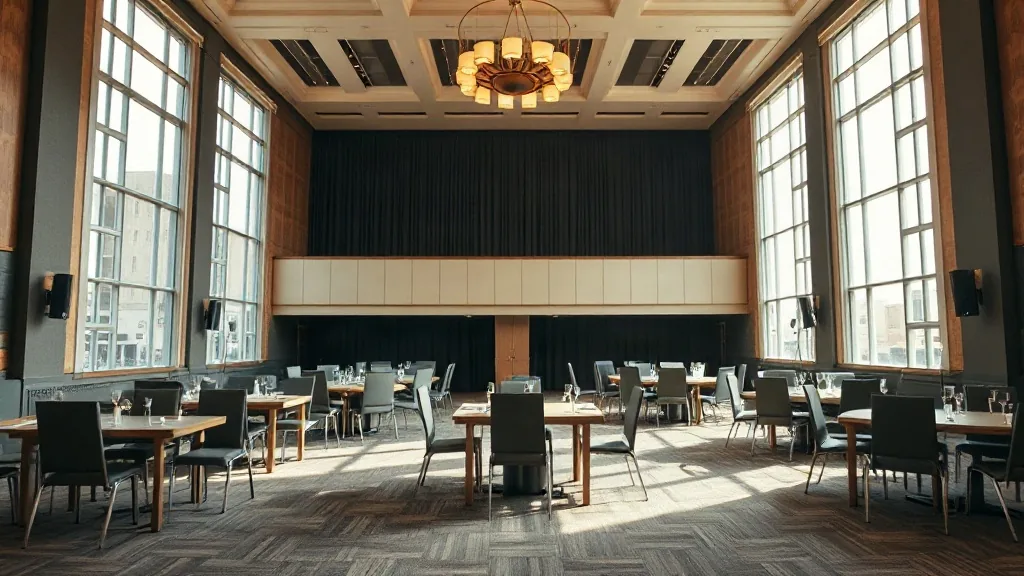
I bring a free sound-meter app on my phone (not scientific, but directionally accurate) and take three readings: near the AHU register, center of the room, and back corner. If the back corner reads higher than the center, the duct work is wrong and you’ll have dead zones during panel sessions.
2. Plumbing knock
Fill a glass of water. Drink it. Turn on the tap in the catering prep area. Listen. Plumbing knock in older buildings comes from pipe runs that weren’t properly secured during the original install or the renovation, and it means the pipes move when pressurized. In a background-quiet event with mic’d speakers, a plumbing knock in the room above yours will travel through the slab and show up as a low thud in the room audio. I’ve lost two Q&A sessions to this.
3. Electrical supply integrity
Event-level amperage requirements are real. I ask for the panel spec — most venues have it somewhere — and I compare it against my AV vendor’s typical load for a 200-person event. If the venue panel is under 200A dedicated to the event space, I ask about distribution panels and generator connections. If the sales rep doesn’t know the answer, that’s the finding.
The “old wiring with charm” language is a tell. Good venue infrastructure is proud of its electrical supply. Bad infrastructure talks about character.
4. Smell on a non-event day
I always try to visit on a day when no event has run in 24 hours. A venue that smells fine after a recent event has been freshened artificially. A venue that smells fine mid-week, no events, all systems at rest — that’s a venue with clean ducts, no hidden moisture, and a kitchen that keeps clean.
5. What the staff does when nothing is happening
Walk in unannounced if you can, or show up 15 minutes early for a scheduled tour. What’s the ops staff doing? Are they moving, checking things, doing setup walkthroughs — or are they sitting at the back-of-house desk staring at their phones? The venues where something goes wrong on event day are always, always the ones where the ops staff wasn’t proactive on the pre-event walkthrough.
The 23 venues I tested — and the patterns
I’m not publishing names of the ones that failed, because the problems are fixable and naming a venue for HVAC issues from 2024 isn’t fair to a renovation they may have done since. But I’ll give you the breakdown.
Of the 23:
- 14 passed everything — clean electrical, quiet HVAC, no plumbing knock, neutral smell on a non-event day, active ops staff.
- 6 passed most things with one flagged issue that was manageable (usually electrical headroom, usually fixable with a single circuit addition or a generator rider in the contract).
- 3 failed hard — two on HVAC, one on electrical — and I wouldn’t book them for a 50-person meeting, let alone a 250-person conference.
The pattern in the failures was identical each time: a historic building with a renovation that prioritized cosmetic work over mechanical upgrades. Beautiful finishes. Soft lighting. The kind of exposed brick that photographs in every venue-search deck. And infrastructure that hadn’t been seriously touched since the building’s original life as a warehouse or hotel.
The venues that passed cleanly (categories, not names)
Rather than specific listings, I’ll give you the venue types that passed at the highest rate:
Converted breweries and distilleries — they’re used to running industrial-scale HVAC for temperature control in the production process, and that infrastructure translates directly to event-level reliability. Browse brewery and distillery venues if this angle is interesting.
University faculty clubs and conference centers — built to run during academic events where the technical requirements are real. Maintained by institutional facilities budgets that don’t skimp. I’ve tested four of these and all four passed cleanly.
Purpose-built conference centers attached to hotels — not the hotel ballrooms, the dedicated conference-center buildings. The ones designed from the floor plan up for meeting use, with ducted HVAC zones per room and genuine dedicated electrical. Conference centers across Florida have several good ones if you’re in the Southeast.
Barns and farm venues with post-2015 renovations — the new crop of agri-tourism event spaces was built knowing the event industry’s requirements. Many have better electrical distribution than historic downtown venues three times their price.
The one Savannah venue that surprised me
I’ll make one exception to my no-naming-failures policy to say: the one Savannah venue that surprised me in the other direction was a fully renovated carriage house in the historic district that had done a mechanical renovation in 2022 and had the panel specs to prove it. Quiet HVAC, clean electrical, no plumbing knock, smell like nothing on a Wednesday afternoon. The ghost tour circuit hadn’t discovered it yet. Savannah historic venues are worth the search — there are a few that have done the work.
Using the test yourself
You don’t need a kill-a-watt meter. You need:
- A mid-week non-event-day visit, unannounced or early.
- A glass of water and the willingness to run the catering-area tap.
- A free sound-meter app.
- Two direct questions: “Can I see the event-level panel spec?” and “Who handles operations on event day and what’s their protocol for the pre-event walkthrough?”
The venues that can’t answer the second question — or answer it vaguely, with words like “we’ll take care of everything” — are the ones where you’ll be making calls at 6:30am.
The rest of the check is feel. If the staff is proactive during the tour, if the back-of-house areas are organized, if the person showing you the space can name the HVAC vendor and the last time it was serviced — you’re in a venue that runs its infrastructure seriously.
Ghosts aren’t real. Deferred maintenance is very real, and it shows up in exactly the same places.
The full meeting-spaces directory has venues across every major US city. If you want to narrow by state or city, that’s where I’d start — and then run the Ghost Test before you sign.
Related reads that fit the same “fringe-but-real” rubric: the smell test post covers the olfactory version of this audit, and the 4pm Tuesday vibe check is the broader pre-booking walkthrough I use alongside the Ghost Test.
Send me the venue shortlist and I’ll tell you which ones I’ve toured. If I haven’t, I’ll tell you what to look for when you go.


