
What's Playing on the Venue's Kitchen Radio Tells You How They'll Run Service
Walk into a venue kitchen at 4pm and listen to the radio. What you hear in 30 seconds tells you more about kitchen culture — and therefore event-day execution — than the menu presentation ever will.

I discovered this by accident in Nashville in 2019. I was doing a site visit at a mid-size event space in the Gulch — not a massive venue, maybe 200-person max, but sharp-looking and well-priced for what I needed. The sales coordinator showed me the event floor, the outdoor terrace, the parking situation. Then she walked me through the service corridor to show me the kitchen access.
The kitchen door was open. The radio was playing at a volume that was audible in the corridor. Not identifiable-lyric loud, but clearly present. It was aggressive hip-hop — nothing I’d characterize as inappropriate in any context, but at a tempo and volume that felt frantic, like the kitchen was running a Saturday dinner service at 10pm rather than an idle Tuesday at 3:30.
There was one prep cook visible. He was moving like the music — fast, not looking up, not acknowledging we were there.
I made a note: “kitchen energy: high-tempo, individual.” Didn’t think much of it.
The event I ran there three months later had a service timing problem. The first course came out 22 minutes late. The second course came out 9 minutes after we’d asked for a hold. The kitchen was fast — they moved fast, clearly — but they weren’t listening. The communication between the event coordinator and the kitchen fell apart under the pressure of service timing.
When I thought back to the site visit, the kitchen radio came to mind. It’s not a causal relationship. But it was a tell.
What I’ve tracked since
I’ve been noting kitchen radio at site visits for five years now. Not obsessively — I don’t go out of my way to hear it — but when I walk through a back-of-house or service corridor and the radio is audible, I note what’s playing and at what volume.
Across 30-something venues where I’ve noted this, here’s the pattern:
Quiet-to-moderate volume, ambient or classic music: 9 times out of 10, the kitchen executes service with good timing and communication. These kitchens are running at a pace that allows for listening — including listening to the event coordinator’s calls on headset, listening for course timing signals, listening for the “hold” request that saves a 200-person dinner from a service pile-up.
Moderate volume, genre-varied: Mixed outcomes. Some great, some not. Correlated more with specific kitchen management than with the music itself.
High volume, high-tempo: The correlation goes the other way. High-tempo kitchen radio at a non-event moment is a tell about the kitchen’s operating culture — fast, individual, less collaborative. The cooks are probably skilled. The team listening is probably not optimized. Under service pressure, this plays out as timing problems and communication failures.
No radio: The highest-performing kitchens I’ve worked with don’t play the radio during event prep. Silence is intentional — it’s how the sous chef can call across the kitchen without raising their voice, how the expediter can get attention without a second ask.
Why this matters more than the menu tasting
Menu tastings are how venues sell you. The food is always at its best during a tasting — fresh, attentive, staged. The venue is showing you what they want you to see.
The kitchen at 4pm on a Tuesday (see also: the 4pm vibe check) is what the kitchen actually is. The radio at 4pm is a window into the kitchen culture that no menu tasting will ever give you.
The specific things the kitchen radio tells you:
1. Whether the kitchen runs collaboratively or individually. A loud personal-space radio is individual. A shared-volume ambient station is collaborative. Kitchen service at scale is a coordination problem, not a skill problem — every cook in that kitchen may be excellent individually, but if the culture runs individual rather than collaborative, service timing falls apart when 200 plates need to go to the same table in 8 minutes.
2. Whether the kitchen leadership is present. Kitchens that play aggressive-volume music when management isn’t in the room sometimes run at a different standard when the chef is there. If I arrive at a site visit at 4pm and the kitchen sounds like nobody’s in charge, that’s exactly what I might be getting on event day if the executive chef is pulled away to a conference call.
3. Whether the kitchen has boundaries with the event floor. A kitchen that plays music audible in the corridor is a kitchen without acoustic awareness. In a well-run event venue, the kitchen boundary is intentional — not just a door, but a real demarcation between back-of-house operating culture and front-of-house guest experience. When the radio spills into the corridor, the boundary is porous.
The best kitchens I’ve worked with
I’ll give you the venue categories, not the specific venues.
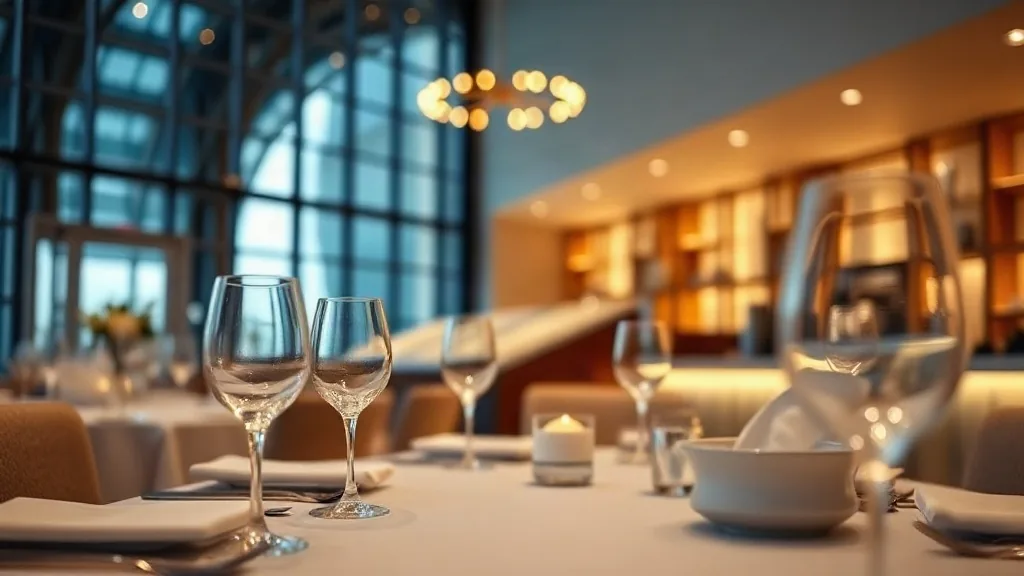
Hotel conference-center kitchens at full-service properties run the most disciplined kitchen culture I’ve encountered. Not the most creative — the food is often conservative — but the most reliable. Hotel kitchens run on system. The radio, if present, is background. The expediter speaks, the kitchen listens.
Farm-and-inn kitchens — the category I wrote about in the barn venues post — are variable but the best ones are kitchen-proud in a way that produces a different dynamic. A chef who runs a farm-sourced kitchen and takes it seriously is running a kitchen where the work is the thing, not the background. The radio, if present, is quiet.
Catering-company kitchens (venues that use exclusive caterers rather than in-house catering) are where I find the widest range. The caterer’s kitchen culture is entirely independent of the venue’s overall quality signal. I’ve been in venues with exquisite event spaces that use a catering company with a chaotic kitchen, and vice versa. When the catering is contracted out, I ask to tour the caterer’s production facility, not just the venue’s prep space. Conference centers that use exclusive caterers — which is common in the category — vary enormously on this.
The literal radio check
Here’s the practical version of this for your next site visit:
When the venue coordinator walks you through the back-of-house on the site tour — which they should do, and if they don’t, ask — pause at the kitchen door. You don’t need to go in. Just stop for a moment.
What you’re listening for:
- Volume (relative to ambient): audible from the door = present; audible from 10 feet away = loud; audible from the corridor = too loud
- Tempo: does it sound like ambient/background or like workout music?
- Whether the cooks acknowledge your presence at the door: good kitchens look up
You’re not evaluating taste in music. You’re evaluating awareness. A kitchen crew that notices a visitor at the door and adjusts is a kitchen crew that notices signals. That’s the kitchen you want running service for your 200-person dinner.
Browse conference centers and meeting spaces to build your shortlist. Then go hear the kitchen.
Send me the event brief and I’ll tell you what questions I’d ask each venue before I scheduled the formal site visit.


