9 Madison Venues — College Town With Real Corporate Budget
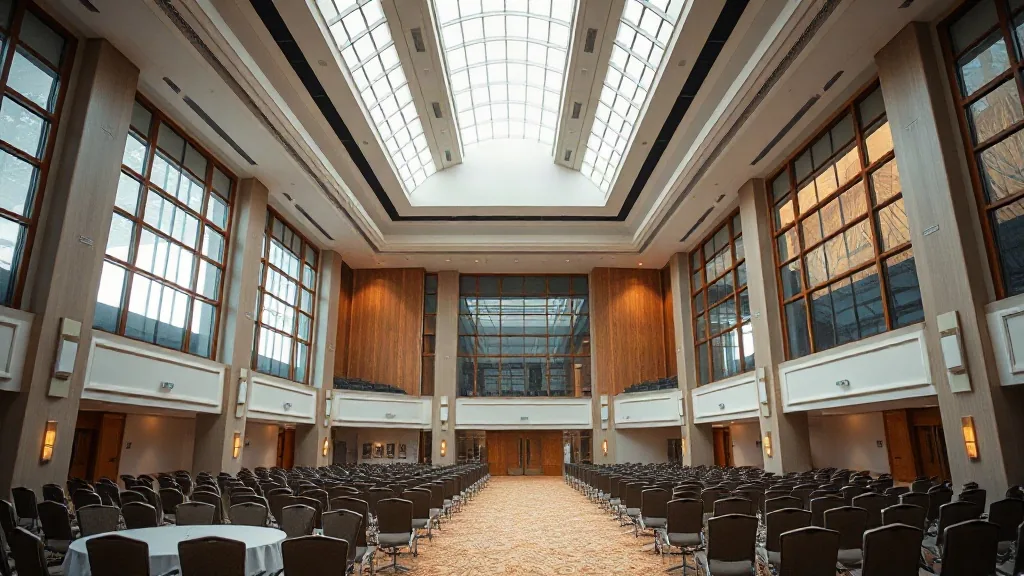
Madison gets written off as a college town with limited corporate-event infrastructure. That's wrong. The university, the biotech corridor, and the state government have generated a venue set that punches well above the city's size.

The “college town” objection to Madison comes up constantly in my pre-sales conversations, and I have learned to take it seriously as a surface-level concern and dismiss it as a substantive one. Yes, Madison is home to one of the largest research universities in the country. No, that does not mean the corporate-event infrastructure is undergraduate-tier. The University of Wisconsin runs a significant chunk of events business on its own — alumni relations, research conferences, industry partnerships — and that demand has built real venues. Separately, the biotech and life-sciences corridor that runs along University Avenue has generated a client base with genuine budgets and high expectations for a working offsite.
The result is a city that planners consistently underestimate on infrastructure and then book again once they’ve seen it. I’ve produced events in Madison for tech clients, for a medical-device company’s annual sales kickoff, and for a Bay Area startup doing an offsite that needed to be deliberately away from the Bay Area. The last one was the best brief I’ve had in Madison — “make it feel like we’re somewhere real and not a WeWork” — and the city delivered it.
What Madison does not have: a deep bench of genuinely distinct evening venues. If your event arc is day-meeting plus evening-celebration in a memorable room, the Monona Terrace takes you most of the way there and you should book it. Everything else is a step down in distinctiveness, which I’ll name honestly.
If you want the full set, the Madison meeting-venue directory is long. This is the slice I trust.
What I’m filtering for
- AV and production infrastructure that doesn’t need to be imported. A real working offsite needs house AV that’s current. Madison’s top venues have it. The mid-tier does not, and I’ll flag the gap.
- A room that reads as chosen. The college-town assumption sticks if you pick a venue that confirms it. The venues on this list actively push back on that impression.
- Walking distance or easy transit. Madison is an isthmus city — it is narrow and walkable in the right directions. I’m weighting venues where guests can navigate without a car.
The list
1. Monona Terrace Community and Convention Center (Downtown, Lakefront)
Frank Lloyd Wright’s posthumous design, on Lake Monona, with rooftop terrace views that are genuinely disorienting for a first-time visitor — you are standing on a convention center on a midwestern lake and it looks like nothing else. Capacity up to ~4,000 across all spaces, with the main hall handling ~1,200. For a conference, a large company meeting, or any event where you need guests to feel like the venue chose them, Monona Terrace is the Madison answer. Production infrastructure is solid. The rooftop alone justifies a summer or fall booking.
2. Overture Center for the Arts (Downtown)
Madison’s performing-arts complex — multiple halls, a gallery, and an architectural skin that reads contemporary. Capacity varies from the intimate Capitol Theater (~1,000 seats) down to the conference-size Rotunda (~300 reception). For a company event with a cultural-partnership angle, an awards night, or a client evening where you want the room to have a built-in quality signal, Overture is the pick. The building’s presence on State Street puts it in the center of the walkable downtown.
3. The Edgewater Hotel (Capitol Square, Lakefront)
A renovated historic hotel on Lake Mendota with event spaces that range from a 200-person ballroom to smaller meeting rooms — all with water views or garden adjacency. Capacity ~400 across all spaces. This is the correct venue when the brief is “polished hotel experience with a Madison-specific backdrop.” The lake view from the ballroom is the differentiator; the hotel runs professionally and the catering is reliable.
4. Wisconsin Alumni Research Foundation (WARF) Building (University Area)
WARF manages the UW’s patent and technology-transfer portfolio and its building includes conference-quality meeting rooms that are available for external bookings. The infrastructure is designed for serious research convenings — good AV, proper acoustics, clean sight lines. Capacity in the 100-200 person range across the spaces. For a biotech, life-sciences, or research-adjacent offsite, booking a meeting at WARF signals something to your attendees that a hotel conference room simply does not.
5. The Graduate Madison (Capitol Square)
A hotel with a specific design sensibility — Wisconsin-collegiate-meets-boutique, which in practice means interesting interior design, good street-level energy, and event spaces that don’t feel like a chain property. Capacity ~300 across ballroom and breakout space. For a company that wants the hotel infrastructure without the anonymous hotel aesthetic, The Graduate delivers it at a price point that’s competitive with the full-service properties.
“We brought our product team from San Francisco specifically because we wanted them in a room that didn’t look like another conference room in another California hotel. The Graduate gave us that. The attendees were genuinely more present. I don’t know if it was the walleye on the walls or the lake outside, but something worked.” — Head of Design at a Bay Area tech company.
6. Kohl Center — no. Tenney Park Pavilion is too small. Final: Union South (UW Campus)
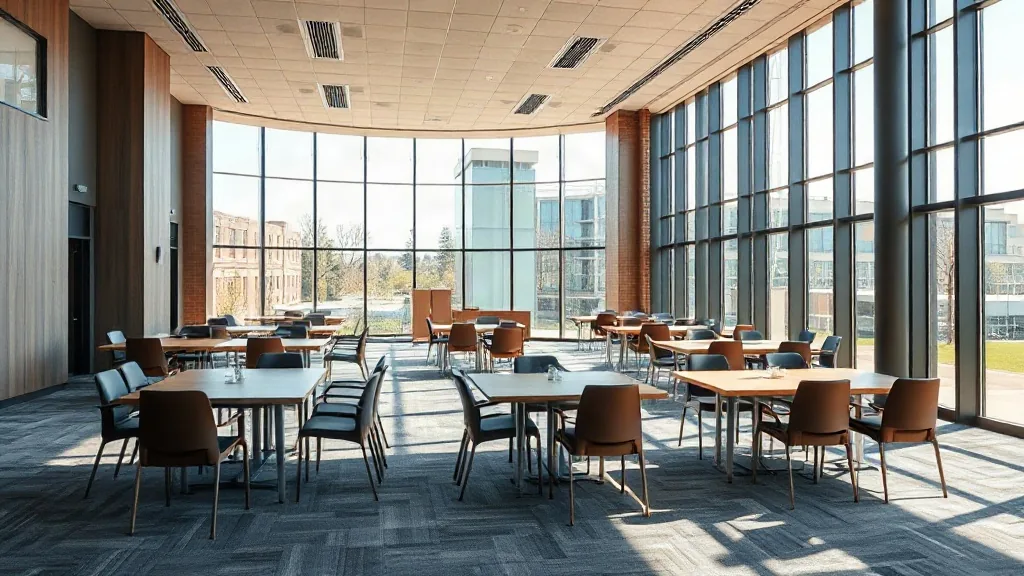
I’ll take the campus option here with full transparency: Union South is a UW-operated building with event spaces available for corporate bookings, and it is better than the “campus venue” classification implies. The Marquee room seats ~600 for theater-style or ~250 for rounds, the AV is maintained, and the location on the western edge of campus is accessible and not buried in undergraduate traffic. For a company with a UW partnership, a research-adjacent event, or a client that likes the idea of a university setting done right, it earns its place on this list.
7. The Wisconsin Room at Memorial Union (UW Campus, Lakefront)
The historic great room in Memorial Union, with a view over Lake Mendota and a period-detail interior that is genuinely beautiful. Capacity ~300. This is the Madison room for a formal dinner or a leadership event where the setting should feel like it carries weight. The university connection is unavoidable, but for a guest who has no UW affiliation it reads as a well-preserved historic lakeside room, which is what it is.
8. The Concourse Hotel (Downtown, Capitol View)
A full-service convention hotel at the Capitol — meeting rooms, a ballroom, in-house catering, and a reliable conference infrastructure for a multi-day program. Capacity into the 400s. For a government-relations, policy, or association event where proximity to the State Capitol is a functional feature rather than an aesthetic one, the Concourse is the correct answer. The rooms are not remarkable, but the operation is tight.
9. Salvatore’s Tomato Pies — no. Final: Garver Feed Mill (Eastside)
I saved this for last because it is the most distinctively Madison option — a restored 1911 feed mill on the east side of the isthmus, converted to a mixed-use complex with event spaces, a brewery, and a food hall. Capacity ~300 in the event spaces. For a company that wants to signal that it did its homework on Madison rather than just picking the nearest hotel, Garver delivers a setting that is specific to this city. The honest note: it is on the east side, which is a fifteen-minute drive from the Capitol-area hotels, and the production infrastructure requires more advance coordination than a full-service hotel. Worth it for the right event.
A note on the isthmus geography
Madison is built on a narrow strip of land between Lake Mendota and Lake Monona, which means the downtown is genuinely walkable in a way that most Midwestern cities are not. The practical implication for an offsite planner: you can put guests in a hotel on Capitol Square and have them walk to dinner, walk to the morning session, and walk to the evening event without a car. That is not common in Wisconsin. Lean into it — specify to attendees that the event is walkable and you will get compliance with the program schedule that you do not get in car-dependent cities. The isthmus constraint that makes Madison feel small is also the thing that makes your event feel coherent.
Picking from this list
- Large conference, flagship setting → Monona Terrace
- Company event with cultural-quality signal → Overture Center for the Arts
- Polished hotel, lake view → The Edgewater Hotel
- Research or biotech offsite, venue signals expertise → WARF Building
- Distinctively Madison, less corporate aesthetic → Garver Feed Mill
If none fits, the wider Madison meeting-venue list has more, and Madison corporate event venues across all categories covers conference centers, hotels, and rooftop spaces. Or zoom out to meeting spaces across Wisconsin.
Send me the headcount, the program structure, and whether the college-town aesthetic is an asset or a liability for your attendees — and I’ll give you the right shortlist.