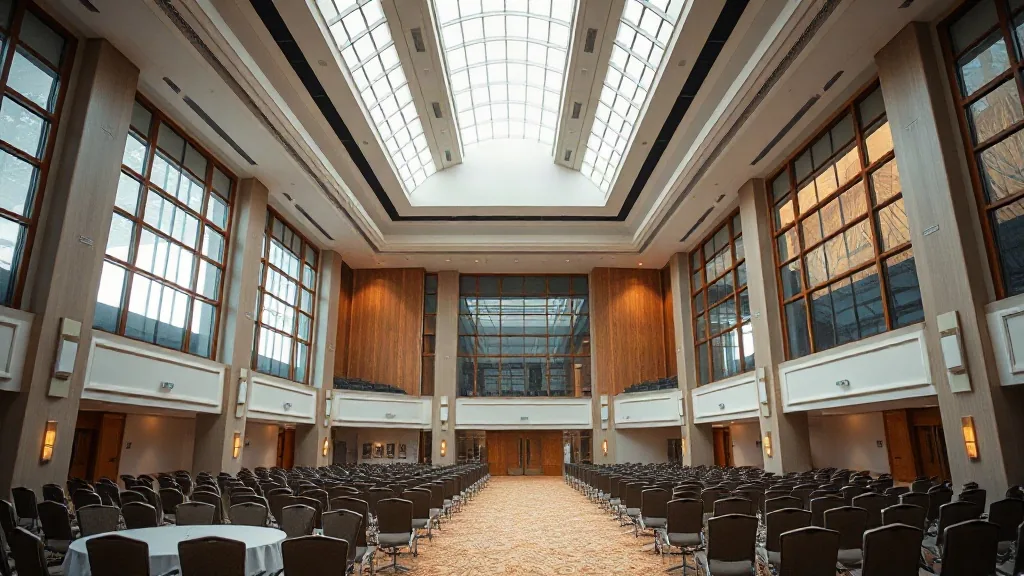
10 Milwaukee Corporate Venues — Cream City Modern
Milwaukee has spent ten years building a corporate event infrastructure that most planners outside the Midwest haven't found yet. Ten venues where the cream-city brick and the modern programming coexist — and the pricing is not Chicago.

I used to route Midwest events through Chicago by default, and then I started working Milwaukee and stopped being that planful. Milwaukee costs 35-40% less than Chicago for comparable rooms, the venues are newer and better-maintained than that price differential suggests, and the flight situation — General Mitchell International is a real airport with real direct routes — is no worse than navigating O’Hare on a Wednesday. For Midwest-flexible clients, I now put Milwaukee in every conversation before I put Chicago on the shortlist.
The city has a specific visual identity that planners either understand immediately or don’t. “Cream City” refers to the buff-yellow limestone brick that Milwaukee’s 19th-century German builders used to construct the city, and it’s everywhere — warehouses, churches, factories, commercial buildings — and it’s genuinely beautiful in a way that photograph well and hold corporate events well. The modern programming at these venues is layered on top of that architectural foundation, and the combination is more interesting than anything a new-build glass box offers.
I’ve been booking Milwaukee for four years, mostly for tech clients and once for a regional manufacturing conference. The venue stock has genuinely improved across that window.
I’ve run events at six of these.
If you want the full set, the Milwaukee meeting-venue directory is long. This is the slice I trust.
What I’m filtering for
- The Cream City aesthetic done right. Cream-brick building with genuine industrial bones, not a surface renovation that stops at the lobby. I’m looking for the real material.
- Modern event infrastructure on top of historic fabric. A beautiful old building with no AV, no catering kitchen, and a freight elevator from 1932 doesn’t make this list.
- Pricing that delivers the Milwaukee advantage. The whole reason to book Milwaukee over Chicago is value. I’ll flag where the gap is real and where venues have started to close it.
The list
1. The Pfister Hotel (Downtown)
Milwaukee’s grand hotel — 1893, a National Historic Hotel, with a Victorian-era grand lobby, a rotating contemporary art collection (the largest hotel art collection in the country), and a full ballroom complex. Capacity ~800. For a formal corporate gala or a multi-day conference that needs a room block with genuine prestige, the Pfister is the anchor. The Victorian grandeur reads as imposing without being stiff, and the art program gives every event something to talk about that isn’t the event itself.
2. The Iron Horse Hotel (Walker’s Point)
A boutique hotel in a 1907 warehouse — cream brick, timber beams, industrial-modern design, a full event facility. Capacity ~300. Walker’s Point has become Milwaukee’s most interesting neighborhood and the Iron Horse is the event hub of it. For a tech company, a creative agency, or any event that wants contemporary Milwaukee rather than Grand Hotel Milwaukee, the Iron Horse is the first call. The motorcyle identity (Harley-Davidson is headquartered two miles away) is present but not overdone.
3. The Milwaukee Art Museum (Downtown, Lakefront)
A Calatrava-designed building on the Lake Michigan lakefront — one of the most architecturally significant event venues in the Midwest. The Burke Brise Soleil wings open and close mechanically; the view from the interior is the lake and the sky. Capacity ~600 in the main event spaces. For a prestige event or a client reception where the building itself makes a statement, the Milwaukee Art Museum is the argument-ender. The catering program through approved vendors has improved significantly in the last two years.
4. Discovery World (Downtown, Lakefront)
A technology and science museum on the lakefront — event spaces with lake views, interactive exhibits, and a fully operational three-masted schooner as an outdoor event option. Capacity ~1,000. For a tech company, a STEM-adjacent client, or an event that wants a programming hook beyond the cocktail reception, Discovery World delivers it. The lake views match anything the Art Museum offers at a lower venue-hire rate.
5. The Harley-Davidson Museum (Menomonee Valley)
The private-event facility at Harley-Davidson’s museum campus — the collection of historic motorcycles, the outdoor plazas, the flexible event spaces throughout. Capacity ~1,000 at the outdoor venues, ~400 in the indoor event spaces. For an event with a Midwest-industrial, brand-authentic, or specifically Harley-adjacent client, this venue is one of the most powerful in the market. For a general corporate offsite without a connection to the brand, it’s the themed choice I normally flag as a risk — but if the connection is real, the setting is extraordinary.
6. Turner Hall Ballroom (Downtown)
A 1882 cream-brick building in the Turner Hall complex — a genuine Milwaukee institution, an 1,800-capacity ballroom with a renovated event infrastructure. For a large company celebration, an awards night, or an event that benefits from a genuine historic ballroom at a Milwaukee price, Turner Hall is the room. The AV buildout is professional, the capacity is real, and the cream-brick exterior sets up correctly for a Milwaukee event.
“We ran a 600-person company kickoff in Turner Hall. Guests from Chicago said it looked like they’d spent Chicago money. We’d spent Milwaukee money. That gap funds the after-party.” — Director of Events at a regional tech company.
7. The Rite-Carlson Milwaukee — no. The Saint Kate Arts Hotel (Downtown)
A boutique arts hotel with galleries, event spaces, and a program that integrates visual art, performance, and hospitality in a genuinely integrated way. Capacity ~200. For creative-industry clients, arts-adjacent organizations, or any event that wants the contemporary Milwaukee arts scene as the context, the Saint Kate is the pick. The programming is unusual for a hotel and that’s the point — it’s the Milwaukee venue that doesn’t feel like a hotel event, even when it’s literally in a hotel.
8. The Pabst Mansion (West of Downtown)
The 1892 Victorian Flemish Renaissance mansion of Frederick Pabst — one of the most elaborate historic homes in the Midwest, with event spaces and a catering program built for corporate gatherings. Capacity ~200. For a formal dinner or a client event where the historic Milwaukee identity is appropriate and the architecture needs to do the work, the Pabst Mansion is the distinctive pick. The Pabst Brewing connection is present but the mansion itself reads as architectural achievement rather than beer brand.
9. Potawatomi Hotel and Casino (Menomonee Valley)
A full-service hotel and casino complex — convention space, hotel rooms, multiple event venues, and a position that’s convenient from Milwaukee’s highway network. Capacity into the thousands in the convention facility. For a large regional conference or a Midwest-draw event that needs hotel infrastructure and room block at scale, Potawatomi handles it without the logistical friction of a downtown-only building. Not the most architecturally distinctive on this list, but the most operationally capable for large events.
10. The Third Ward / Public Market / venue cluster — settle: The Wisconsin Center (Downtown)
The Wisconsin Center is Milwaukee’s main convention facility — expanding to 300,000+ square feet of meeting and exhibition space, downtown, connected to the hotel cluster via skybridge. For events at the upper scale of this list that need a convention-center infrastructure, the Wisconsin Center is the right answer and will get better as the expansion completes. Capacity scales to the thousands. Not the Cream City aesthetic pick, but the answer when size wins the argument.
A note on Milwaukee and the Chicago shadow
The Chicago question comes up on every Milwaukee brief and I have a standard answer: the clients who book Milwaukee instead of Chicago either have a compelling cost reason, a specific connection to the market, or a Midwest-brand identity that Milwaukee serves better than Chicago does. Finance clients from New York often default to Chicago because the name recognition is there. Tech clients from the West Coast sometimes need Milwaukee explained to them. Healthcare and manufacturing clients who operate in the Midwest often already understand the Milwaukee case without being sold on it.
The practical argument: Milwaukee is 90 minutes from Chicago by either train or car, which means a Chicago-based executive can do a Milwaukee event and be home the same night if the event ends by 8pm. That commutability is a feature, not a flaw. For a one-day conference drawing from the Chicago-Milwaukee corridor, Milwaukee removes the hotel-block requirement for a significant portion of attendees, which changes the budget math meaningfully.
Picking from this list
- Grand hotel, prestige event → The Pfister Hotel
- Contemporary, tech or creative client → The Iron Horse Hotel
- Architecture as argument-ender → Milwaukee Art Museum
- Large company kickoff or celebration → Turner Hall Ballroom
- Large convention, infrastructure-first → The Wisconsin Center
If none fits, the wider Milwaukee meeting-venue list has more, and Milwaukee corporate event venues across all categories covers conference centers, hotels, and unique spaces. Or zoom out to meeting spaces across Wisconsin.
Send me the Chicago comparison you were quoted and the headcount — and I’ll show you what that budget buys in Milwaukee instead.