
Media day venues that have a real broadcast path
A press event lives or dies on whether your feed reaches the outlet. Most venues sell you a room and hope the upload works. Here is what to verify before you invite a single reporter or camera crew.
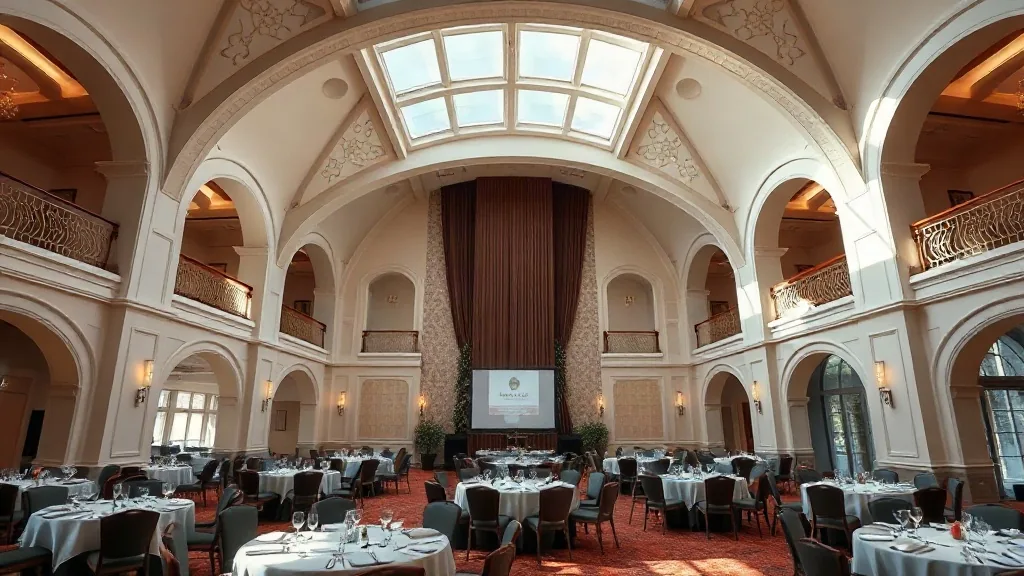
The general counsel’s exact words, an hour before a policy announcement went live to fourteen outlets, were “the upload is at 40 percent and the embargo lifts in twelve minutes.” The venue had sold us a beautiful room in a downtown museum and a single business-grade internet line shared with the gift shop’s card readers. We made it, barely, by tethering to a bonded cellular unit I had brought as insurance. I have never planned a media day without that insurance since.
I run policy and association press events in Washington, where a botched announcement is not a private embarrassment. It is a wire story about the botch. The venue you pick has to carry your message out of the building reliably, and most venues have never been asked the question that matters.
The question most venues cannot answer
“What is the sustained upload speed on a dedicated, hardwired line, and can I contract it?” A room with pretty light and 12-foot ceilings means nothing if the outbound pipe is a shared cable connection that sags the moment the gift shop starts processing sales. I ask for a dedicated line, hardwired, with a written committed rate, not the marketing “up to” number. For a single live feed I want 25 Mbps up, sustained, and I test it on a weekday at the same hour the event will run.
The upload path is the whole event for a livestreamed announcement. I built a full checklist around exactly this problem for a product launch livestream from a venue, and the media-day version is stricter, because reporters are unforgiving and embargoes do not move.
Redundancy is not optional at a press event
One line is not a plan. It is a hope. I bring a second path that does not share infrastructure with the first: a bonded cellular unit that combines several carriers into one stream, rented at $250 to $500 a day. If the venue’s hardwired line drops, the encoder fails over to cellular and the feed keeps moving. This is the same discipline public companies apply on investor day, and I lifted my approach straight from the investor day AV redundancy playbook: assume the primary fails and prove the backup works before anyone arrives.
Test the failover during rehearsal by physically unplugging the primary line and watching the encoder switch. If you have never seen it fail over live, you do not actually have redundancy. You have two lines and a prayer.
The room a camera crew can actually work
Broadcast crews need things a wedding venue never thinks about. A hard camera position with a clean sightline to the lectern, 40 to 60 feet back, on a riser that will not bounce when someone walks past. A multi-box or press feed so twelve outlets can each pull clean audio and video off your board instead of jamming shotgun mics in the aisle. Power for the crews, real distributed power, not two wall outlets and a daisy chain of orange cords that trips a breaker.
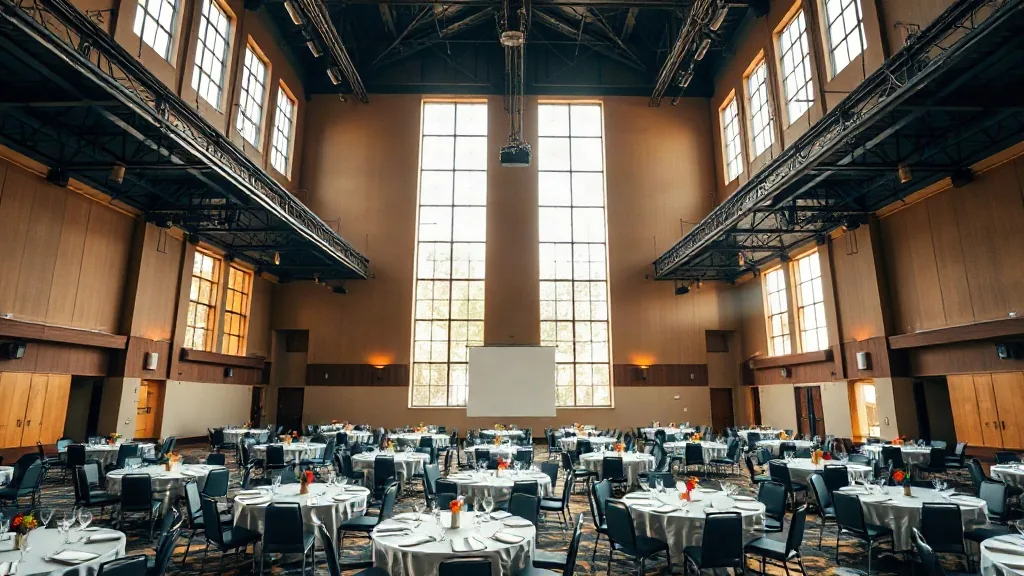
This is where a theater or performing-arts venue quietly outperforms a hotel ballroom. Theaters are built for a fixed audience facing a stage, with a real lighting grid, a proper sound system, house power, and often a control booth. Your camera positions are already good because the room was designed around sightlines. I have run announcements from 400-seat theaters where the broadcast crews packed up in twenty minutes because the room gave them everything.
Lighting the podium for camera, not for the eye
A room that looks fine to your eye reads as a shadow-faced spokesperson on camera. Faces need front light, evenly, at a color temperature the cameras can balance to. If the venue’s house lighting is warm downlights, your CEO announces the merger looking jaundiced on every outlet’s B-roll. I bring or rent a simple three-point kit for the lectern, roughly $400 to $800 for the day with a technician, and I light for the camera even when the room feels bright enough to my eye.
Check the backdrop too. A logo step-and-repeat or a clean branded panel behind the speaker means every photo and every frame carries your name. A random hotel pattern behind the speaker means you gave away free branding to nobody.
The record you keep for reuse
Every media day should record itself in full, isolated feeds, even the parts you do not livestream. The Q and A a reporter references three days later, the clean speaker-only file your comms team cuts into a social clip, the full archive your legal team may need. You do not need a broadcast budget to do this well, and I laid out the low-cost version in recording your conference for reuse. At minimum: an isolated recording of the program feed and a separate lavalier recording of the speaker, so a dropout on one does not lose the moment.
The venues I keep on the list
For pure broadcast reliability and sightlines, a theater or performing-arts space. For a working press conference with breakouts and a filing room for reporters, a conference center with real IT infrastructure and a facilities team that can commit bandwidth in writing. For an announcement where the setting is part of the story, a museum, but only after I have confirmed the upload path, because the same beautiful buildings that make the best backdrops often have the weakest outbound internet.
Give the reporters a place to work
Reporters do not just watch a press event, they file from it, and a venue with nowhere for them to sit and write turns your announcement into a scramble in the parking lot. I hold a filing room near the main space: tables, power strips at every seat, hardwired drops if I can get them, and quiet. Wire reporters need to post within minutes, and a filing room with real bandwidth means your story goes out clean instead of throttled through the same overloaded connection as 200 guests. It costs a small breakout and a power drop. It buys you reporters who leave on time and file accurate copy, which is the whole reason you invited them.
The 30-minute rehearsal that saves the day
The morning of, I run a full technical pass: primary line speed test, failover to cellular, camera positions checked, lectern lit and white-balanced, press feed confirmed by at least one crew, and a test upload of a real file at the real hour. Thirty minutes. It is the difference between a clean announcement and a general counsel watching a progress bar with twelve minutes on the clock.
Tell me whether you are livestreaming or only recording, how many outlets you expect to send crews, and whether the setting itself is part of the message. Those three answers tell me whether you need a theater, a conference center, or a museum with a bonded backup line.


