
More Microphones, Not Bigger Microphones — The Audio-Bigger Bias
Your AV vendor quoted you one premium podium mic and a $4,000 line array. What you actually needed was six $300 boundary mics distributed across the room and a competent mix engineer. Here's the 'bigger audio' trap and how to avoid it.

I spent eight years as an AV vendor before I switched to the consulting side. I’ve run front-of-house audio for conferences, gala dinners, product launches, sales kickoffs. I know what good audio sounds like and I know what it costs to produce it. I also know the pitch patterns that lead planners to spend $6,000 on audio systems when $2,800 would have produced better results.
The trap I call the audio-bigger bias works like this: a planner or a client hears that a venue had “audio problems” at the previous event. The fix they propose is to spend more on audio. More spending on audio means: bigger speakers, higher-tier microphones, a more sophisticated mixing console. The AV vendor, incentivized to upsell, confirms that yes, a premium system will solve the problem. The planner books the premium system. The event has audio problems because the premium system was the wrong solution to the actual problem.
The actual problem, in most cases, is not that the audio equipment was insufficient. It’s that there weren’t enough audio pickup points, or the pickup points were in the wrong locations, or the mix wasn’t managed for the room’s specific acoustic properties, or the venue’s HVAC system was running and nobody addressed it in the mix. These are coverage and management problems, not size problems. Bigger speakers don’t fix coverage problems. More microphones, better placed, do.
The conference audio problems that are almost always coverage problems
“The Q&A audio was terrible.” This is the single most common audio complaint at corporate conferences. The panel sounds great. The speakers’ microphones are professional and well-mixed. Then Q&A starts and the audience member in row 8, seat 12 stands up and asks a question — and the people in the back half of the room hear a muffled voice that the live recording doesn’t pick up at all.
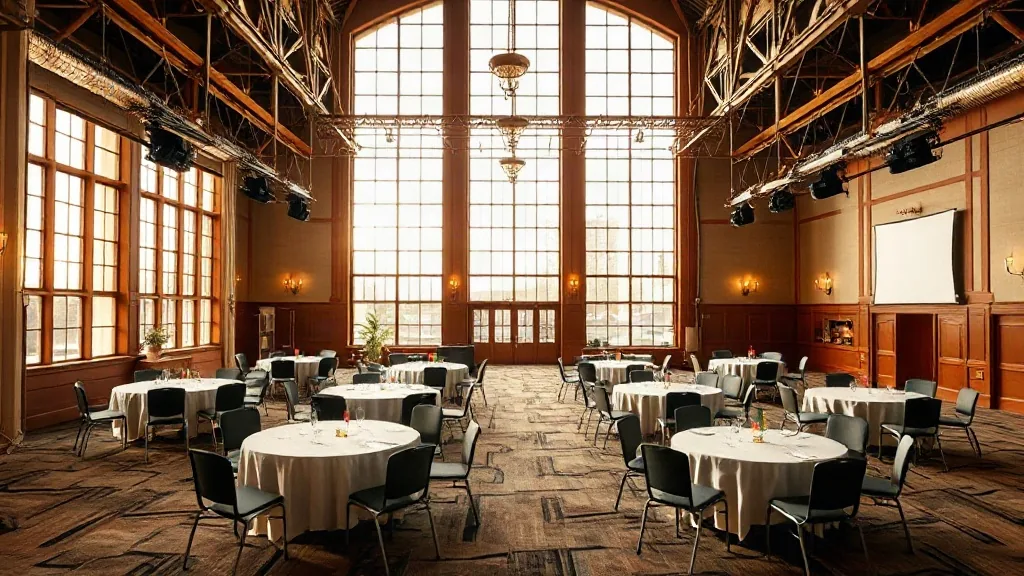
This is not a speaker-quality problem. This is a coverage problem: there is no microphone near the audience. The fix is not a better podium mic. The fix is wireless handheld microphones available to audience members, or — better for large rooms — boundary microphones distributed on the backs of chairs in the audience area, or lavalier mics on roving staff who can reach any questioner within 15 seconds.
The cost of a boundary mic distributed on chair backs: $150-$300 per unit, 6-8 units for a 200-person room, so $900-$2,400 plus cable runs and mix channels. Less than the premium podium microphone package that doesn’t address the Q&A problem.
“The room sounded echoey and hard to understand.” Almost always a combination of: hard surfaces (concrete, glass, bare walls) creating reflection, insufficient sound absorption, and speakers aimed in a way that produces too much direct sound without adequate room treatment. The fix is not a better speaker system. The fix is distributed speaker coverage (more speakers, lower volume each) instead of point-source coverage (one or two large speakers at high volume), and sometimes basic room treatment (draping, carpet, linens) that the venue can provide.
A distributed speaker system for a 200-person room is often cheaper than a line array. It produces better intelligibility because each speaker is closer to the listener and running at lower volume, which means less room interaction. The AV vendor selling you the line array is not lying — line arrays are excellent systems for concert-level SPL and long-throw coverage. They are frequently wrong for corporate conference rooms where intelligibility, not volume, is the goal.
“The recording doesn’t have the speaker audio.” The live mix sounds great because the front-of-house engineer is hearing the room and adjusting. The recording is taken from the main house mix output, which includes all the room echo and feedback mitigation that sounds correct live but sounds muddy in a recording. The fix is a clean mix output specifically for recording — a separate channel, before the house processing — which requires pre-planning with the AV team, not a bigger system.
What “more microphones, not bigger” looks like in practice
For a 200-person all-day conference with a general session, breakout rooms, and a lunch format:
Wrong spec (typical AV upsell):
- 1x premium podium microphone (Shure SM7B equivalent), $400 hardware
- 2x wireless lavalier mics (Shure SLX-D), $800 hardware
- 1x line array system, $3,000+ in rental costs
- 1x digital mixing console, $800 in rental
- 1x front-of-house engineer for the day, $450-$600
- Total: ~$6,000-$7,500
Better spec for the same room:
- 2x wireless lavalier mics (panel speakers), $600 hardware rental
- 6x boundary mics distributed in audience area for Q&A, $900-$1,200 hardware rental
- 4x distributed ceiling or podium speakers instead of line array, $1,200-$1,800 rental
- 1x digital mixing console with 16-channel minimum, $600 rental
- 1x front-of-house engineer who knows the room, $450-$600
- Total: ~$3,750-$4,800
The second spec costs roughly 30-40% less and produces better Q&A pickup, better speech intelligibility, and a recording that doesn’t require post-processing cleanup.
The mix engineer problem
Here is the variable that vendors undersell and planners underpay for: the quality of the person running the mix.

An average mix engineer with premium equipment will produce average audio. An excellent mix engineer with mid-tier equipment will produce excellent audio, because they understand the room, they anticipate feedback before it happens, they manage the dynamics of a conference program (quiet speaker, loud speaker, panelist with bad mic technique) in real time.
The premium line array won’t help you if the engineer sets it flat and walks away. The distributed speaker system mixed by a skilled engineer will sound better than the line array mixed by someone who’s dialing in your event between their phone checks.
When I’m spec’ing audio for a client now, I put the mix engineer budget first. I’d rather spend $750-$900 on an excellent engineer and $2,000 on mid-tier equipment than spend $400 on a competent engineer and $4,000 on premium equipment. The engineer is the multiplier on everything else.
The HVAC problem nobody addresses
One final thing. Conference room HVAC systems are loud. In a 200-person room with a ceiling-mounted HVAC system running at full capacity, the ambient noise floor is typically 45-55 dB(A). Normal speech is 60-65 dB at one meter. The signal-to-noise ratio is not comfortable, especially for people at the back of the room.
The fix is not more audio. It’s asking the venue’s engineering team to reduce the HVAC airflow during session times. Most conference hotel HVAC systems can be stepped down to a lower setting during active programming and ramped up during breaks. This costs nothing and reduces the ambient noise floor by 8-12 dB, which improves speech intelligibility more than any speaker upgrade would.
I put this in every event’s pre-production checklist and am ignored approximately half the time. The half of the time it’s done, attendees never complain about audio. Make the request in writing, with the specific room and the time windows for the reduction, at least a week before the event.
For tech company conferences in San Jose and the Bay Area, where the room-acoustic situation ranges from perfectly-treated purpose-built spaces to HVAC-dense tech campus conference rooms, the distributed speaker approach matters more than in purpose-built hotel ballrooms. California conference centers with adjustable HVAC are worth identifying in advance specifically for this reason.
If you haven’t read my AV walkthrough checklist, that’s the companion piece — it’s the 27 questions I ask before any conference audio setup. The hybrid event AV reality check covers the remote audio capture problem specifically, which compounds everything in this post.
Send me the room dimensions and the AV quote. I’ll tell you what’s over-specced and what’s actually missing.


