
Premium Open Bar Isn't Worth It — The 3-Tier Substitute That Outperforms
You're spending $18–$24 per person more for top-shelf liquor that 70% of your guests won't touch and 15% won't notice. Here's the three-tier bar structure that consistently outperforms premium and costs less.

Every year I have the same conversation with a client and every year I lose it. The conversation goes like this: they tell me they want a “premium open bar.” I tell them the premium bar will cost them $18 to $24 more per head than a well-executed mid-tier bar, that most of their guests will not taste the difference, and that there’s a smarter structure that delivers a better guest experience at lower cost. They say they want it to feel “first class.” I say the guests won’t feel it in their glass. We go to premium. Six hours later, half the Macallan 18 is still in the bottle and the event was, by all accounts, excellent.
This has happened, in some form, eleven times in the last four years. I’ve stopped being surprised and started being prepared. If you’re reading this before your venue contract is signed, you can still do this right.
What “premium open bar” actually buys you
Let me describe what you’re paying for when you upgrade to premium spirits at a corporate event:
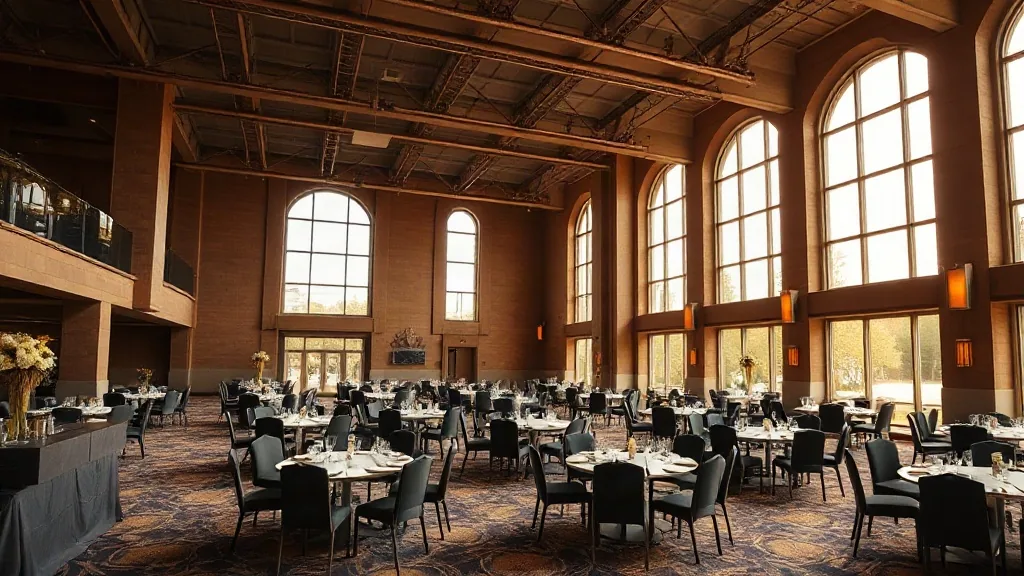
You are buying the option for guests to drink Ketel One instead of Titos, Hendrick’s instead of Bombay Sapphire, Woodford Reserve instead of Buffalo Trace, Macallan or Glenlivet instead of Dewar’s. The upgrades are real. The spirits are genuinely better. The price delta is also real: $18 to $24 per person per event is the typical venue surcharge for premium tier versus mid-tier. On a 250-person event, that’s $4,500 to $6,000.
Here is what that buys you in practice:
About 20-25% of your guests drink spirits and would notice or prefer the upgrade. Another 30-35% drink wine or beer exclusively and would not be affected by the spirits tier at all. Maybe 10-15% don’t drink alcohol. The remaining 30% order mixed drinks where the spirit is combined with juice, soda, or tonic — in which case the difference between Ketel One and Titos in a vodka-soda is imperceptible to most palates.
So you’ve spent $4,500 to $6,000 to meaningfully improve the experience for roughly 20-25% of your guests, and that improvement is a spirits upgrade that those guests will probably appreciate for the first drink and stop noticing by the second.
I’m not saying the premium spirits are bad. I’m saying the return on the spend, measured against what else you could do with $4,500 to $6,000 in your event budget, is almost always worse than the alternatives.
The three-tier structure that actually works
Over the last several years I’ve landed on a bar structure that I now propose to every client before they ask for premium. It consistently outperforms premium-open-bar in post-event guest surveys and costs materially less. Here’s how it works:
Tier 1 — The signature cocktail. Two house cocktails, created specifically for this event, using quality mid-tier spirits as the base. One lighter (spritz, citrus-forward, low-ABV option), one stronger (bourbon or gin-based, something with a story or a name tied to the event or company). These are made in batches or by the drink, poured at the bar and from trays during the first ninety minutes.
Why this works: Signature cocktails signal craft and intentionality. They photograph well. Guests remember them. A $14 signature cocktail with a good story reads as more premium than an anonymous pour of Ketel One, because it has identity. The batch production keeps labor costs manageable.
Tier 2 — A curated short wine list. Two whites, two reds, one sparkling, all in the $22-$35 wholesale range per bottle. Not premium — quality. Wine is where you spend real money, because wine drinkers are the largest non-spirits segment at most corporate events and they will notice quality in a way that vodka-soda drinkers won’t.
Budget rule: your per-bottle cost on wine should be at least 20% higher than whatever the venue is proposing for their “standard open bar” wine. This is where the premium shift actually pays off in perceptible quality.
Tier 3 — A curated spirits back-bar. Mid-tier spirits across the standard categories: one bourbon, one vodka, one gin, one tequila, one rum. These cover every cocktail order without the premium price. The spirits in the Tier 1 signature cocktails are the same bottles — you’re buying in volume.
What this structure does: it concentrates perceived quality where guests notice it (signature cocktails, wine) and doesn’t waste money where they don’t (the fourth drink of the evening when nobody’s palate is still calibrated).
The math comparison
Let me run the numbers on a 200-person event with a 5-hour bar:
Premium open bar at $65/head: $13,000 total. Spirits are top-shelf across the board. Wine is mid-quality (venues typically use the spirits upgrade budget, not the wine budget). No signature cocktails — just a branded bar menu card.
Three-tier structure at $52/head equivalent: $10,400 total. The $2,600 difference funds: two custom signature cocktails (design, batch production, recipe development with the venue’s bar team) at roughly $800; a wine upgrade on both white and red selections at roughly $1,200; and the remaining $600 goes back into budget or toward non-alcoholic options, which I’ll address in a moment.
At comparable or lower cost, you have a more memorable experience because guests are talking about the signature cocktail, the wine is actually better than the premium-open-bar wine, and the spirits are perfectly adequate for everything else.
I have done this side-by-side enough times that I no longer present it as an experiment. It’s the standard proposal.
The non-alcoholic gap everyone ignores
Here is a pattern I see at corporate events that genuinely bothers me: planners spend $15,000 on a premium bar program and $200 on non-alcoholic options. At most corporate events, 15-20% of guests don’t drink alcohol, and another 15-20% are moderating. That’s 30-40% of your room looking at a beverage station that has sparkling water, still water, and maybe some sad lime-infused lemonade that’s been sitting since setup.
This is a hospitality failure. It’s also increasingly visible as non-drinking becomes a more common and openly acknowledged choice in professional settings.
The fix is not expensive. A dedicated non-alcoholic cocktail menu — two or three house mocktails, same signature treatment as the alcoholic cocktails, same glassware, same bar presentation — costs $3 to $6 per head for the guests who actually want it. That’s $600 to $1,200 to meaningfully improve the experience for 30-40% of your room.
I’ve gotten clients to redirect $1,500 of the premium spirits budget into a proper non-alcoholic program. Post-event, the feedback on the mocktails is consistently in the top three event elements. People notice when you took care of them. This is one of the cheapest ways to do it.
When premium open bar is actually right
I’m not saying never. There are specific situations where premium open bar is the correct call:
When the spirits are the point. A bourbon company’s sales kickoff, a whiskey distributor’s client dinner, a spirits brand’s partner event — in these contexts, the spirit selection is a product statement, not just a beverage program. Go premium, go deep.
When the audience is finance or law. I have clients in private equity and large-firm law where the signals of a premium bar matter to the cultural expectations of the room in ways that are real, not imagined. When everyone at the table would order Clase Azul on their personal dime, serving Buffalo Trace sends a message you probably don’t want to send.
When the venue contract makes it nearly the same price. Sometimes a venue’s “upgrade to premium” is $8 per head, not $22. At $8 per head, the premium debate is mostly moot — you get it.
When the client explicitly wants it and understands the math. After I’ve given this speech, if the client says “I understand, I still want premium,” we do premium. It’s their event and their money. My job is to make sure they’re deciding with full information, not because they didn’t know there was an alternative.
The conversation to have with your venue
Most venues will not volunteer the three-tier structure. They have a menu: standard bar, premium bar, ultra-premium bar. The menu exists because it’s how they’ve been selling for twenty years and it requires no customization on their part.
You can almost always negotiate a custom bar program that doesn’t fit those tiers, especially if you’re a repeat client or booking a meaningful room minimum. The conversation to have:
“We’re interested in building a custom bar program around two signature cocktails and a focused wine upgrade, rather than a top-shelf spirits upgrade across the board. Can we work with your bar team to price that out?”
This requires getting a beverage manager on the phone, not just the sales coordinator. It takes one extra call. The outcome is a better event.
For Florida galas and corporate events, I’ve run this structure at hotels across Tampa, Orlando, and Miami with consistently positive results. If you’re building a program in a specific market, the venue directory for your city is a good starting point for who has the bar flexibility to do this well — not every venue does.
Also worth your time before the bar conversation: the preferred vendor list post explains why the venue’s “recommended beverage caterer” may not have your interests at heart, and the F&B minimum explainer puts the bar program in the context of the broader F&B commitment.
Send me the headcount and the F&B minimum. I’ll build the bar structure that actually makes sense.


