
Registration desk placement that prevents the entrance jam
The registration line is where 300 people meet a bottleneck in the first ten minutes. Where you put the desk, how you split the alphabet, and how far it sits from the door decide whether check-in flows or clogs.
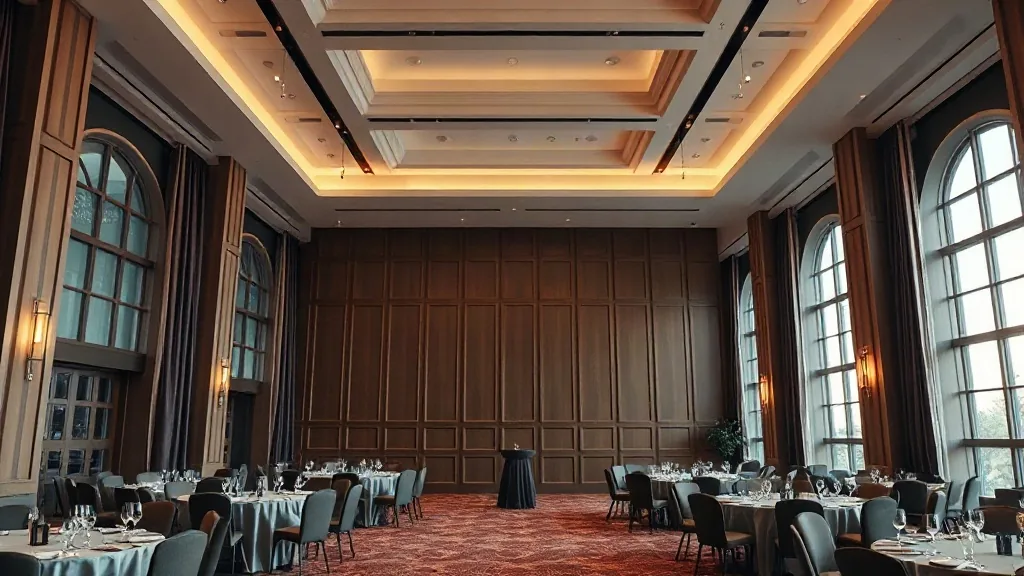
At a 350-person healthcare summit I ran, the venue set our registration desk 8 feet inside the front door because that is where the power drop was. By 8:10am the check-in line had backed out the door and onto the sidewalk, people were holding the door open in February, and the line for the coat check tangled with the line for badges. The desk was staffed and organized. It was in the wrong place, and placement beats staffing every time.
The registration desk is the first bottleneck of the day, and where you put it matters more than how many people work it.
Give the line somewhere to go
The single most common mistake is placing the desk too close to the entrance. A line forms in front of a registration desk, always, and that line needs room to stack without blocking the door people are still coming through. If the desk sits 8 feet inside the entrance, the line hits the door at 20 people deep and now arriving guests cannot get in.
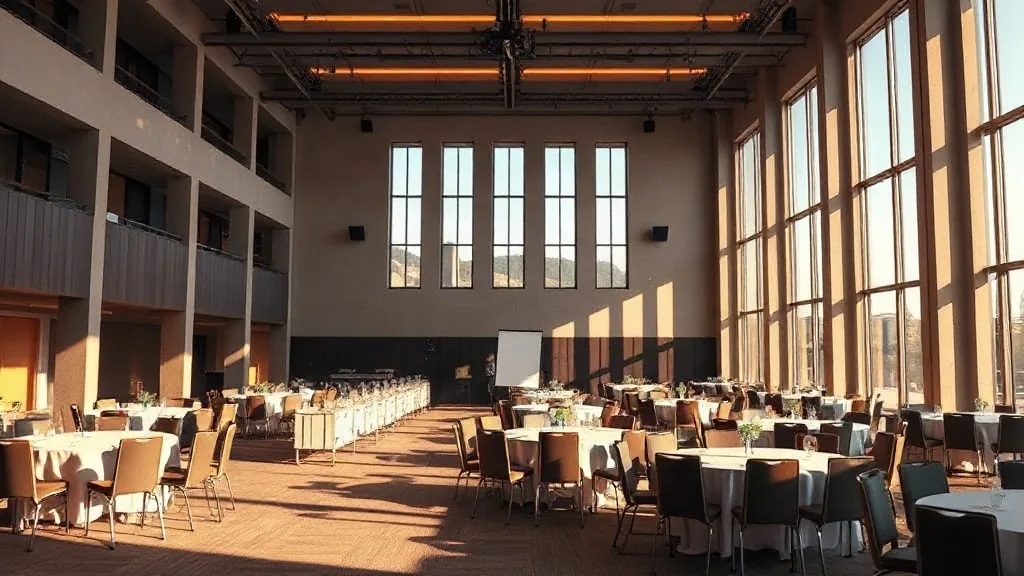
I place the desk at least 30 to 40 feet inside the entrance, angled so the line forms parallel to the flow of traffic rather than across it. That gives the queue room to grow into the lobby instead of out onto the curb. A convention center pre-function space is built for exactly this, with the depth to absorb a long line, which is one reason those venues handle big check-ins better than a tight hotel lobby.
The registration table setup itself matters, but no amount of good table design fixes a desk placed where the line has nowhere to go. Placement first, then the table.
Split the alphabet, split the load
One line for 300 people is a 25-minute wait. The fix is splitting the check-in by last name, and the split has to match the actual distribution of names, not the alphabet’s midpoint. If you break A to M and N to Z, the A-to-M line is always longer, because more surnames start in the first half of the alphabet. I break it A to G, H to O, and P to Z for a large event, which balances the three lines far better than an even alphabetical cut.
Each break needs its own clearly labeled sign at standing-eye height, because a sign flat on the table is invisible from 15 people back. I use signs on stands above the desk so someone at the end of the lobby can see which line is theirs and pick it before they arrive. Guessing wrong and switching lines is how the jam compounds.
Match staff to the arrival curve
Registration staffing is not about total headcount, it is about the peak arrival window. For a 9am general session, most of 300 people arrive between 8:15 and 8:50, so the desk has to clear roughly 8 to 10 people a minute at peak. A single check-in station handles about 3 to 4 people a minute if badges are pre-printed and alphabetized. That means I need at least three stations running at peak, sometimes four, to keep the wait under 5 minutes.
I fold this into the day-of staffing plan as a curve, not a flat number. Four staff from 7:45 to 9:00 covering the crush, dropping to one from 9:00 onward for stragglers. Staffing flat all morning wastes people early and after; staffing to the curve puts the bodies where the line actually is.
Pre-print and alphabetize before the day
The slowest possible check-in is a staffer searching an unsorted stack for one badge while 40 people wait. I pre-print every badge and sort them into labeled bins matching the line splits, so the A-to-G staffer only handles A-to-G badges in alphabetical order. That cuts the per-person time from maybe 40 seconds of searching to under 15 seconds of finding.
The badges and bins are part of the load-in schedule, delivered and sorted the evening before or first thing at load-in, never left to the morning. A box of unsorted badges arriving at 7:30am for an 8:15 rush is a guaranteed jam, because there is no time to sort under pressure. The sort has to happen before the doors open.
The accessible path cannot be an afterthought
The registration desk placement has to leave a clear, step-free path from the accessible entrance to the desk and on to the session room. When the line snakes across that path, someone using a wheelchair or a walker is stuck behind a queue with no way through. I rope the line so it never crosses the accessible route, and I keep one station at a lower counter height so a seated guest can check in without reaching over a standard desk.
This is a placement decision made on the walkthrough, not the morning of. I walk the path from the accessible parking to the desk to the room, and if the natural line position blocks it, I move the desk. The conference center rooms I book usually have the depth to route both the line and the accessible path without conflict, but I confirm it in person rather than trusting the floor plan.
Keep coat check and catering off the line
The last piece is separating the other lobby functions from the registration line. Coat check, a coffee station, and registration all want the same pre-function space, and if they stack on top of each other the whole lobby gridlocks. I put coat check on the opposite side of the space from registration and keep the morning coffee past the desk, so people check in first, then flow toward coffee, rather than forming a second competing line right at the door.
At a smaller event venue with a tight lobby, this sometimes means putting coat check in a side room or skipping it entirely in favor of coat racks inside the session room, because a small lobby cannot hold two lines at once without both failing.
Have a walk-up plan for the unregistered
No matter how clean the pre-print is, some people arrive who are not on the list. A last-minute add, a plus-one nobody flagged, a name misspelled at registration. If those people clog the main lines while a staffer hunts, the whole desk slows. So I run a separate walk-up station off to the side, staffed by someone with a laptop and a portable badge printer, whose only job is the exceptions. That station handles maybe 5 percent of arrivals but it protects the other 95 percent from waiting behind a problem that takes three minutes to sort.
The printer matters. A staffer hand-writing a badge for a walk-up takes 90 seconds and looks unprofessional at a client-facing summit. A portable printer at the walk-up station turns out a clean badge in under 20 seconds, and it costs about $200 to rent for the day. On a 350-person healthcare event where the badge is the first thing a physician sees, that small piece of gear is worth every dollar, because the exception line is where the frustrated people end up and the last thing I want is my most irritated guests holding a scribbled name tag.
So before you set the desk, tell me this. What is your peak arrival window, how many people are checking in, and how deep is the space between your entrance and where the desk would sit? Give me those and I will tell you how far from the door to place it, how many lines to run, and how many staff the crush actually needs.


