
Rigging points and load-in doors: the venue questions AV asks first
Before your AV vendor quotes a stage, they need to know what the ceiling holds and what fits through the door. Ask these venue questions during the site visit and you avoid the 6am load-in that discovers the truck cannot get in.
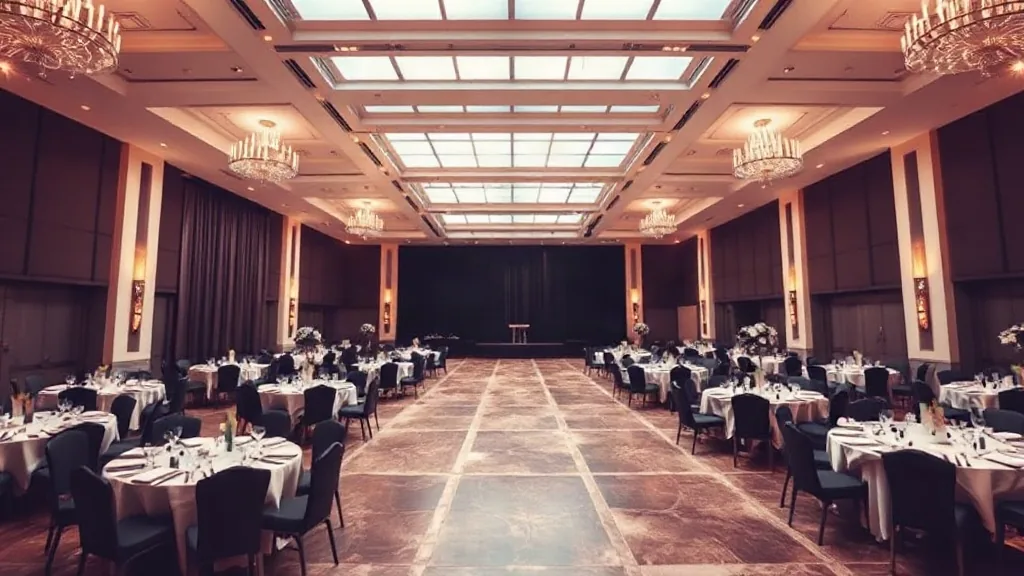
The most expensive four words I have heard at a load-in were “it won’t fit through.” A vendor had trucked an 8-foot-wide LED wall frame to a downtown association venue, and the freight door measured 7 feet 2 inches. We spent the morning disassembling and rebuilding the frame in the loading dock while 400 registrants filed past the coffee. That failure was avoidable. It came from a site visit where nobody asked the venue the two questions AV always asks first: what does the ceiling hold, and what fits through the door.
I plan convenings for policy and association clients, and I have learned to run the technical part of a site visit like the AV lead would, because I am usually the one in the room before the vendor ever sees it. Here is what to ask, and why each answer changes the quote.
Rigging points: what the ceiling will actually hold
Anything your show hangs overhead, truss, lighting, speakers, an LED wall, a banner, depends on rigging points, which are certified attachment locations in the ceiling structure rated for a specific load. This is not a place to guess. A point rated for 500 pounds that gets asked to hold 900 is a life-safety failure, not a budget problem.
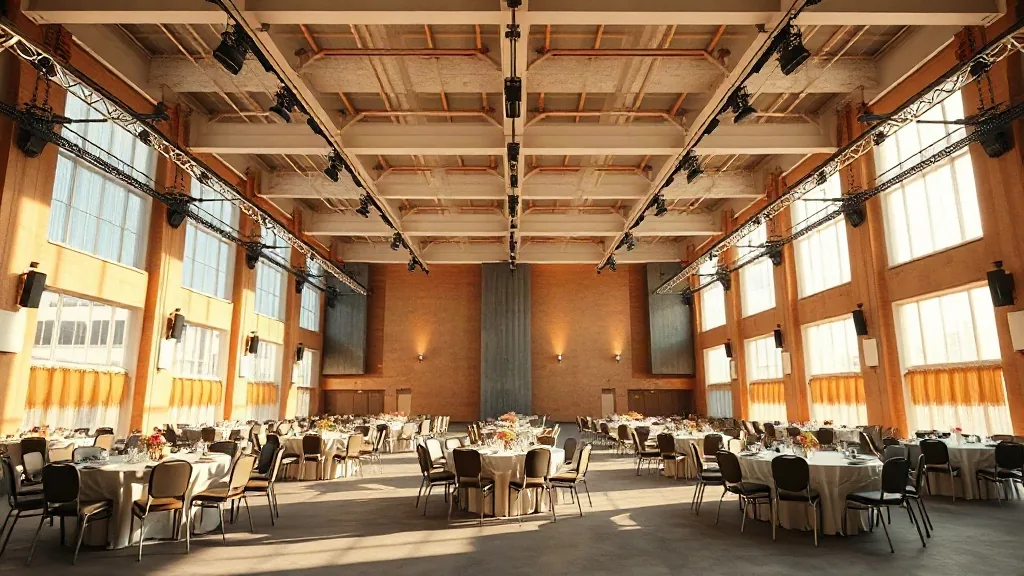
Ask the venue four things. How many rigging points does the room have, and where are they on the grid. What is the rated capacity per point, in pounds. Does the venue require its own house rigger or a union rigger to make the connections, and at what labor rate. And is there a per-point rigging fee, which at convention-scale rooms often runs $75 to $200 per point before labor.
The answers reshape the AV design. A room with a dense, high-capacity grid lets your vendor fly a full lighting and audio rig cleanly. A room with four points rated at 300 pounds each means everything ground-supports off towers and lifts, which changes the look, eats floor space, and shifts the cost from rigging fees to labor and equipment rental. Your vendor cannot quote honestly without these numbers, so get them at the site visit, in writing, not from a salesperson’s memory.
Ground support when rigging is off the table
Plenty of rooms have no usable rigging at all. Older ballrooms, historic spaces, and many warehouse venues with roof structures that were never rated for hanging load. That does not kill the event. It moves everything to ground support: line-array speakers on stands, lighting on totems and crank-up towers, video on a free-standing frame. Ground support costs more in gear and labor and it consumes sightline real estate, so ask early whether the room rigs or not. A venue that cannot tell you is a venue that has never hosted a real production, which is itself an answer.
Load-in: the path from the truck to the room
The freight door failure I opened with is the single most common load-in disaster, and it is pure measurement. Ask for the clear width and height of every door on the path from the loading dock to the event room. Not the nominal size. The clear opening, which is smaller once you account for the frame and any door that does not fully swing away.
Then ask about the whole path. Is there a loading dock, and does it sit at truck-bed height or at grade, because a dock that is not truck height means everything comes off the truck by liftgate and hand, adding an hour or two of labor. How wide are the corridors and do they turn, since a 20-foot section of truss cannot round a tight hallway corner. Is there a freight elevator if the room is not on the ground floor, and what are its interior dimensions and weight limit. I have seen a 6-foot road case defeated by a freight elevator that was 5 feet 10 inches deep.
The load-in questions that protect the schedule
Access is not only about size, it is about time. Ask what hours the loading dock is available, because a downtown venue that shares a dock with a restaurant may give you a two-hour morning window and nothing else. Ask whether there is a dock master or a union labor requirement for unloading. Ask how many trucks can be at the dock simultaneously, because if three vendors all show up to a single-bay dock at 7am, you get the traffic jam I have watched unfold more than once. And ask about the strike, the reverse of load-in, because the venue that gives you all night to load in may want the room cleared by midnight, and overnight strike labor is a different rate.
Power, the quiet third question
While you are asking about doors and ceilings, ask where the power drops are and what they deliver. Event AV pulls real current, and a large stage may need three-phase power or multiple 20-amp circuits on separate breakers. A room with two wall outlets and no distro panel forces your vendor to bring a generator or run long cable pulls, both of which cost money and appear on the quote as a surprise if nobody asked. Note the drop locations relative to the stage so the vendor is not running 200 feet of cable across a doorway.
Turn the answers into a brief
Every answer above goes into the vendor brief before they quote. A vendor pricing a room blind will either pad the quote to cover the unknowns or lowball it and hit you with change orders at load-in when reality shows up. Give them the rigging capacity, the door dimensions, the dock hours, and the power situation, and you get a quote you can trust. Build that brief with how to brief an AV vendor, and run the full room against the AV walkthrough checklist of twenty-seven things so nothing gets skipped on the site visit.
The venues where this matters most are the big ones. Convention centers have real rigging grids and real freight infrastructure, which is exactly why the fees and labor rules are complex enough to require these questions. Purpose-built conference centers usually document their rigging and load-in specs cleanly, so ask for the spec sheet and half your questions answer themselves. And when you scope the technical envelope end to end, how to scope AV for a conference ties the rigging, power, and access answers into a single plan.
Tell me your room, your rough stage size, and whether you are hanging anything overhead. I will give you the exact list to walk the venue with. What are you planning to fly, and what floor is the room on?


