
Stop Chasing E-E-A-T on Corporate-Event Content (Here's What Actually Wins)
The event planning content that ranks is not the content that followed Google's E-E-A-T guidelines most carefully. It's the content that answered a specific question nobody else answered. Here's why the framework is backwards for this niche.

I’ve been watching event planning content rank and not-rank for five years. In that time, I’ve seen well-credentialed, expertly produced content get buried below listicles written by people who’ve never run an event, and I’ve seen single-experience stories from planners who rarely publish crush national venue directories on competitive terms.
If you’re producing event planning content and you’re optimizing primarily for E-E-A-T — Experience, Expertise, Authoritativeness, Trustworthiness — you are optimizing for a framework that is largely retrospective. It describes the signals that correlated with search ranking before large-scale content production became easy. It does not describe the forward-looking signal that will win in a market that is flooded with E-E-A-T-compliant content from well-credentialed sources.
Let me explain what I mean and what actually works.
What E-E-A-T gets right (and where it stops being useful)
E-E-A-T is not a bad framework. It was a useful heuristic for distinguishing between medical misinformation and legitimate health content, between financial advice from anonymous forums and from licensed advisors. In those contexts — high-stakes, harm-relevant, credential-sensitive — the framework does important work.
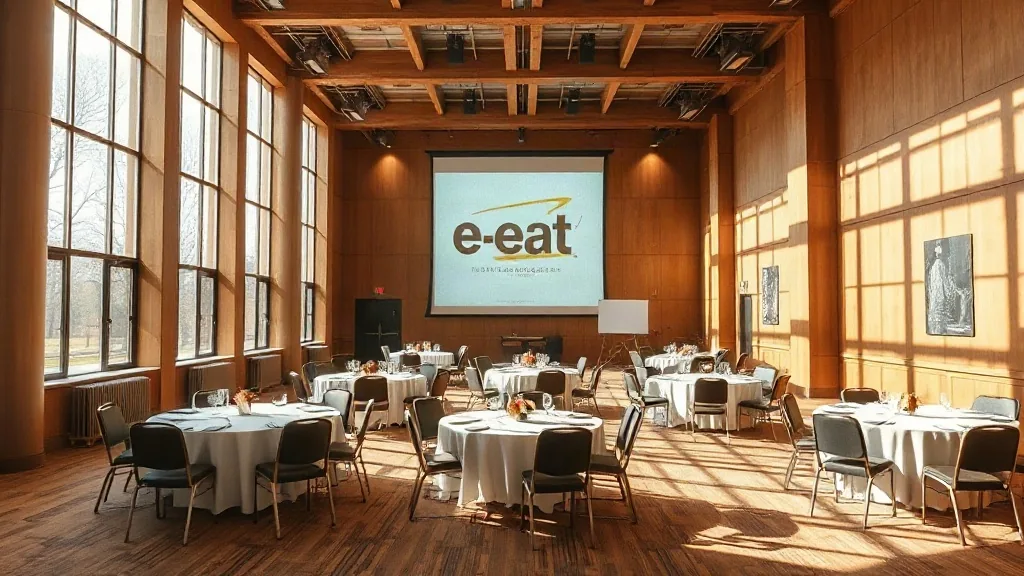
Event planning is not a high-stakes regulatory category. There is no license required. The “harm” from bad event planning advice is a suboptimal conference, not a health or financial crisis. Which means the E-E-A-T signals that matter most in regulated verticals — credentials, institutional affiliation, authorship verification — matter far less here.
What this means practically: a licensed CMP (Certified Meeting Professional) writing a generic “10 tips for corporate event planning” article does not rank above an anonymous Reddit thread that answers “what do I do when the catering truck doesn’t show up” — because the Reddit thread has something the credentialed article doesn’t have: a specific, searchable answer to a specific question that people actually type into Google.
The E-E-A-T framework would score the CMP article higher on every dimension. Search ranking disagrees.
The signal that actually predicts ranking in event planning content
The ranking predictor that I’ve found most reliable, across the content I’ve produced and the content I’ve studied, is query specificity match: how precisely does this content answer the specific question a searcher is typing?
This sounds obvious. It is not obvious in practice, because the gap between “the question the searcher is typing” and “the question the content author thinks the searcher is typing” is often significant.
Here’s an example. A planner writes an article titled “How to Choose a Conference Venue.” This is an E-E-A-T-compliant article with good advice, authored by someone with 15 years of experience and a CMP credential. It covers: location, capacity, AV capabilities, catering, parking, accessibility, budget.
A different planner publishes a post titled: “Conference Venue Wi-Fi: How to Test It Before You Sign (And the 3 Questions the Sales Rep Won’t Answer).” This is a first-person account from a planner who got burned by bad venue Wi-Fi at a hybrid event, decided never to be burned again, and documented the specific methodology they now use.
The second article ranks above the first on queries like “conference venue wifi speed test” and “how to check conference venue wifi capacity” because it is the most specific available answer to those specific questions. Not because it has better E-E-A-T signals. Because it answers a narrower question more completely.
The “How to Choose a Conference Venue” article has an enormous amount of competition from every major event planning publication, venue directory, and hospitality trade magazine. The Wi-Fi testing article has almost no competition because almost no one has written it from experience.
The mistake most event planners make with content
The mistake is writing to the broad topic rather than the specific experience.
“How to plan a corporate gala” is a broad topic. It has hundreds of competing articles from large publications with large domain authority. The planner who writes the 1,200th article on this topic, even if it’s excellent and E-E-A-T-compliant, is fighting against extreme competition for a relatively generic query.
“Why I stopped including the traditional gala opener after 8 years of including it” is a specific experience. It has two or three competing articles, maybe fewer. The planner who writes this from real experience has an almost certain path to ranking for the specific queries that article answers.
The broad topic feels more important. The specific experience feels less impressive. In search ranking terms, the specific experience wins more often.
This is not just a search strategy observation — it’s a content quality observation. The specific experience is genuinely more useful to a planner trying to make a specific decision than the broad overview is. The ranking reflects real utility.
What actually wins in the event planning niche
Across the content I’ve seen perform well, the patterns are:

Specific dollar amounts. “We spent $4,200 on sustainable event signage and here’s what it did” ranks above “how to make your event more sustainable” because the dollar amount is specific and makes the article findable on long-tail queries. People search for “$4000 event signage” or “sustainable event costs.” They search for these things because they’re trying to make real budget decisions.
Named failure stories. A first-person account of a specific thing that went wrong — the Wi-Fi failing, the venue double-booking, the catering truck not arriving — ranks well because almost no one publishes these stories and the stories answer questions that planners genuinely search after they’ve experienced a similar problem. “What to do when venue double books” is a real query. The answer that ranks is usually the one that comes from someone who lived it.
Decision trees for specific alternatives. “Distillery vs winery vs brewery for a corporate dinner” outranks “how to choose a venue with character” because it answers a specific comparative question that planners search when they’re actually trying to make a decision. The specificity of the comparison is the SEO advantage.
City-specific operational specifics. “Conference hotel Wi-Fi speeds in Chicago’s River North” outranks “how to get good Wi-Fi at your conference” because it’s both more specific and more geographically indexable. When a planner is planning a Chicago event and worrying about Wi-Fi, they are searching with Chicago in the query.
Contrarian takes on established norms. Content that argues against a conventional practice — “stop using Excel for guest counts,” “your cocktail hour is too long” — outranks content that explains how to execute the conventional practice, because the contrarian framing captures the searcher who is already skeptical of the convention and looking for confirmation that their instinct is right. These searchers are more motivated and less served by existing content.
E-E-A-T as a secondary signal
Here’s where I land: E-E-A-T matters, but it matters as a secondary signal that becomes relevant after you’ve established query specificity match. If two articles answer the same specific question with similar specificity, the E-E-A-T signals help Google decide which one to prefer. If one article answers the specific question and the other doesn’t — regardless of how many credentials the second article’s author has — the first article wins.
The practical implication: invest in being the most specific available answer to the specific questions your real experience can answer. Add authorship, bio, credentials, and publication dates as housekeeping. Don’t optimize for E-E-A-T as your primary editorial strategy — optimize for specificity and let E-E-A-T be the finishing detail.
For planners building content around specific venue markets, the national conference center directory and the city-level directories provide the venue-specific context that makes specificity-optimized content possible. If you’re writing about conference centers in Atlanta or meeting spaces in DC, the directory is the reference layer; your specific experience is the content layer.
The meta-lesson from this applies to planning generally: the generic approach competes against everyone. The specific experience competes against almost no one.
Worth reading if this interests you: the AV over-spec post is an example of specific-experience content that outranks general “how to hire AV” content, and the contract red flags post is the same pattern — specific enough to answer a question people search when they’re in a specific situation.
Send me your content brief. I’ll tell you if it’s too broad.


