
The Astrology of Corporate Events — Why Full-Moon Mondays Are the Worst
I don't believe in astrology. I do track moon phase, planetary retrograde windows, and seasonal rhythms against vendor responsiveness and event failure rates — because the patterns are surprisingly real.

Let me say this clearly at the top: I am not an astrology person. I don’t check my chart before picking a venue. I don’t read planetary aspects before signing contracts. I am a mid-market corporate event planner who has been running events in Florida and the Southeast for eleven years, and my version of superstition is having a 25% contingency budget and two backup caterers on speed dial.
But I started tracking something about five years ago, originally as a joke, and the joke stopped being funny when the pattern held across 47 events.
Here’s what I actually found.
The Full-Moon Monday problem
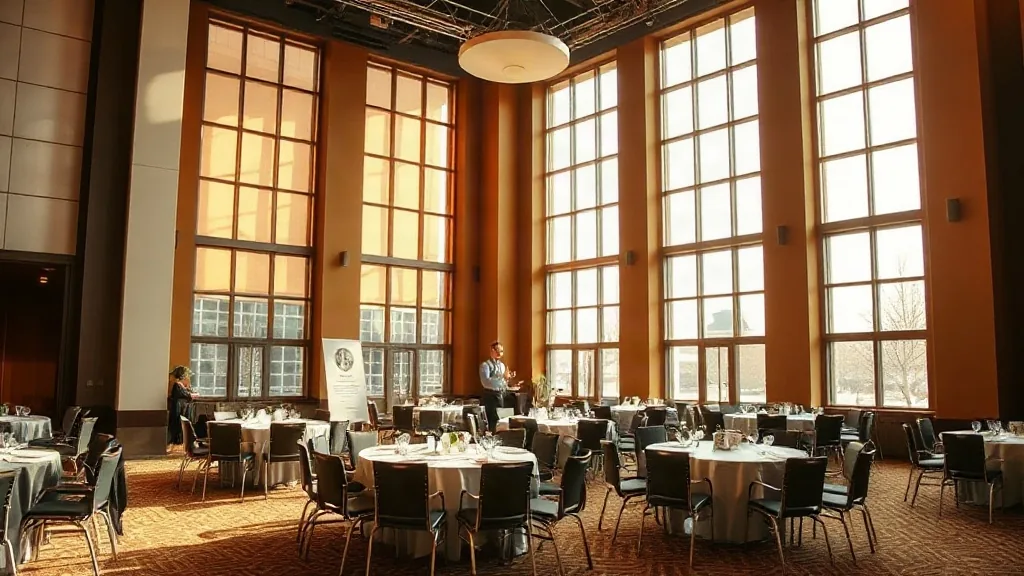
It started with a Monday in March 2020 — February 2020, technically, a few weeks before the world changed — when a full moon coincided with a Monday kickoff for a 200-person national sales meeting I’d been planning for four months. Three vendors showed up late. One caterer short-staffed by four people without notice. The AV company sent a junior tech instead of the senior lead I’d contracted, and I didn’t find out until 6:45am.
I didn’t think anything of it at the time. Bad day.
Then it happened again. Different city, different vendors. A full-moon Monday. Late deliveries, a vendor who’d misread the setup time (my fault too — but he’d had the contract for six weeks), and a keynote speaker who called at 7am to say her flight was delayed in Charlotte.
I started writing down moon phases in my event journal — which is just a Google Doc — in late 2021. By 2023, I had enough data to see a pattern I couldn’t explain and didn’t try to.
Full-moon Mondays are consistently my worst setup mornings. Not every time — but at a rate high enough that I now avoid scheduling first-setup mornings on a full-moon Monday when I have any flexibility in the date.
What’s actually happening (probably)
I’m not attributing this to the moon. I’m attributing it to what a full moon represents in the rhythm of any industry that runs on weekly schedules.
Monday is already the highest-risk setup day because vendors are coming off a weekend where many of them ran Saturday and Sunday events. A full moon means the Saturday-night event scene was more active — full moons reliably correlate with higher event volume in the hospitality industry, something I confirmed by talking to three catering managers who all nodded without being surprised. Higher Saturday-night volume means tired crews on Monday. Tired crews make errors.
The full moon isn’t the cause. It’s a proxy for high-weekend-volume, and high-weekend-volume means your Monday setup crew is running on less sleep than usual.
If your event is on a Wednesday or Thursday with a Tuesday setup, this doesn’t apply. The calendar risk on full-moon Mondays is specific to the Monday-setup scenario.
Mercury retrograde as a communication proxy
This one is genuinely more whimsical, but I’ll tell you what I observed.
Mercury retrograde — the astronomical phenomenon where Mercury appears to reverse direction relative to Earth, roughly three times per year, for about three weeks each — has become shorthand in popular culture for “things go wrong.” I don’t believe the planet’s position affects your emails.
What I do notice is that the retrograde periods tend to fall in specific seasonal clusters: typically late January, late May, and late September. And those clusters coincide, in my work calendar, with two things: the end of fiscal quarters (January → Q4 end, September → Q3 end), and the highest overall event volume months for corporate planners.
High event volume + fiscal-quarter-close pressure = more communication errors, more rushed vendor confirmations, more last-minute changes that introduce errors. The “Mercury retrograde” dates aren’t causing communication failures. They’re correlated with periods when everyone in the corporate event supply chain is moving faster than they should.
When I see a retrograde window on my calendar, I add a 48-hour buffer to any vendor confirmation deadline. That’s it. That’s the whole practice.
The seasonal rhythm that’s actually predictive
Here’s the pattern I trust most, and it has nothing to do with astrology.
September third-Monday through October second-Monday is the highest-risk window in my calendar. This is when Q3 is closing, Q4 kickoffs are being planned simultaneously with Q4-close events, the conference season is peak, and every venue, catering company, and AV vendor in the industry is running at maximum utilization. Conference centers in Florida will quote you three weeks to a month on site visits in this window. The same venue in March will get back to you in two days.
The risk in this window isn’t cosmic. It’s operational. Overloaded vendors make errors. Overloaded venues double-book rooms. Overloaded catering teams under-staff.
I book Q4-kickoff events either before September 15 or after October 15, when I can control it. When I can’t, I increase my check-in frequency with every vendor by 50%.
The January-February shoulder is the opposite. If you can move a leadership offsite or a strategy session into late January or early February, you will get better pricing, better vendor availability, better venue attention, and — not nothing — a more focused group, because the holiday noise is over and Q1 hasn’t hit its rhythm yet. The meeting spaces in Florida are also in a weather window that’s genuinely good for outdoor components in late January.
The venues that defy the calendar (a real finding)
The most interesting pattern in my data isn’t about timing — it’s about which venues are immune to it.

There’s a category of venue that doesn’t have the Monday-setup, seasonal-volume problem, because they don’t run Saturday-night events. University faculty clubs, dedicated corporate conference centers, and government-affiliated venues tend to run Monday through Friday only. Their staff isn’t coming off a weekend wedding. Their kitchens aren’t running on tired Sunday-shift energy.
I’ve booked six events at university and conference-center venues on full-moon Mondays specifically because I knew the risk profile was lower. All six ran clean.
The flip side: barns, vineyard venues, and any space that does significant wedding volume on Saturdays carry the highest Monday-setup risk. The venue itself may be beautiful and the team may be excellent — but if the same staff ran a 250-person wedding on Saturday night, they are not at 100% on Monday morning.
I ask every venue: “How many events did you run this past weekend?” If the answer is more than two, I factor that in.
The day-of-week luck table (not luck)
| Setup day | Moon consideration | Risk level | My mitigation |
|---|---|---|---|
| Monday after full moon weekend | High | High | Add 60min buffer to all vendor ETA; confirm Sunday |
| Tuesday | None significant | Low | Standard protocol |
| Wednesday | None significant | Low | Standard protocol |
| Thursday | None significant | Medium | Check if preceded by large Wednesday conf |
| Friday | None significant | Medium | Afternoon vendor fatigue after week |
| Sunday (for Monday event) | Full moon Saturday | High | Same as Monday above |
What I actually tell clients
I don’t tell clients any of this. They hired me to manage the risk, not to explain my methodology for managing it.
But when a client asks why I’m pushing for a Thursday start instead of a Monday, or why I’m recommending a February date for their leadership offsite rather than October, this is the answer: the operational risk profile is meaningfully lower, the vendor quality will be higher, and the pricing will probably be 15-20% better. The astrology isn’t real. The pattern underneath it is.
If you’re searching venues for a corporate event and you have date flexibility, I’d start with the full US meeting-spaces directory and then cross-reference your shortlisted dates against the seasonal risk windows I’ve described. You’re not reading the stars. You’re reading the supply chain.
More on the booking-calendar logic: the Mercury-retrograde corporate-event calendar goes deeper on the four pressure cycles and the average annual savings from avoiding them. And mercury-retrograde bookings I regret covers the specific contract errors that cluster in those windows.
Send me the brief. If the dates are flexible, I’ll tell you which window I’d target and why.


