
The Contract Clause I Forgot About That Saved a $42,000 Cancellation
I buried a force majeure rider in a venue contract fourteen months before the event. When a hurricane forced a cancellation, that one paragraph recovered $42,000. Here's exactly what it said.

I have a confession: I did not remember the clause until my attorney pointed it out.
That is the honest version of this story. The version where I get to be the hero is: I drafted a comprehensive force majeure rider, tucked it into the venue contract fourteen months before the event, and when a Category 2 hurricane shut down the city of Tampa three days before our scheduled conference, I calmly invoked the clause and recovered forty-two thousand dollars in non-refundable deposits.
The true version is: my attorney found the clause at 11pm while I was in a panic about a conference I thought we were going to lose entirely.
Both versions end in the same place. But I tell the true one because the lesson is more useful.
The setup
The event was a three-day financial services industry conference — 240 attendees, Tampa Convention Center-adjacent hotel, October. The client was a mid-size wealth management firm running their annual advisor summit. Total event budget was $280,000. The venue deposit structure was aggressive: forty percent down at signing ($44,800 to the hotel alone), with the remainder due thirty days before the event.
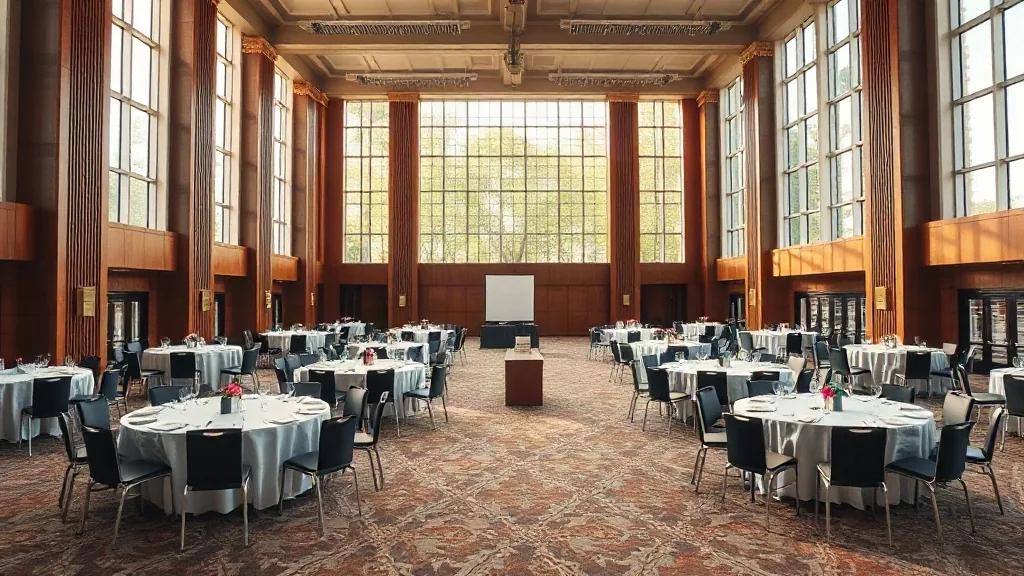
I signed the contract in August of the previous year. I was thorough — I always am — but August in Florida is a month when you are distantly aware of hurricane season without treating it as imminent. I added a force majeure rider because I add force majeure riders to everything. I did not think about it again.
Fourteen months later, in late October, a hurricane entered the Gulf at Category 1 and intensified rapidly over warm shallow water the way they do in October. By the time it made landfall it was a Category 2. Tampa did not take a direct hit — the eye tracked slightly north — but the city issued evacuation orders for Zone A on the Sunday before our Thursday event, and Hillsborough County shut down non-essential operations through Wednesday.
Our event was Thursday through Saturday. We could not, in good conscience or good legal standing, run a conference in a city that was still in evacuation recovery mode with guests flying in from twenty-two states.
The call I made at 9am
I called my attorney first, not the venue. That sequence matters. If you call the venue first, you are negotiating without knowing your position. If you call your attorney first, you know what you’re entitled to before anyone else does.
She pulled up the contract. She read quietly for two minutes. Then she said, “Daisy. You have a rider.”
I did not immediately know what she was referring to.
She read it to me. The rider I had added fourteen months earlier, in a moment of contractual thoroughness that I had entirely forgotten, stated: in the event that a declared state of emergency, government-mandated evacuation order, or named tropical storm or hurricane makes the event location inaccessible or unsafe for attendees within seventy-two hours of the event date, the client shall be entitled to a full refund of all deposits paid, or the option to rebook at a mutually agreed future date with no additional penalty, at the client’s election.
Hillsborough County had issued a mandatory evacuation order for Zone A on Sunday. Our hotel was in Zone A. The county’s order was still formally in effect on Thursday morning, even though Zone A residents had been allowed to return by Wednesday evening.
My attorney said: “You have a very strong case for full refund. Possibly complete.”
I said: “How much?”
She said: “$42,000 between the hotel and the AV company. The catering deposit was structured as a credit, not a refund, so that one’s a conversation, not a claim.”
The negotiation that wasn’t
I called the hotel’s director of sales at 10am. I led with sympathy — they had just been through a hurricane, their staff had evacuated, they were dealing with their own property damage and operational recovery. That was real and I acknowledged it.
Then I told them I was invoking the force majeure rider in our contract and requesting a full refund of our $28,400 hotel deposit.
There was a pause. She said she’d need to review the contract with their legal team. I said: “Of course. I’ll email you the specific clause and the county’s evacuation order documentation now.”
I had the documentation attached before the call ended.
They came back to me in four hours, not four days, which told me they had reviewed the clause and knew it was valid. Their counter was: we’ll refund fifty percent now and issue the remaining fifty percent as a credit toward a future booking. I said: “The clause doesn’t provide for a split or a credit. It provides for a full refund.” They said they understood that, but the hurricane had affected their revenue significantly, and they were asking for flexibility.
I took a beat. The relationship with this hotel mattered to me — I had booked there three times and planned to again. I also had a client who had paid forty-two thousand dollars and was entitled to it back.
I offered this: full refund of the deposit, and I would commit, in writing, to giving them right of first refusal for the rescheduled event if we chose Tampa. They took it. We had a written agreement by end of day.
The AV company, to their enormous credit, refunded their $13,600 deposit without being asked. Their owner called me directly and said: “You’re a good client. We’ll see you at the rescheduled event.” I have given them every AV contract I’ve had in Tampa since.
What the clause actually said — and why it worked
The force majeure rider that saved us had four specific features that made it enforceable rather than decorative:

First, it named specific triggering conditions — not just vague “acts of God” language, which courts have been inconsistently applying for years, but specific: declared state of emergency, government-mandated evacuation, named tropical storm or hurricane. The Hillsborough County order was a government-mandated evacuation. The trigger was clear.
Second, it specified the geographic scope — “makes the event location inaccessible or unsafe for attendees.” The Zone A evacuation order covered the hotel’s exact address. This was not a stretch.
Third, it provided the client’s election — either full refund or rebooking with no penalty. That “at the client’s election” language was critical. Without it, the venue could have pushed for rebooking credit as the default resolution.
Fourth, it applied to all deposits paid, not just the venue’s. That’s why the AV deposit was also in scope.
I did not draft this rider from scratch. I adapted it from a template my attorney had developed after a client of hers lost $60,000 in a prior hurricane season. The template cost $400 in attorney time. It recovered $42,000.
What I take from this
One: Force majeure riders need specificity, not just presence. A rider that says “neither party shall be liable for events beyond their reasonable control” is nearly useless in practice. Courts have gutted that language repeatedly. Name the triggers. Name the geography. Name the election. Make it concrete.
Two: If you’re in Florida, hurricane season is a contract term. Signed events scheduled in August, September, October, or November? The force majeure rider is not optional. This is not fear-mongering. This is what Florida is. I now include a supplemental tropical weather addendum in every Florida contract from June through November.
Three: Call your attorney before you call the venue. I know it costs money. I know it feels like you can handle the call yourself. But knowing your position before the negotiation begins is worth every billable hour.
Four: The relationship matters more than the last dollar. I could have pushed harder on the hotel’s counter and probably gotten a faster full refund. I chose to offer the right-of-first-refusal because I wanted to keep the relationship. That hotel gave me preferred rates on two subsequent events. The math worked out.
Five: Read your contracts. I know. I know you know. But I had drafted this clause, signed this contract, and fourteen months later could not recall it without my attorney’s help. Build a contract index. Even a simple one. Even if it’s a sticky note that says “FM rider — hurricanes — full refund, client’s election.” Something that survives fourteen months of other events between signing and execution.
If you’re planning a financial services conference or advisor summit in Florida, the conference centers in Tampa, Florida are excellent — and I can help you negotiate a contract that protects you before you ever get to the force majeure conversation.
I wrote more about how the hotel double-booking disaster played out differently — a situation where the contract language wasn’t as clean and I had to improvise.
Send me the contract. I’ll tell you what I see.


