
The Ice Sculptor Who Fell Asleep at the Venue at 5am
He'd been carving since 11pm. When I arrived at 6:30am for final setup, he was asleep on the service corridor floor next to a half-finished 200-lb company logo. Two hours to doors.

I want to be clear that there was no malice here, and there was no negligence in the normal sense of the word. The man had been working for seven and a half hours in a walk-in refrigerator adjacent to the service corridor of an Atlanta hotel, carving a company logo out of a 200-pound block of ice, and at some point between 4am and 6:30am his body made a unilateral decision that the service corridor floor was a reasonable place to sleep.
I found him at 6:31am when I arrived for the pre-event setup sweep.
He was on his back, tools beside him, with his jacket pulled over his face. He was breathing. This was the most important piece of information.
The ice sculpture — a 200-pound block that was supposed to become the client’s logo, a stylized “A” with an architectural quality that had looked excellent in the artist’s portfolio — was approximately sixty percent complete. The “A” shape was there. The architectural detailing on the crossbar and the serif elements at the base were not.
I had two hours and twenty-nine minutes before doors.
The assessment
I did what any rational person does when they find a sleeping vendor at 6:31am: I gave them thirty seconds. Not out of sentimentality, but because waking someone abruptly from deep sleep produces approximately sixty seconds of disorientation that isn’t useful to anyone, and thirty seconds of quiet assessment gives you information about your options.
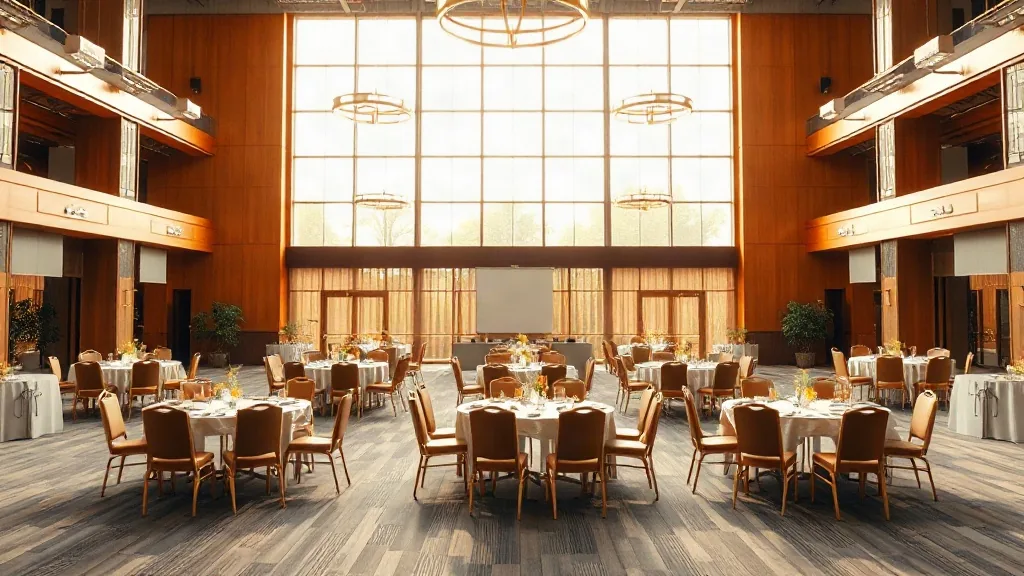
What I assessed in those thirty seconds: the sculpted portion of the ice was clean and detailed. His tools were organized beside him, not scattered — this was someone who had stopped working intentionally, not someone who had collapsed. The refrigeration in the service corridor was holding — the ice was not visibly degrading. And he had, according to the work log the venue’s overnight security had noted, been on site and actively working from 11:00pm until at least 3:45am, which was the last time they had done a welfare check through the corridor.
I knelt down and said his name. He came awake in about four seconds — not disoriented, just tired. He looked at me. He said: “The serif elements.”
I said: “Yes.”
He said: “Give me twenty minutes.”
6:35am to 7:15am
I left him two cups of coffee from the hotel’s overnight station and went to check the rest of the venue. When I came back at 7:15am, he was standing at the ice block with a detail chisel, working the left serif of the “A” with a level of focus that I have rarely seen in anyone at that hour. The detail was emerging. It was going to be fine.
He finished at 7:42am. I walked over and looked at it. It was excellent work — the proportions were right, the lines were clean, and the stylized quality that the client had specifically requested had come through. I could not tell that the final forty minutes had been worked on two cups of bad hotel coffee after four hours of inadvertent sleep.
He said: “I should have set an alarm.”
I said: “Yes.”
He said: “Is it good enough?”
I said: “It’s better than good enough. It’s what they ordered.”
He packed his tools and left at 7:55am. Doors at 9:00am.
The client conversation I almost had
There was a version of this morning where I called the client — the Director of Corporate Events, a hospitality-industry executive who was running her company’s regional leadership summit — and told her that the ice sculpture might not be complete and gave her options. I drafted that call in my head on the drive to the venue.
I did not make that call, for a specific reason: I didn’t have enough information to make it usefully. Calling someone at 6:45am to say “the ice sculptor might not finish” is only useful if you have an alternative ready. At 6:45am I did not have an alternative ready. I had a sleeping sculptor with tools who had said he needed twenty minutes.
If, at 7:15am, the sculpture had clearly been unfinishable — if the integrity of the ice had been compromised, or the remaining work was simply too extensive — I would have made the call. At that point I would have had something to offer: remove the sculpture, replace it with a floral centerpiece from the venue’s inventory, or reposition the table so the incomplete side faced the wall.
The information I had at 7:15am was: he’s working, it looks right, we’re going to be okay. That information did not warrant a client call. Know when to wait for more information before making the escalation decision.
The conversation afterward
I called him the following week. He answered and immediately said: “I know why you’re calling.”
We talked for about twenty minutes. He told me he had misjudged the complexity of the commission — the architectural serifs had taken four times longer than his estimate — and had not built in a rest window. He was, by his own accounting, about eighty hours into a week that had started the previous Friday with three other commissions.
I told him: I’m going to continue recommending you because the work is excellent. I am going to add a requirement to our working agreement going forward: for any commission that runs overnight, I need you to confirm a completion timeline before midnight and contact me if you’re running behind schedule. Not to micromanage — so that I have enough runway to help if something goes wrong.
He agreed. We have worked together four times since. The calls have come.
What I take from this
One: Vendor welfare checks are event logistics. The overnight security at the hotel had done three welfare checks on the sculptor between 11pm and 4am. I did not ask for those checks — the hotel did them as standard practice. But I now explicitly request overnight vendor check-ins for any vendor who is working on site after midnight. Not invasively, not constantly — but someone should know they’re there and approximately how they’re doing.
Two: The escalation call has a timing calculus. The question is not “should I tell the client?” The question is: “What can I offer them at the moment I tell them?” If the answer is nothing — if you have no alternatives ready, if you don’t yet know whether the problem is solvable — wait until you have information, then call. This is not hiding the problem. It is managing the information appropriately.
Three: Overnight commissions need explicit completion milestones. Any vendor working through the night needs to have a milestone check-in in your agreement — a time at which they confirm a status, and a protocol if they’re behind. “I’ll be done by 7am” is not a plan. “I’ll text you at 3am with a status update and contact you immediately if I’m more than thirty minutes behind” is a plan.
Four: Excellence and exhaustion can coexist. The last forty minutes of that sculpture were worked by a man running on two cups of bad coffee after an unplanned four-hour floor nap. The result was excellent. I don’t recommend this as a workflow, but it taught me something about the relationship between craft and fatigue — skilled work has a resilience that tired people don’t give themselves credit for.
Five: Know your overnight venue. The service corridor where he slept was temperature-appropriate for a cold-work space, the security checks were happening, and the ice refrigeration was holding. I knew those things because I had asked about overnight access conditions during my site visit. Don’t book overnight vendor access to a venue without knowing what the overnight conditions are.
Atlanta is a city I work regularly and the convention hotel infrastructure handles elaborate corporate productions with experience. If you’re planning an event in Georgia that includes production elements — ice sculptures, elaborate installations, overnight builds — the conference centers in Atlanta, Georgia have seen it and have overnight logistics protocols worth asking about.
Also worth reading: 38 vendors at the same loading dock — a story about what happens when overnight logistics meet morning reality at scale.
Drop me the brief. I’ll map the overnight build timeline before we sign anything.


