
The Freelance Photographer Who Showed Up Drunk to a 400-Person Gala
I knew something was wrong when he handed me his business card upside down and called me by the wrong name. It was 5:47pm. Doors in 73 minutes. Here's the chain of calls I made.

I want to start by saying that I do not know exactly how intoxicated he was. I am not a medical professional and I did not ask him to breathe into anything. What I know is this: when he arrived at my check-in table at 5:47pm on the evening of a 400-person black-tie gala in Miami, he handed me his business card upside down, called me “Sarah” — my name is Daisy — and smelled, unambiguously, like he had been at a different event earlier in the afternoon where the open bar had been well-stocked.
His name was on my vendor list. He was the contracted event photographer.
I gave myself about four seconds of pure disbelief, which is a luxury I will probably not allow myself in future identical situations because those four seconds were not useful. Then I told my assistant to cover the check-in table and I walked the photographer ten feet to the side, out of earshot of the arriving vendors.
5:51pm — the conversation
I told him quietly that he seemed like he was not at his best, and that I needed him to be very honest with me about whether he was in a condition to work professionally tonight. I said it without judgment in my voice. This mattered, I think — making someone feel attacked in that moment only raises their defensiveness and you lose the ability to get useful information.
He said, with genuine sincerity, that he was “totally good” and “just had a couple at the pre-party.”
There had been, as far as I knew, no pre-party.
I asked him to show me his camera setup. He opened his bag. The camera body was there. The lenses were there. He had all his equipment, which told me the afternoon — whatever it had contained — had not resulted in lost gear, which was honestly more than I was confident of at that point.
He tried to attach a lens and fumbled it twice before getting it on. The fumble was the deciding moment. A photographer who fumbles lens attachment at a gala is a photographer who is going to produce blurred images of blurry moments and call it “editorial style.”
I told him: “I’m going to need to find coverage for tonight. I’m not going to put you in the room.”
He started to argue. I kept my voice level and said: “I’m going to take care of your transportation home and I’m going to call you tomorrow about the contract.” Both of those things were true. I arranged a car through the hotel concierge at 6:02pm and he was out of the building by 6:15pm.
The next sixty-eight minutes
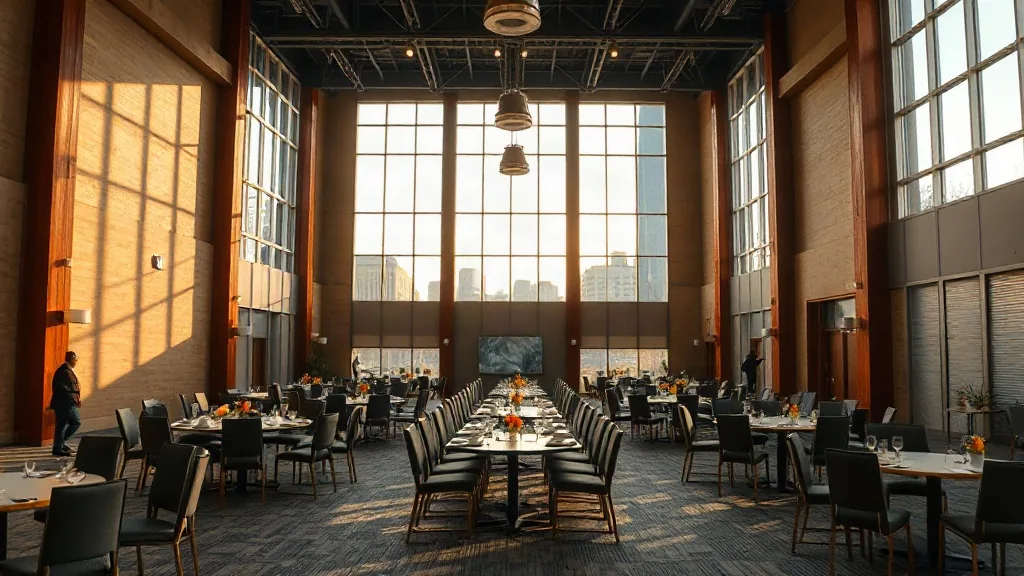
Doors at 7:00pm. I had sixty-eight minutes to find a replacement photographer for a 400-person black-tie gala in Miami on a Friday evening.
The first call I made was to the venue’s event coordinator, because venue coordinators for high-end Miami properties often have relationships with photographers who are local, available on short notice, and familiar with the venue’s light conditions. She said she had two contacts she could text. She texted them both.
The second call I made was to a planner colleague in Miami who I knew had shot her own events in a pinch. She could not help directly — she was at her own event — but she gave me a name: a second-shooter she had used at a wedding the previous month who was “very good, very fast, reasonable.”
The third call I made was to that second-shooter. She picked up. She was, by astonishing good fortune, not working that evening. She named a rate that was sixty percent above the original photographer’s contracted rate, which I agreed to without negotiation because I was not in a position to negotiate. She said she could be there in thirty minutes.
She arrived at 6:42pm.
6:42pm — the assessment
She came in carrying two bodies and a lighting kit, assessed the ballroom in about four minutes, asked me two questions — “Where’s the award presentation?” and “What time does the CEO speech happen?” — and went to work pre-shooting the room setup.
I did something I rarely do, which was essentially hand over a significant piece of the event to someone I had spoken to for eleven minutes total. I gave her the run-of-show timeline, told her the key moments that were non-negotiable, and told her to use her judgment on everything else.
That is a risk. I knew it was a risk. I took it because the alternative was no photography at a 400-person gala for a client who would be expecting a full photo archive for their annual report.
How the night went
She was extraordinary. I did not know this in time to feel relief about it — by the time her work quality was apparent, the event was already over and I was operating on faith. But when I saw the delivered gallery four days later, it was the best event photography I had received in three years. She had an eye for unposed moments that the original photographer — who I now know takes technically correct but emotionally flat images — had never demonstrated.
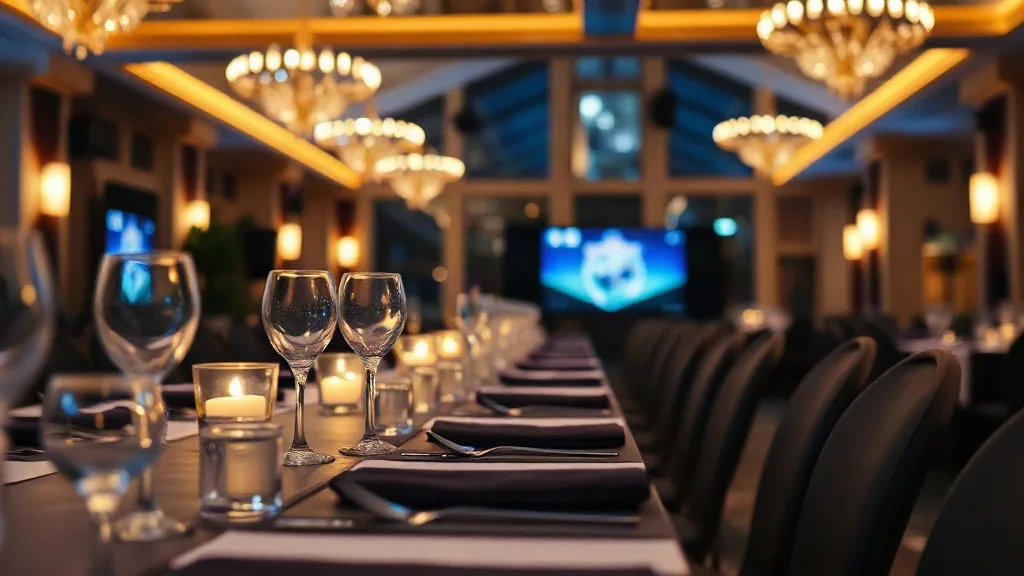
The client received the gallery and said it was “the best photos we’ve ever gotten from a company event.” I told her I had made a last-minute production change to the photographer. She asked why. I gave her the true version.
She said: “I would have panicked.” I said: “I almost did.” That was also true.
The contract resolution
The original photographer called me the next morning. He was contrite in a way that suggested he had processed the previous evening and understood what had happened. He said he was dealing with something personal and had made a poor decision. I told him I believed him and that I appreciated the call.
He offered to refund his deposit. I accepted. I also told him that I could not refer him going forward, not as punishment, but because professional referrals are trust-based and I could no longer extend that trust without direct evidence of change. He said he understood.
I put a note in my vendor file.
What I take from this
One: Vendor contingency contacts are not a nice-to-have. Every vendor category on my contact sheet now has a “B” name beside it — a backup I can call in a crisis. For photography in every city I regularly work, I have at least two contacts who are local, available for short-notice work, and whose quality I have seen firsthand or had vouched. In Miami, I now have three.
Two: How you tell someone they’re not working tonight matters. I did not accuse him. I did not raise my voice. I did not make a scene in front of other vendors. I found a private space, spoke directly, and gave him a dignified exit — transportation arranged, future conversation acknowledged. He called me the next morning. That phone call only happens if the departure is handled with care.
Three: “Available on short notice” is a qualification you need before the event. I now ask photographers in my intake: have you done same-day or short-notice bookings? Who would you recommend in the local market if something came up and you couldn’t make it? That question tells me whether they have a professional network and whether they’re humble enough to name their peers.
Four: The B-team sometimes outperforms. Not always. But often enough that the fear of using a backup should be calibrated. The replacement photographer did better work than the booked photographer would have, at least by the evidence of that night. Contingency is not failure. Contingency is the system working.
Five: Tell the client the true version. She would have found out eventually. Clients in corporate environments talk to each other and to their vendors. The truth came from me first, in a measured way, with the resolution attached. That’s the right order.
Miami black-tie galas are a category I know well — the venues have their own aesthetics and lighting quirks and the right photographer makes an enormous difference. If you’re planning a formal gala in South Florida, browse the waterfront venues in Florida and ask each property for their preferred photography contacts. That list is your B-team.
Also read: the fire marshal who shut us down twelve minutes before doors — a different kind of sixty-minutes-to-solve-it crisis, same composure required.
Send me the brief. I’ll have a contingency plan for every vendor category before we get anywhere near event day.


