
The Valet Service That Just... Stopped at 9pm
At 9:03pm, with 200 guests still inside and the program running long, the valet company stopped accepting cars and began returning keys. They had a shift end clause in the contract. I had not read it.

The first I knew about it was when one of my floor staff came inside at 9:06pm and said: “The valet guys are giving keys back and parking guests’ cars on the street.”
I said: “That’s not what we contracted.”
She said: “That’s what they’re doing.”
I set my clipboard on the nearest table and went outside.
The situation
The event was a year-end recognition gala for a real estate development firm. 200 guests, private club in Ft. Lauderdale, formal evening. The valet service had been contracted for the full event window: 6:00pm guest arrival through end of event. End of event was listed in the BEO as 10:00pm.
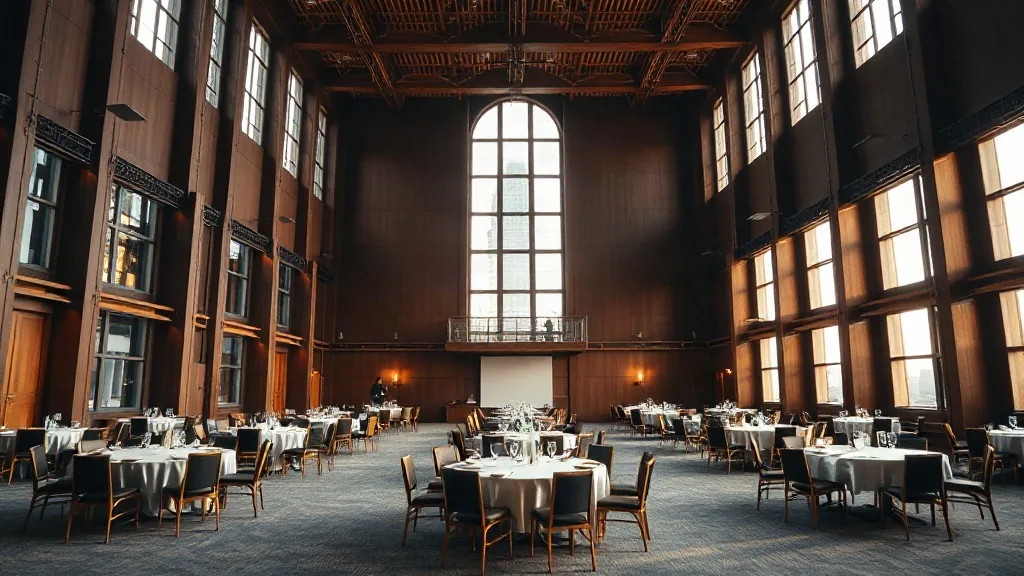
At 9:03pm, with 200 guests still inside and the program running approximately thirty minutes long, the valet company — three drivers and a manager — had stopped accepting incoming cars and had begun systematically pulling cars out of the garage and parking them along the adjacent street, returning keys to a receiving table they had set up near the front door.
When I reached the manager, he showed me his copy of the contract. The contract I had signed specified valet service from 6:00pm to 9:00pm. It did not say “through end of event.” It said 9:00pm.
I had been thinking of it as “through end of event” because in my mental model the event ended at 10pm. But I had written 9pm in the contract, probably in an early draft when the event was scheduled to end at 8:30pm, and had never updated it when the timeline extended.
That is on me, entirely. And I stood outside acknowledging it while cars were being parked on the street.
What I did in the next twelve minutes
I asked the valet manager whether he or his team could stay until 10pm on overtime. He said yes, at a rate he named that was fifty percent above the contracted hourly. I said: “You have me and you know it. Can we do thirty percent over?”
He said: “Forty.”
I said: “Forty. Can I get that in a text right now as confirmation?”
He sent me a text. I approved it. The drivers stopped returning cars and resumed the valet queue.
Inside, I went to the client — the Head of Facilities and Events, a man who I had worked with twice before and who had a high tolerance for operational hiccups — and told him, briefly and without drama: the valet contract had a 9pm end time, I caught it and extended it, there will be a small additional charge. He said: “How small?” I named the number. He nodded and said: “Fine.” He did not ask more questions.
The extension covered the event through 10:15pm, which is when the last guests left.
The fourteen guests who had already gotten their keys back
When I went outside at 9:06pm, the valet team had already returned keys to approximately fourteen guests whose cars had been pulled from the garage. Those cars were parked on the street. Most of those fourteen guests were still inside.
I had my floor staff identify the fourteen affected guests from the valet claim tickets that the manager had logged. We did this while the extension was being set up — it took about eight minutes to cross-reference claim tickets with check-in records and identify which guests had been sent their keys.
I sent my assistant to those guests, individually, to let them know their car was currently parked on [street name] in a legal space, we would have a staff member walk them to their car at the end of the evening, and I apologized for the confusion. Fourteen guests, eight minutes, no one left the gala upset.
One of those fourteen was the firm’s CFO. She found me at the end of the night and said: “Someone came and told me my car was on the street.” I said: “Yes, I’m sorry about that — we had a contract timing issue that I resolved. Your car is two blocks west. Would you like an escort?” She said: “No, I’m fine. But you should check your contracts.”
She was right. I told her so.
The contract problem I had created
The timeline mismatch was not a mystery. Here’s how it happened: when I first drafted the scope of services and sent it to the valet company, the event was ending at 8:30pm. I wrote 9:00pm as the valet end time as a thirty-minute buffer. Reasonable. Then the event program extended to 10:00pm — which happened during a planning meeting with the client two months before the event — and I updated the BEO, the run-of-show, and the venue contract. I did not update the valet contract.

The valet contract was one of nine vendor contracts on this event. When the event timeline changed, I should have issued a contract amendment to every vendor with a time-specific obligation. I issued amendments to the venue and the catering team, whose contracts referenced the 10pm end time. I did not issue amendments to the valet, the photographer, or the parking garage — all three of whom had time-specific language that was now inconsistent with the actual event schedule.
The valet issue surfaced. The photographer ran a little long and nobody noticed. The parking garage, as it turned out, had a 10pm hard close that I caught during a setup walk that afternoon — I had two hours to arrange alternative departure routing for guests in the adjacent lot. That near-miss I did not tell anyone about.
What I changed
I added a single step to my event timeline change process: when the event end time changes, trigger a contract review for every vendor contract on file, check for time-specific language, and issue amendments where needed. This sounds obvious. It was not in my process in a systematic way. It is now.
I also added a “contract time cross-reference” column to my vendor tracking sheet — a column that shows the end time in each vendor contract, side by side. When I look at that column and one entry is out of sync with the others, the inconsistency is visible immediately.
The additional charge for the valet overtime was $280. I absorbed it personally — did not pass it to the client — because the error was mine. The client didn’t know and didn’t need to. The CFO’s comment (“you should check your contracts”) was enough of an accounting.
What I take from this
One: “Through end of event” is not a contract term. A time is a contract term. When writing vendor contracts, always specify an actual time, not a relative reference. And when the event timeline shifts, that time must be updated in every contract that contains it.
Two: Contract amendment triggers need to be systematic, not memory-based. When any event variable changes — date, time, headcount, venue, program — there should be a systematic review of which vendor contracts are affected. Not a mental review. A checklist that you run.
Three: Identify the fourteen guests, go to them, don’t wait for them to come to you. The fourteen guests whose cars had been returned to the street did not need to find out about the issue at the valet stand while they were leaving. Finding them proactively, inside, before they encountered the street-parked cars, was the difference between a recoverable situation and an irritated client conversation.
Four: The negotiation with the valet manager was fair. He had a contract that said 9pm. He honored that contract. When I asked him to stay, he named a rate. I countered; we landed in the middle. He did not behave unreasonably. The error was mine and the resolution was mutual. Characterizing vendors as adversaries in these situations is wrong — he was running his business correctly and I was the one who had created the gap.
Five: The CFO’s comment was useful feedback, not a complaint. She said it in a tone of professional observation, not anger. I received it as professional feedback. That is the appropriate response to useful criticism from a client.
Fort Lauderdale is a market I know well and the event infrastructure — particularly for private club and waterfront events — is excellent. If you’re planning a formal gala in South Florida, browse the waterfront venues in Fort Lauderdale, Florida and let’s make sure every vendor contract says what the event actually needs.
Also read: the fire marshal who shut us down twelve minutes before doors — another story where a document I had either written or not written determined everything at the worst possible moment.
Send me the brief and your current vendor contracts. I’ll find the time-specific language gaps before they become a 9pm situation.


