
The Wedding Reception Next Door — and Our Sales Kickoff
At 8:45pm the bass line from the adjacent ballroom was shaking our session chairs. The hotel had double-booked adjacent spaces without telling either party. Here's how a Saturday night went sideways.

I want to be precise about the sound because precision matters here. It was not background noise. It was not the ambient hum of another event filtering through a wall. At 8:45pm, during our breakout session on Q3 pipeline optimization, the bass from the wedding reception in Magnolia Ballroom B was physically moving the chairs in our room.
I don’t mean that metaphorically. I mean that I watched a metal folding chair, unoccupied, vibrate approximately three inches across the hardwood during what I later identified as a bass drop in Usher’s “Yeah.”
We were in Magnolia Ballroom A.
The rooms share a wall.
How this happened
The hotel — a Nashville convention property I won’t name, but that I have not booked since — had sold both rooms as independent event spaces with a shared wall that included, according to their marketing materials, “acoustic partitioning for privacy between events.”
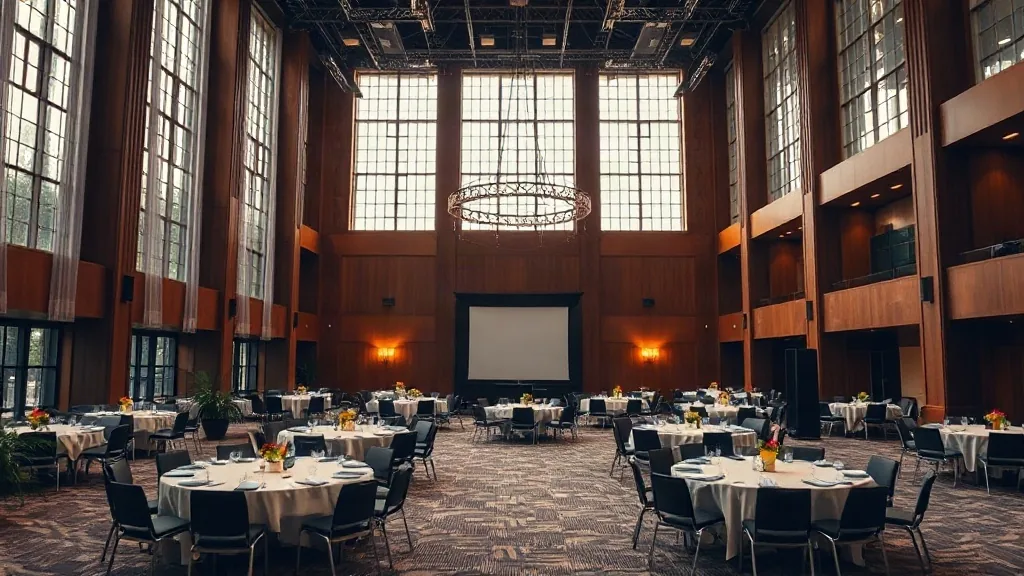
The acoustic partition was a set of accordion-folded panels that appeared to be made of the same material as the dividers in a conference-room partition system from approximately 2003. They may have been effective at moderate volume. They were not effective against a wedding DJ who had, by all appearances, interpreted his brief as “as loud as possible, from 8pm until the venue makes us stop.”
I had booked the space four months earlier for a sixty-person sales kickoff — a technology company, Friday through Sunday, heavy emphasis on evening programming. The event guide I received from the hotel listed Magnolia Ballroom A as our space. It did not mention that Magnolia Ballroom B had been simultaneously sold for a Saturday-evening wedding reception.
I did not ask. That is on me, and I’ll come back to it.
The call I made at 8:47pm
I was on the phone with the hotel’s event manager before the second song. I told her what was happening and I kept my voice level, which required effort. She was apologetic in the tone of someone who had been anticipating this call for approximately forty minutes.
She explained: the wedding had been booked first. Our event had been booked second. The acoustic partition had been — and here is the phrase that aged me five years — “assessed as adequate for the anticipated volume levels of both events.”
Nobody had told either party about the other event.
I asked her: what can you offer us right now? She said she could move us to the Bluebell Room on the third floor, which was available and had been set for a corporate breakfast and could be reconfigured. Sixty people, she thought it could work. She’d have to check.
I told her to check while I managed the room.
Managing the room at 8:52pm
My client — the VP of Sales, a man with the pragmatic temperament of someone who has closed difficult deals in bad circumstances — was standing at the front of the room watching me with the expression of someone who has decided to let you handle it. That is the best thing a client can do in this moment, and I appreciated it then and appreciate it now.
I stepped to the front and said: “We have a venue logistics issue. We’re moving to a quieter room on the third floor. Break here for fifteen minutes, grab a drink, and reconvene at nine fifteen. The session runs until ten.” Three people applauded. I don’t know why but it helped the room energy.
The hotel called me back at 8:58pm. The Bluebell Room would work. They were sending staff to flip it now.
I sent my assistant to supervise the flip and make sure the AV was re-cabled before I arrived with sixty people. She got there at 9:03pm. By 9:13pm she had texted me: “We’re 80% ready. Room looks good.”
The session that continued
We reconvened at 9:17pm in the Bluebell Room. It was smaller than Magnolia A — slightly crowded for sixty people in a workshop configuration — but it was quiet, the ceiling was lower and actually better for discussion energy, and someone on the hotel’s staff had put out fresh coffee and dessert, which had not been part of our evening F&B plan and was apparently an apology.
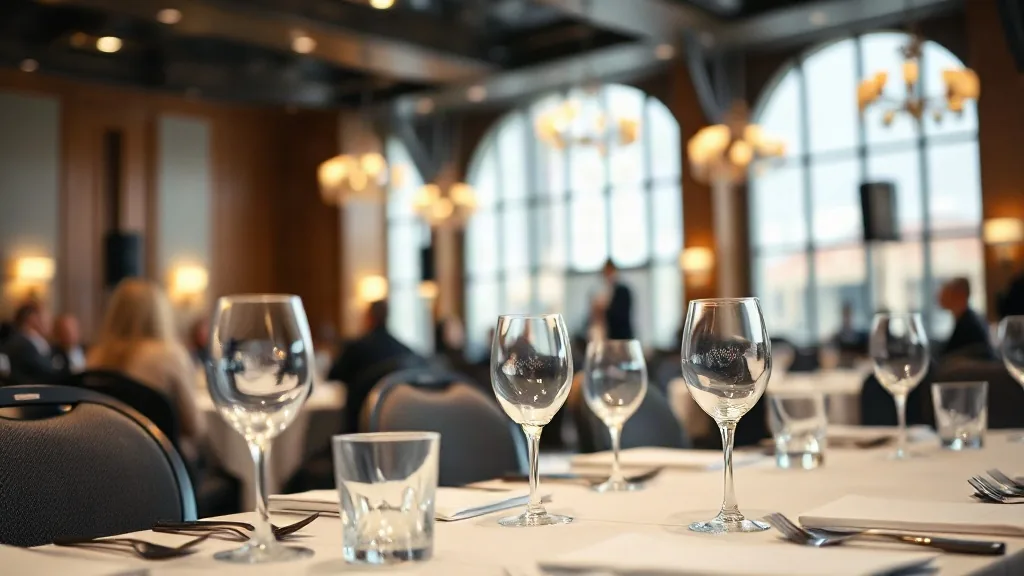
The VP of Sales opened the session by saying: “That was the loudest pivot I’ve been part of all quarter.” The room laughed. And we ran the session through to 10:05pm.
The Usher music from downstairs was faintly audible even on the third floor, mostly as rhythm rather than lyric, which a few people commented was actually kind of nice.
The next morning
I sat down with the hotel’s director of sales at 7:30am Sunday. I had prepared three things: a timeline of the disruption, a list of what had been disrupted (the session, a post-session client dinner that had been derailed by the chaos), and a statement of what I wanted as resolution.
What I wanted: a partial refund of the room rental — specifically, the Saturday-evening rental for Magnolia A, which I paid for and did not use past 8:52pm. I also wanted a credit for the Bluebell Room that had saved us, which they had offered free but had not confirmed in writing. And I wanted an explanation, in writing, of how the double-booking of adjacent spaces had occurred.
The director offered a refund of forty percent of the Saturday room rental and a credit of fifteen hundred dollars against a future booking. I countered at sixty percent. She came to fifty. I took it because the real goal was the conversation about how it happened.
The explanation she gave me was bureaucratic and unsatisfying: the wedding had been booked through the catering department, and our corporate event had been booked through the corporate events department, and the two teams had not cross-referenced their bookings until the day before, at which point the acoustic partition had been declared sufficient and no further action taken.
I told her: in the future, any client booking an adjacent space needs to be told at booking, not after arrival. She agreed. Whether they changed their policy, I cannot confirm, because I have not booked there since.
What I take from this
One: Always ask about adjacent spaces at booking. I had not done this. I do now. My venue intake includes a specific question: “What events are currently booked in adjacent or shared-wall spaces during our event window, and what is the acoustic partition specification?” It’s an odd question to ask. It has saved me from this situation twice since.
Two: Acoustic partition ratings are marketing, not engineering. “Acoustic partitioning” on a hotel spec sheet tells you almost nothing about actual sound transfer at high volume. If the adjacent space is likely to host music, you need to know the STC rating of the partition — Sound Transmission Class, which is an actual metric — and compare it to the anticipated dB level of the adjacent event. Below STC 45, you will hear bass frequencies through almost any partition. Most hotel folding walls are STC 25–35.
Three: Move fast and frame it as an upgrade. The fifteen-minute break and the third-floor move worked because I did not apologize excessively or explain the hotel’s failure to the room. I gave them the information they needed, maintained the energy, and let the move feel like a decision rather than a defeat. Framing is not spin. It is leadership.
Four: The client’s trust is rebuilt by execution, not explanation. The VP of Sales did not need me to explain the hotel’s booking failure in detail. He needed me to run a clean session in the new room. I did. That was the resolution for him.
Five: Document the disruption in real time. I had timestamps on my phone for every decision and communication from 8:47pm onward. That documentation was the foundation of my conversation with the director of sales the next morning. Without it, the negotiation would have been my memory against hers.
Nashville is a city I love planning events in — there’s real energy and genuine hospitality at the better properties. If you’re looking for conference space that has actually thought through its acoustic configuration, the conference centers in Nashville, Tennessee are worth a careful look, and I can help you ask the right questions before you sign.
Also worth reading: the catering truck that hit a sinkhole — a different kind of Saturday-night chaos that required the same instinct for fast pivots.
Send me the venue short-list and I’ll tell you what to ask.


