
What Is a Package Proposal at a Venue (And What's Actually Flexible Inside It)
Venue packages bundle room, F&B, AV, and linen at a per-person price. Most items are not as fixed as the proposal makes them look. Here is what is genuinely bundled and what can be broken out or swapped.

Hotels and conference centers love package proposals. They present beautifully. “Full-day meeting package: $89 per person includes meeting room, continental breakfast, AM break, hot buffet lunch, PM break, basic AV, and standard linen.” Clean. Simple. One number.
What they don’t tell you: you’re paying for everything in that package whether you use it or not, some items in the package cost the venue almost nothing, and several items you’re paying for at package rates are available for less if you separate them out.
I had a 60-person one-day meeting where my attendees were local, arriving after 9am, and leaving by 4pm. The package included a continental breakfast (nobody wanted, since they’d eaten), two breaks, a lunch, standard linen (fine), and AV that consisted of a single screen and a built-in projector (adequate). When I broke the package apart and quoted the individual components, the non-package total was $74 per person. The package was $89. The $15 per-head difference across 60 people was $900.
What a package actually contains
A standard full-day meeting package at a hotel or conference center typically includes:
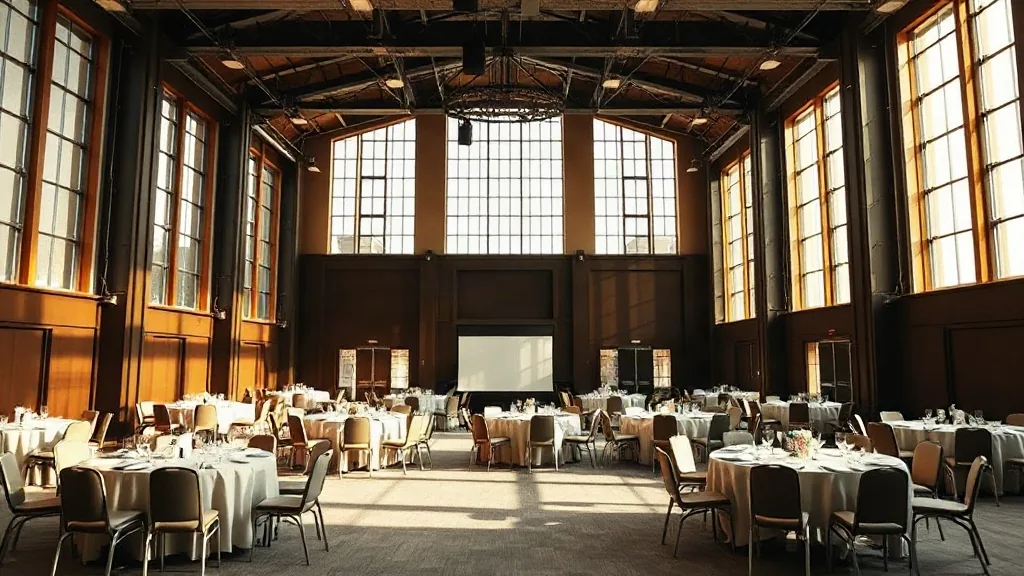
- Room rental (or F&B minimum credit against the room)
- Continental breakfast
- Morning break (coffee, pastry, or snack)
- Lunch (usually buffet or box)
- Afternoon break (coffee, snack)
- Standard linen and chair configuration
- Basic AV (projector, screen, 1 wireless mic, house sound if applicable)
- Notepads, pens, and ice water on tables at many properties
Half-day packages include a subset: room, one break, lunch or breakfast, basic AV.
Packages designed for social events (banquet packages, gala packages) typically include room rental, a catering minimum, standard linen and centerpieces, and sometimes a hosted bar for a defined period.
What’s genuinely fixed
The room rental component is typically non-negotiable as a break-out. If the package bundles the room with catering, you cannot usually separate the room cost as a standalone.
The F&B minimum, if the package is structured as a minimum guarantee rather than a fixed menu, is what it is. You’re committing to the spend.
Union or regulatory requirements, where they exist, are fixed. A venue with mandatory in-house AV won’t let you substitute an outside vendor regardless of what the package includes.
What can typically be separated or adjusted
Break frequency and content. If you have a one-day meeting that runs from 9am to 3pm, you don’t need two breaks plus a lunch in the way the package structures them. You can often combine the afternoon break into a working lunch and remove the formal PM break, reducing the per-head cost.
Breakfast. If your attendees don’t arrive until 9am and don’t need breakfast, ask whether the package price reduces if you remove the continental breakfast. Many hotels will deduct $8-12 per head. Some won’t.
AV specifics. The “basic AV” in most packages is minimal. One projector, one screen, one handheld mic. If you need two screens, a confidence monitor, or a wireless lavalier, you’ll pay additional regardless of the package. If you don’t need the basic AV at all (you’re doing a working session with no presentations), you can sometimes negotiate the AV component out.
Linen tier. Packages include standard linen, which is typically polyester tablecloths in white or ivory. If you want specialty linen (pintuck, satin, color), it’s an upgrade charge. If you genuinely don’t care about linen (warehouse venue, working meeting), ask whether the package price drops without it. Most venues won’t reduce the price but will let you acknowledge you don’t need the upgrade.
Signature items. Some packages include a signature item (chocolate-dipped strawberries at break, custom notepad covers) that looks impressive but adds $3-5 per head in cost. Ask to remove it and take the credit.
The negotiation approach
The frame that works: “I’d like to use your meeting package as the base, but I want to adjust it to match how my event actually runs. Can we walk through each component and identify the ones I won’t need or can simplify?”
Most experienced catering managers will engage with this. They’ve had the same conversation with dozens of planners. The ones who won’t negotiate package components are venues that use packages specifically to prevent à la carte comparison.
If a venue refuses to discuss any package flexibility, that tells you something about how they’ll handle day-of requests for adjustments.
What the package proposal doesn’t show you
Packages show the per-person number without ++ clearly displayed, sometimes without any mention of service charge and tax. Always ask: “Is this package price inclusive of service charge and tax, or is it subject to additional charges?” See what does ++ mean in event pricing for the calculation.
Packages also don’t show you the marginal cost of individual components. A hot buffet lunch at $28 per head in a package may cost $22 per head if quoted separately. Knowing the gap between package and à la carte pricing tells you how much bundling premium you’re paying.
Packages and the F&B minimum relationship
At hotel venues with F&B minimums, a meeting package serves double duty: it describes the services you receive and it counts toward your F&B minimum. A full-day package at $89++ per person for 80 guests generates $7,120 in pre-service-charge, pre-tax F&B spend, which applies toward whatever minimum the venue requires for that room.
If the minimum is $8,000 and the package generates $7,120, you’re $880 short. The venue expects you to add a PM break, upgrade a beverage offering, or extend the bar to fill the gap. This is not padding. It’s the minimum working exactly as designed.
The package math and the minimum math need to be run together, not independently. Calculate your package spend first, then compare it to the minimum. Know the gap before you start negotiating components.
For more on how minimums and package pricing interact, see what is an F&B minimum.
When a package is the right call
Packages make the most sense when: your event is straightforward, you don’t have strong preferences on individual menu items or AV configuration, and the package price is close to what you’d pay building the same menu à la carte.
They’re most often the right call for standard half-day or full-day training sessions, orientation events, and smaller working meetings where the food is functional rather than a program element. Board retreats, client entertainment events, and high-visibility galas almost always benefit from à la carte customization.
The question to ask the venue
“Can you provide a component-level breakdown of what’s included in this package price? I want to understand the individual cost of each element before deciding whether the package makes sense for my event.” If they say the package is non-divisible, that’s fine. You still know the total and can compare it to an à la carte approach.
You’re booking at a hotel or resort, conference center, or banquet hall. Share the package proposal with me and I’ll help you identify which components are worth negotiating out.


