
Engineering offsite venues with power and bandwidth to spare
An engineering team will find the ceiling of your venue's internet in the first hour, and a booked hotel ballroom with shared wifi is where a hack week goes to die. Here's the power, bandwidth, and room spec I hold vendors to before an engineering offsite gets my signature.
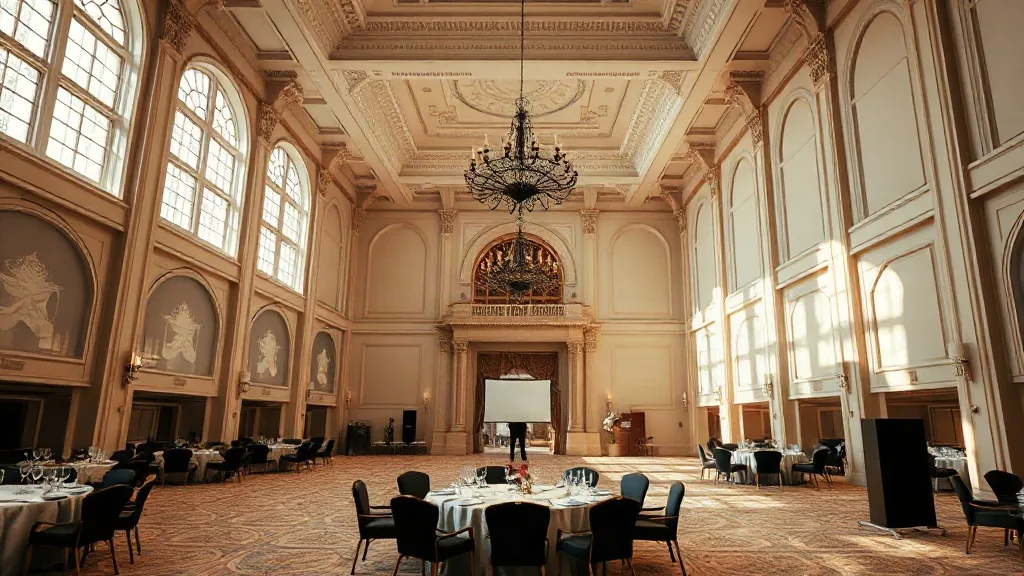
An engineering director I work with has one test for a venue. He opens his laptop in the proposed room, kicks off a container build pulling a few gigs of images, and watches. If the venue’s wifi buckles, we walk. He blew through a hotel’s “high-speed” package in about eight minutes once, and the sales manager’s face told me she’d never seen anyone actually use the internet she was selling.
I book tech and agency offsites out of Atlanta, and engineering teams break every assumption a hospitality venue makes. Hotels price bandwidth like it’s a minibar. Engineers treat it like oxygen. Those two worldviews collide on the invoice, and my job is to make sure the collision happens in the site visit, not on day one.
Bandwidth: get the number, then double it
“We have wifi” means nothing. Every venue has wifi. The question is the guaranteed dedicated symmetrical bandwidth in the actual room, in megabits, in writing.
A 30-person engineering team pushing and pulling from remote repos, running cloud IDEs, and doing video standups with distributed colleagues will saturate a 100 Mbps shared line without trying. I ask for a dedicated line, not the house wifi, and for an engineering offsite I want at least 300 Mbps symmetrical, meaning upload matters as much as download because these people are pushing code and images out, not just streaming in.
A dedicated line at a conference center runs $400 to $1,200 for a multi-day event. That sounds like a lot until you price the alternative: 30 engineers billing $150-plus an hour each, sitting idle because the build won’t pull. Ten minutes of a stalled team costs more than the line. I put that math in front of the finance approver every time and it ends the debate.
Then I test it. Speed test in the room, not the lobby, during the site visit, ideally at a busy hour. A venue that’s fast at 9am on a Tuesday when it’s empty tells you nothing about Thursday at 2pm during a citywide.
Power under every seat, not on the wall
Engineers run hot hardware. Laptops with dedicated GPUs, external monitors, docking stations, and everyone charging a phone. That’s 200 to 400 watts per person, and a room built for a lecture has maybe six outlets total.
I ask the venue to commit to a power drop at every two seats, minimum, and I ask where the floor boxes are so we’re not running gaffer-taped strips across a walkway that a fire marshal will flag. A loft or industrial space usually wins here, because these buildings were wired for equipment, not for a chandelier. Old freight buildings have real amperage on the walls. A hotel ballroom has decorative sconces and a prayer.
If the room can’t deliver, I bring in distro: a rented power distribution setup with drops where I need them, which an AV vendor prices at $200 to $600 for the event. I’d rather spend that than watch a room of engineers rotate one power strip like it’s a campfire.
The room shape engineers actually use
Engineering offsites aren’t lecture events. They’re work sessions, hack days, architecture reviews, and the room needs to support small groups clustering and re-clustering.
I want big tables people can crowd around, wall space for whiteboards or at least mountable paper, and the ability to reconfigure without calling the venue’s setup crew. Fixed theater seating is the enemy. A flat-floor room with movable 6-foot tables and rolling chairs lets a team break into pods of four, come back together, and split again, all without a room flip.
Whiteboards matter more than screens for this crowd. I ask how much writable wall the venue has, and if it’s none, I rent mobile whiteboards at $40 to $75 each per day and I bring more markers than seems reasonable, because the venue’s markers are always dead. A coworking space with events is often the sweet spot: writable walls everywhere, power built for laptops, and internet as the core product rather than an add-on line.
One more room detail engineers care about and nobody else asks for: climate control they can change. A room full of hot laptops and 30 bodies heats up fast, and a venue that locks the thermostat at a fixed 72 will have the team sweating by mid-afternoon. I confirm the room has its own zone and that facilities will let me drop it to 68 if the gear load runs warm, because an overheating room slows both the people and the hardware.
Catering that doesn’t kill the afternoon build
Engineers keep odd hours during a hack day and they graze. I skip the rigid 12:30 plated lunch and I do a rolling setup: real food available across a window, plus snacks and caffeine that never run out. A team deep in a build won’t stop for a seated meal, and a plated lunch going cold on a table is money I lit on fire.
For a multi-day hack format I budget all-day beverage and snack service at $30 to $50 per head per day, and I keep the coffee and the cold brew flowing past 3pm, because that’s when the real work happens and hospitality venues love to cut the coffee at 2. I tell them up front the coffee stays on, and I put it in the banquet order so nobody strikes it early. I go deeper on the power, wifi, and 48-hour catering pattern in running a corporate hackathon, because a hack week and a straight offsite have different fuel needs.
Where I book these, ranked
For a pure engineering offsite, my order is coworking space, then loft, then conference center. A coworking space with events is built for exactly this: fast symmetrical internet, power everywhere, writable walls, and staff who won’t blink when someone asks about upload speeds. A loft or industrial space gives you the power and the room flexibility but you’re bringing your own internet and AV, so budget for it. A conference center is the safe pick when the team is 40-plus and you need real infrastructure and a dedicated line the venue will actually stand behind.
The hotel ballroom is last, and only if the property proves the bandwidth in the room during the site visit. Most can’t, and the ones that can charge like it. If you want the view from inside the org, the startup CTO running the engineering all-hands covers what an engineering leader actually cares about in the room, and it’s power and internet, not the branded pastries.
Tell me your team size, whether it’s a hack format or an architecture-review format, and your worst-case concurrent bandwidth need. I’ll tell you which of the three room types fits and exactly what to make the venue commit to in writing before you sign.


