
Fintech launch parties that pass compliance review
A fintech launch party has a second guest list you can't see: compliance. Gifts, giveaways, recorded claims, and who pays the bar tab all get reviewed. Here is how I plan the night so legal signs off the first time.
The email that reworked a whole launch party arrived at 4:40pm on a Friday, two weeks out. Compliance had reviewed the run of show and flagged the raffle. We were giving away a $600 pair of headphones to one guest, and roughly a third of the invite list were employees of banks and broker-dealers we did business with. Under those firms’ gift-and-entertainment rules, a $600 prize to an employee could be a reportable inducement. The raffle came out. We swapped it for a charity donation in the winner’s name. Legal signed off Monday.
I plan launch events for fintech and payments companies, and the thing nobody tells you at your first one is that the guest list has a shadow. Compliance reviews the event the way an auditor reviews an expense report. Who’s invited, what they receive, what gets said on the mic, and who pays for what. If I plan the party to look good on a photo but ignore that review, it gets gutted 10 days out. So I plan for the review from day one.
The gift-and-entertainment ceiling drives the giveaways
Most large financial institutions cap what their employees can accept in gifts and entertainment. A common figure is a $100 annual gift limit per vendor, with entertainment handled separately and often requiring pre-approval. Your launch party is entertainment to every regulated guest in the room.

So I keep swag under the line and I keep it obviously promotional. Branded items in the $15 to $40 range are fine. A tote, a good water bottle, a $25 gift card is where it gets murky and I usually cut it. Anything that reads as a personal luxury, the $600 headphones, a spa voucher, a bottle over $50, is the thing that trips a guest’s own reporting obligation. I’d rather give 200 people a $20 item that nobody has to disclose than one person a prize that becomes a compliance ticket at their firm.
The open bar is its own question. Reasonable food and drink at a business event is generally fine, but a $95-a-head premium bar for regulated guests can read as excessive entertainment. I keep beverage cost per head defensible, usually $40 to $55 including service, and I make sure the food is real, because “meal provided” is easier to justify than “cocktails only.”
What gets said on the mic is a regulated document
This is the part that surprises founders. At a fintech launch, the demo script and the keynote are marketing communications, and if the company is regulated or the product touches securities, lending, or investment claims, those words go through the same review as a press release.
I get the run of show and every slide to compliance no later than 10 business days out. Forward-looking claims, performance numbers, “guaranteed returns,” anything that sounds like advice, all of it gets scrubbed or footnoted before showtime. If we’re recording, and at a launch we always are, the recording is a permanent record the firm may have to retain. I tell the AV team the demo capture is a compliance asset, not just B-roll, and we hold it accordingly.
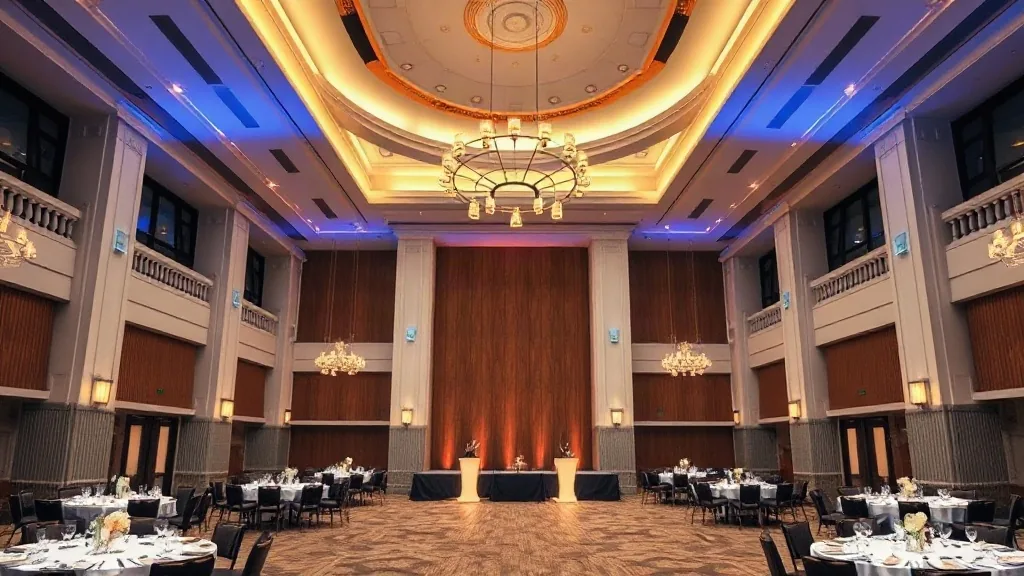
This changes the venue too. I want a room where I control the audio and the recording cleanly. A theater or performing-arts space gives me a real stage, a booth, and a clean capture, which is why I’ll pick one over a loud rooftop when the demo carries claims that have to be recorded accurately. When the night is more mingle than main-stage, a rooftop venue with a controlled short program works, as long as I can kill the music for the eight minutes the CEO is on the mic.
The invite list is a controlled list
I treat the guest list as a document compliance will read. That means no undisclosed mixing of retail customers and institutional partners in a way that looks like steering, no press in the room during a segment that isn’t cleared for press, and a clear RSVP record of who attended. For public-company clients, I also check whether anything being announced is material, because a launch that reveals market-moving news has disclosure timing rules that sit above my pay grade and have to be handled by their counsel before invitations go out.
I keep a simple attendee log: name, firm, and category. It sounds bureaucratic. It’s the thing that lets the client answer “who was there and what did they get” in one email if anyone ever asks.
The budget lines compliance actually checks
When I build the estimate for a fintech launch, I separate the lines a reviewer cares about so they’re easy to defend.

- Venue rental and AV, a normal business cost, clean.
- F&B per head, kept in a defensible band, with the number including service charge and tax so nobody can call it understated.
- Promotional items, itemized with unit cost, all under the gift ceiling.
- Any charity component, documented, because a donation-in-lieu-of-prize needs a paper trail.
- Entertainment or talent, disclosed, because a $20,000 DJ at a party for regulated guests is a line someone will ask about.
For a 200-person launch I’ve landed around $58,000 to $72,000 all-in in a major metro, and the compliance-driven choices, the sub-$40 swag and the charity swap instead of a luxury raffle, actually saved money versus the flashier version the marketing team pitched first.
The timeline that gets a first-pass approval
I send compliance three things by the 10-business-day mark: the run of show, every slide and demo script, and the giveaway list with unit costs. I send the guest list categorized. I ask for their edits in writing. Then I lock. Nine times out of ten, planning for the review up front means the review is a rubber stamp instead of a rebuild.
The launches that go sideways are the ones where marketing books a gorgeous room and a $600 raffle, prints the invitations, and shows compliance the plan a week out. By then the raffle is ordered and the mic script promises things legal won’t allow. Do it in the other order. Loop compliance in while the plan is still soft, and you get the party you wanted instead of the one you had to salvage.
Tell me the headcount, how many guests come from regulated firms, and whether there’s a recorded demo with product claims. Those three answers decide the giveaway budget, the venue type, and how early I need your legal team in the room.


