
Founder-led all-hands for a newly remote company
When a company goes remote and gathers in person twice a year, the all-hands carries a weight a weekly standup never did. This may be the only day the team is in one room. Here's how I book and shape it so the founder's voice lands and the room feels like a company again.
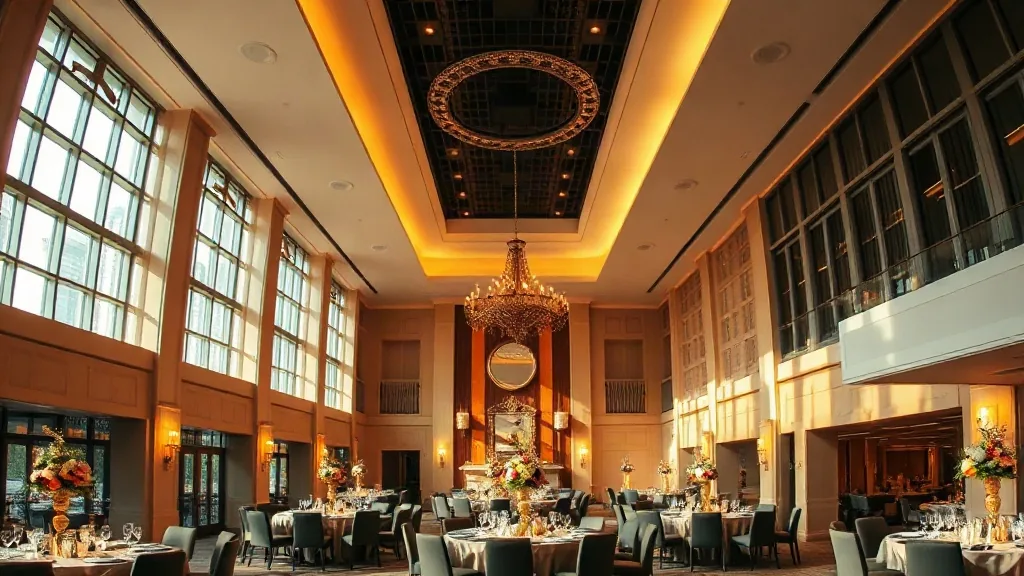
A founder told me her 80-person company had gone fully remote in the spring, and that this fall all-hands would be the first time a third of the team had ever been in the same room as anyone they worked with. Some had been hired, onboarded, promoted, and never shaken a coworker’s hand. That reframed the whole booking for me. This wasn’t a quarterly update with slides. It was the day the company found out whether it was a company or a Slack workspace with payroll.
I plan a lot of these now, because the pattern is common: small team, went remote, gathers in person two or three times a year, and the in-person days have to do the connective work that used to happen in a hallway. The stakes on the room are higher, not lower, because you get so few of these days.
Book for connection, not for a stage
The instinct is to book a room with a big stage and rows of chairs, because “all-hands” sounds like a presentation. For a newly remote company that’s the wrong shape. Rows facing a stage let 80 people sit through a day without speaking to each other, which defeats the entire reason you flew them in. I book rooms that make people mix: a flat, flexible floor I can set in rounds for the content and clear for standing and food, with breakout corners and a lounge area where conversation happens on its own.
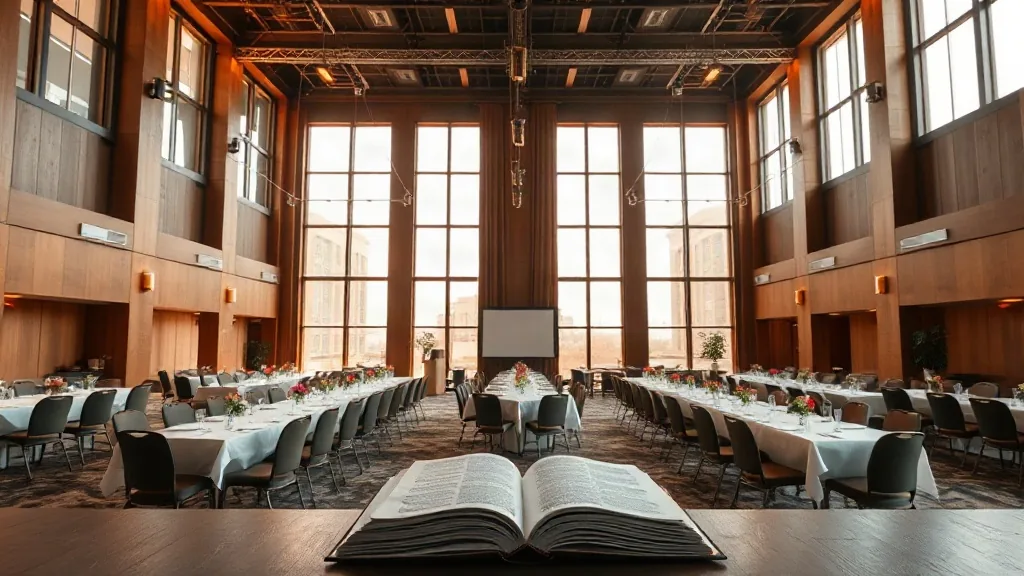
A distinctive event venue with an open floor does this better than a hotel ballroom, because the space itself invites movement instead of seating. For a company with a maker or builder culture, lofts and industrial spaces give you a raw, real room that reads as the company’s own rather than a rented conference floor, and they photograph in a way that gives the remote team a shared image to hold onto. The tradeoff is these spaces bring less built-in AV, so I price the production honestly. The look-versus-infrastructure math is laid out in hotel ballroom vs converted warehouse for all hands, and I use it every time a founder falls for a beautiful empty box.
The founder’s voice is the AV priority
On a normal all-hands, AV is about the slides. Here it’s about the founder being heard, plainly, by every person in a room where a third of them have only ever heard that voice through a laptop speaker. So I over-invest in clean audio and a stage setup that keeps the founder close to the room, not marooned behind a lectern on a distant riser. A lower stage, a handheld or a good lav, and a room shape that lets the founder walk into the audience beats a formal keynote setup for this moment.
I keep the deck spare. A newly remote team doesn’t need 40 slides of metrics on the day they’re finally together; they need to hear the founder say where the company is going and feel the person saying it. Data can go in a follow-up doc. The room is for the human.
Feed people in a way that makes them talk
Catering is a connection tool, and I use it deliberately. I avoid a plated, seated lunch where you talk only to the two people beside you. Instead I run stations and long communal tables that force people to move, queue together, and end up next to someone from a team they’ve only Slacked. A grazing reception in the evening does more for a newly remote team than a formal dinner, because people circulate. I budget generously here, because on a two-times-a-year gathering the food-and-mixing time is where the relationships actually form. Plan roughly $70 to $95 a head for a strong lunch plus an evening reception, and treat it as core spend, not overhead.
Give the day unstructured time on purpose
The mistake founders make is packing the day to prove it was worth the travel. For a newly remote team the opposite is right: the scheduled content is not where the value is, the hallway is. I build in real open blocks, a long lunch, a proper coffee break, an unstructured evening, so people can have the conversations that a remote company never gets. The agenda should have visible air in it, and leadership should model using it, not filling it with more meetings.
For the underlying structure of the day, from the run-of-show to the recognition moment, I build off the company all hands planning playbook and adapt it toward connection rather than broadcast. And because a founder running the room themselves has specific traps, the founder running the 50-person offsite covers the ones I watch for, mainly the founder trying to be host, MC, and presenter all at once and burning out by lunch.
Location math for a distributed team
A remote company has no home city, so the host city is a real decision. I pick for total travel pain, not for where HQ used to be, which usually means a well-connected hub with cheap non-stops from the team’s main clusters. I map where people actually live, then choose the city that minimizes the worst individual trip and keeps the airfare total sane. For a team clustered on two coasts, a Central hub often wins. For a team heavy in one region, host near the cluster and fly the few.
The room block and the after-hours reality
Because everyone’s traveling, the overnight matters. I book a room block near the venue so nobody’s commuting across a strange city at 10 p.m., and I keep the group in one or two properties so the informal evening time, the hotel bar, the shared breakfast, happens naturally. For a smaller company a coworking with events space near a cluster of hotels can host the working day affordably while the connection happens in the walkable blocks around it. The goal is that the day doesn’t end when the sessions do, because for a remote team the after-hours is half the point.
A founder-led all-hands for a newly remote company isn’t a status meeting. It’s the day the company becomes real to the people in it. Book a room that makes people mix, protect the founder’s voice, feed people so they talk, and leave the schedule enough air for the hallway to do its work.
Tell me your headcount, where your team actually lives, and how many times a year you gather, and I’ll build the city, the room, and the run-of-show around making a remote company feel like one.


