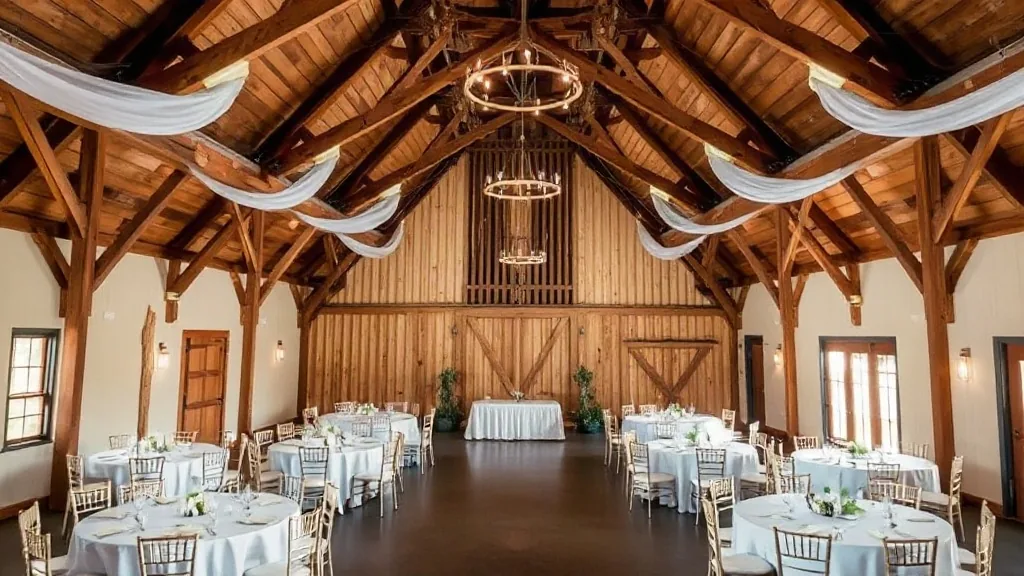
How to Book a Barn or Farm for a Corporate Event
Barn and farm venues offer a format no hotel can replicate, but they require infrastructure planning that most corporate planners don't budget for. HVAC gaps, generator requirements, restroom capacity, and shuttle logistics from urban areas all add costs that the rental fee doesn't include.

The first time a client asked me to look at a farm venue for their 250-person company retreat, I thought it would be the simple booking of the year. Gorgeous property, flexible pricing, none of the exclusivity restrictions of a hotel. By the time we closed the deal, I had added a generator rental, a shuttle contract, a restroom trailer, and a catering tent to a venue that was charging $4,500 for the space. The infrastructure gap between a rural venue’s aesthetic appeal and its functional readiness for a corporate group is real. Here’s how to close it without surprises.
What the format offers
Farm and barn venues deliver something specific: a visual break from the conference room that reads as intentional. Guests who’ve attended 20 hotel offsites remember the one that happened in a restored 1890s barn with Edison lights and a catered barbecue. The format signals informality, investment in experience, and some distance from the usual corporate script.
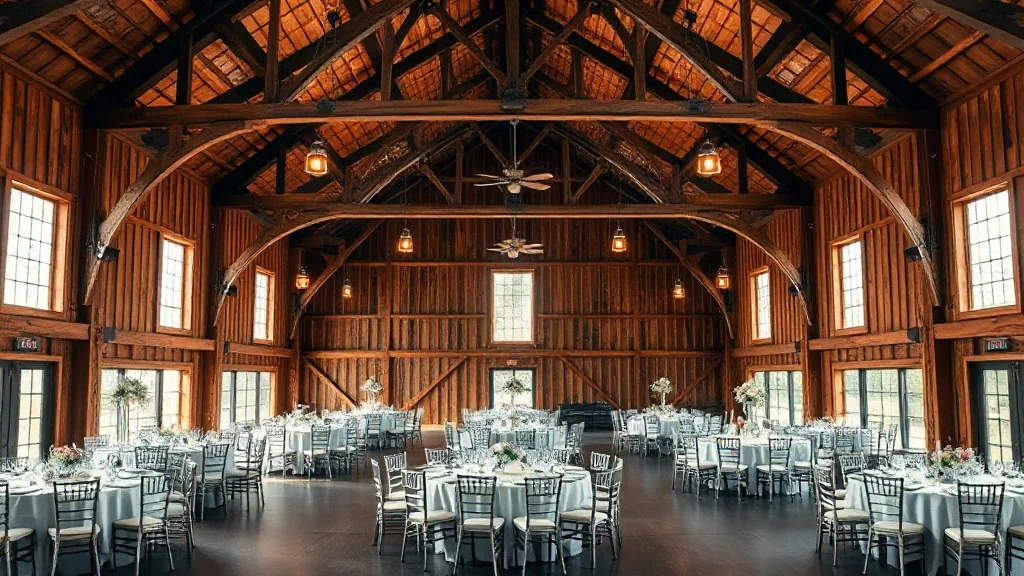
It works best for company retreats, summer parties, end-of-year celebrations, team-building days, and incentive events for smaller groups. It’s harder to justify for events that require significant AV infrastructure, multiple simultaneous breakout spaces, or attendees who are flying in and need a hotel within walking distance.
The capacity sweet spot for barn venues is 75 to 300 guests. Below 75, the scale feels awkward for a full farm rental. Above 300, most barn properties don’t have the physical infrastructure without significant rental additions.
HVAC and climate
This is the failure mode that ends barn venue bookings in the summer months across the Southeast, Texas, and the interior Southwest. A converted barn without dedicated HVAC is functionally unusable above 85 degrees Fahrenheit. Between May and October in Florida, Georgia, Alabama, Mississippi, Texas, and Arizona, that’s most days.
Before you book, ask specifically: is there climate-controlled interior space? If yes, what is the BTU rating of the HVAC system and what is its rated capacity for guest load? A 5,000-square-foot barn with a residential HVAC unit will not cool adequately with 200 guests generating body heat.
If the venue doesn’t have commercial HVAC, you’re looking at renting portable commercial air conditioning units, which run $200 to $500 per unit per day, plus a generator to power them. A 200-person event in the July heat of Georgia might need 8 to 10 portable units to be comfortable. That’s $2,000 to $5,000 before the generator.
In cooler months (October through April in most of the country), this problem disappears and barn venues become very practical. Book a barn for October and you’re in the sweet spot. Book one for July in Miami and you’re building an HVAC operation from scratch.
Generator requirements
Rural properties often have residential electrical service that can’t support commercial event loads. A DJ or live band plus catering warmers plus string lighting plus AV can draw 60 to 100 amps, more than a residential service panel can provide.
Ask the venue: what is the main electrical service amperage? What is already connected to the main panel (house systems, outbuildings)? Is there a dedicated event panel?
If the answer is unclear or the amperage is under 200 amps for a 200-person event, budget for a generator rental. A 45KW diesel generator with an 8-hour fuel load runs $800 to $1,400 per day depending on your market. Add delivery, fuel, and an operator if required by the rental company.
Some farm venues have already solved this and have a dedicated 400-amp event panel. Those are the ones worth booking repeatedly. Ask before the site visit so you can check the panel during the visit.
Restroom infrastructure
This is the issue that gets under-budgeted most consistently. Rural farm properties typically have the restroom capacity of a large house: 2 to 4 bathrooms. For 200 guests over a 5-hour event, that’s a line problem within the first 90 minutes.
The industry standard for outdoor events is 1 toilet per 50 guests for events under 4 hours, or 1 per 35 guests for events over 4 hours. For 200 guests at a 6-hour event, that’s 6 toilets minimum.
A standard restroom trailer (ADA-accessible, climate-controlled, with running water and mirrors) holds 3 to 4 toilets and runs $500 to $900 per day plus delivery and setup. Two trailers for 200 guests is a $1,200 to $1,800 line item that should be in your budget from day one.
Some farm venues have invested in permanent event restroom facilities. If a venue can show you a permanent restroom building rated for 250+ guests, that’s a significant differentiator. Confirm it’s climate-controlled; a non-air-conditioned permanent bathroom in July is barely better than a trailer.
Shuttle logistics
Most farm venues are 20 to 60 minutes from the nearest major hotel cluster. If your attendees are flying in, you’re running shuttles. If they’re local, parking is usually not the constraint (farms have land), but you may still want shuttles to discourage DUI risk if you’re serving alcohol.
A charter bus holding 55 passengers costs $400 to $700 for a 2-to-3 hour contract with most operators. For 200 guests requiring 4 roundtrips over a 4-hour window, budget $1,600 to $2,800 for ground transportation.
Build the shuttle schedule into your event timeline from the start. Farms with gravel or unpaved roads can’t handle 200 cars arriving in 30 minutes; the parking field becomes a traffic jam and guests arrive scattered over 90 minutes.
Sound ordinances and permits
Rural properties often fall under county noise ordinances that cap amplified sound at specific decibels after 10pm or even 8pm. Some counties require a permit for amplified outdoor music; some don’t, but the ordinance still applies.
Ask the venue whether they’ve had noise complaints, what their standard end time for amplified sound is, and whether you need a permit for your event date. Some farm venues are in agricultural-use zones that have different rules than residential areas; others are in mixed-use counties where neighbors are close and sensitive.
Catering in a rural venue
Catering at a farm or barn venue is almost always an outside caterer operation because rural properties rarely have commercial kitchens. This is fine when managed correctly; it creates problems when the caterer hasn’t worked the property before.
Always require your caterer to do a site visit at the farm before the event. Key things they need to confirm: where they can park their vehicle, whether there’s a flat, covered prep surface, where the nearest power source is for warming equipment, and how they’ll handle waste (rural properties don’t always have easy trash and recycling access).
If the venue has a preferred caterer list, those caterers already know the property and have worked through the logistics. This is worth weighting in your decision. A caterer who’s done 20 events at a specific farm knows how to handle the 6pm wasp situation near the outdoor bar, where the extension cord runs to avoid tripping guests on the path, and which parking area floods when it rains. That institutional knowledge has real value.
For remote properties with no nearby commercial kitchen, ask your caterer specifically: do you have commissary kitchen access within 45 minutes of this venue? Hot food transported more than 45 to 60 minutes risks falling below safe serving temperature. Caterers who regularly work rural venues have solved this; caterers who primarily work urban venues may not have.
Browse barn and farm venues for corporate events to find properties that have already invested in event infrastructure, or compare to outdoor and garden venues for properties with more urban proximity and fewer rural logistics.
For a direct format comparison on climate challenges, Barn vs Winery for a Summer Corporate Retreat covers exactly the HVAC and infrastructure tradeoffs. For understanding the full vendor stack a blank rural space requires, How to Book a Warehouse Venue for a Corporate Event covers comparable infrastructure gaps in an urban context.
What’s your event date and the closest major metro your attendees are traveling from? That’s where the site selection analysis has to start.