How to Book a Convention Center for a Corporate Event
Convention centers are the right venue for events above 500 attendees, but they come with union labor rules, exclusive service contractors, and per-head costs that run 30 to 50 percent higher than comparable hotel space. This guide covers the real cost structure, the contractor relationships to understand, and what minimum revenue requirements actually mean.

Convention centers are publicly owned facilities in most US cities, operated by a management company (SMG, ASM Global, and similar operators are common) under contract with the municipal government. That ownership structure creates a service model unlike any private venue: exclusive service providers, union labor jurisdiction, and a revenue framework designed around large-scale trade shows and conventions. If you’re booking a 600-person corporate conference or a 2,000-person user conference, this is your venue. If you’re booking 300 people, read on to understand whether the cost overhead justifies it.
Who uses convention centers for corporate events
The practical minimum for convention center use is around 500 attendees. Below that, the exclusive service contracts (catering, AV, electrical, rigging, cleaning) add overhead per head that doesn’t exist at a hotel or conference center. The break-even point where convention center scale justifies the overhead is different by city, but 500 is a reasonable threshold nationally.
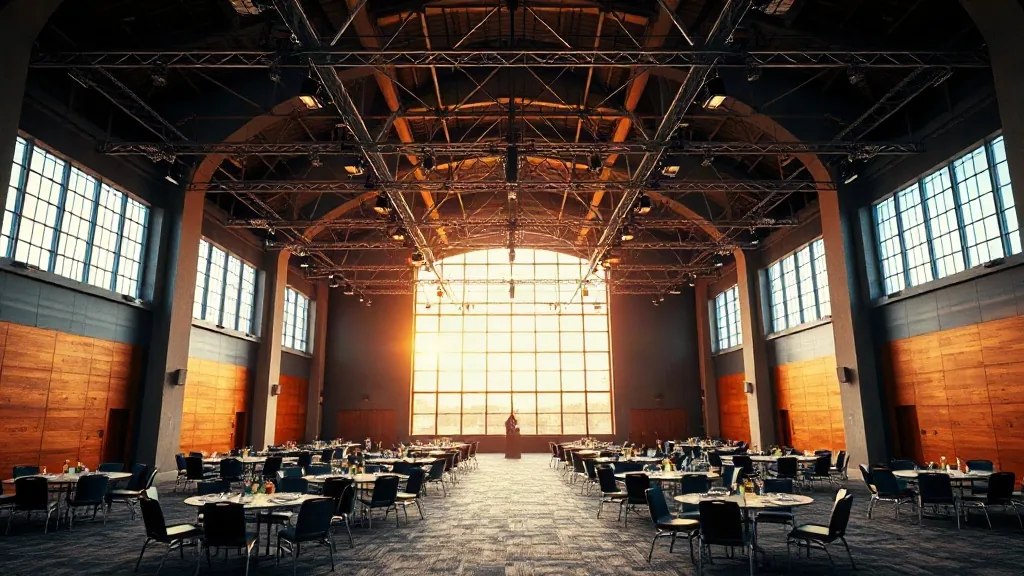
Above 1,000 attendees, convention centers become the only viable venue in most cities. No hotel has a single contiguous event space for 1,000 people that also accommodates sponsor exhibits, registration, pre-function space, and breakout rooms. Convention centers do.
The most common corporate uses: annual user conferences, national sales kickoffs above 400 people, association annual meetings with exhibits, industry conferences with sponsor floors, and company galas for large organizations.
The exclusive service contractor model
This is where convention center events cost more than equivalent hotel events. Most convention centers have exclusive or preferred service contractors across every operational category:
Catering: One or two food service companies have exclusive rights to serve food and beverages on the premises. You cannot bring in an outside caterer. You work within their pricing and menus. Expect corporate catering at $75 to $150 per person for a full day with breaks and lunch, and $100 to $175 per person for a dinner or gala event.
AV and production: An in-house AV company often has a preferred or exclusive arrangement. You can bring an outside AV company in many convention centers, but you’ll pay a patch fee (typically $1,500 to $5,000) to connect to the house system, and you may need the in-house company for any rigging or electrical work regardless.
Electrical: In-house electricians handle all connections to temporary power distribution. Rates are union labor: $85 to $150 per hour per electrician. A two-day exhibit setup with 20 booths can run $8,000 to $25,000 in electrical costs.
Rigging: All overhead rigging goes through the in-house rigging crew. Rates are union, typically $400 to $600 per hour with a 4-hour minimum per call.
Cleaning: Convention center cleaning is done by facility staff, billed as a service. Expect $2 to $4 per square foot for event cleaning on larger footprints.
The effect of all these exclusives is that your actual all-in cost per head is 30 to 50 percent higher than a hotel event of similar format. The scale and infrastructure justify this for large events; for smaller events, it’s hard to rationalize.
Union labor jurisdiction
Most convention centers in major cities are in buildings with union labor agreements covering the installation, operation, and dismantling of exhibits and production elements. The specific union (IATSE for AV and production, Teamsters for material handling, IBEW for electrical) varies by city and facility.
What this means practically:
- Your staff cannot move their own furniture or equipment into the building in many facilities. Material handling is done by Teamsters labor at $80 to $120 per hour.
- AV equipment that your vendor ships must be unloaded by the union drayage company at a per-hundred-weight rate.
- Union call minimums (typically 4 hours) apply to every call, even 30-minute jobs.
Ask the convention center sales team specifically: what work can our team and vendors perform independently, and what requires union labor? Get the answer in writing, because the rules vary by city and sometimes by the specific agreement in place at the time of your event.
Minimum revenue requirements
Convention centers in major cities have minimum revenue thresholds for booking certain halls or configurations. These minimums are typically stated as a combination of catering revenue, rental fees, and service contractor spend, not as a single line item.
A mid-size convention center hall might require $150,000 in total revenue (rental, catering, and services) to book a 3-day conference. If your event generates $120,000 in spend, the facility may decline the booking or require you to fill in the gap with an additional facility fee.
Ask the sales manager: what is the total revenue commitment required to book this space for our event dates? This is different from just the rental fee. You need the total picture.
The booking timeline
Convention centers have long booking timelines. Major halls at tier-1 city facilities are booked 18 to 36 months in advance for large conferences. A 1,000-person conference seeking a tier-1 city convention center for next year’s date will find very limited availability.
For events under 1,000 people in tier-2 and tier-3 cities, lead times are more reasonable: 9 to 18 months for peak dates, 3 to 9 months for off-peak.
If your event is under 500 people and you’re trying to book a convention center because you want the branding of a downtown convention center address, have an honest conversation with the sales team about whether your event’s revenue profile meets their minimum thresholds.
Negotiating in a convention center context
Convention centers are government-owned or quasi-governmental facilities and their pricing is less flexible than private venues. However, negotiation is still possible in specific areas:
Rental fee reduction for off-peak dates: Convention centers discount inventory that wouldn’t otherwise sell. A Tuesday through Thursday conference in February will rent for less than the same footprint on a Friday through Sunday in October.
Service contractor introduction fees: If you’re bringing an outside AV company, the patch fee to connect to the house system is sometimes negotiable, particularly if you’re a repeat customer or a large event.
Catering volume discounts: Exclusive caterers at convention centers are more likely to negotiate per-person pricing for events with guaranteed minimum headcounts above 1,000. Events below that threshold have less leverage.
Complimentary services: WiFi, parking validation for speaker vehicles, a green room for keynote speakers, and a dedicated event manager instead of a shared one are all items worth asking for without expecting them in the base contract.
The convention center’s sales manager has more flexibility than they often let on. The deals happen in negotiation, not in the initial proposal. Ask for a second meeting specifically to discuss terms after you’ve reviewed the proposal.
Browse convention centers available for corporate events by city, or look at conference centers if your event is under 500 attendees and would be better served by purpose-built meeting infrastructure without the exclusive service contracts.
For a direct city comparison on convention infrastructure, New York vs DC for an Association Annual Meeting covers the specific trade-offs in the two largest association markets. For understanding what a user conference at this scale requires, the User Conference Playbook covers the full scope.
What’s your peak attendee count and whether you need exhibit or trade show floor space? Those two factors determine whether a convention center is the right venue category.