How to Book a Winery or Vineyard for a Corporate Event
Winery and vineyard venues are among the most requested for executive retreats and client events, but harvest-season blackouts, mandatory wine purchase minimums, the outdoor-ceremony versus indoor-barrel-room distinction, and COI requirements for agricultural properties create terms that differ from almost every other venue category.

Winery events sell a feeling: unhurried, adult, civilized. For an executive offsite or a board retreat, a winery in Napa, Willamette Valley, or the Finger Lakes communicates something about the host organization that a conference center never can. I’ve booked four winery corporate events in the last six years, and three of them were excellent. One was a disaster because I didn’t understand the harvest-season blackout until we were six weeks out and had to rebuild the logistics around a different date. Here’s what I know now.
The harvest blackout is real and non-negotiable
Most wine regions in the United States harvest grapes in August through October. The specific timing varies by region:
- California (Napa, Sonoma): Mid-August through early November
- Oregon (Willamette Valley): September through late October
- New York (Finger Lakes, North Fork): September through October
- Washington State (Columbia Valley): September through November
- Virginia: September through October
During harvest, wineries are operating at maximum capacity. The vineyard is full of harvest crews. The production facility is processing fruit around the clock. Winery staff are exhausted. Events during harvest are either completely unavailable or severely degraded in quality.
If you’re planning a winery event and your target date falls in the harvest window for that wine region, move the date or choose a different wine region or venue type. Trying to negotiate around this restriction produces a worse event and a frustrated venue relationship.
The best winery event months nationally: June (Napa post-frost, Pacific Northwest pre-harvest), late October through December (post-harvest, before winter), and April through May (before harvest preparation begins in earnest).
Indoor barrel room versus outdoor vineyard
Wineries typically offer two distinct event environments:
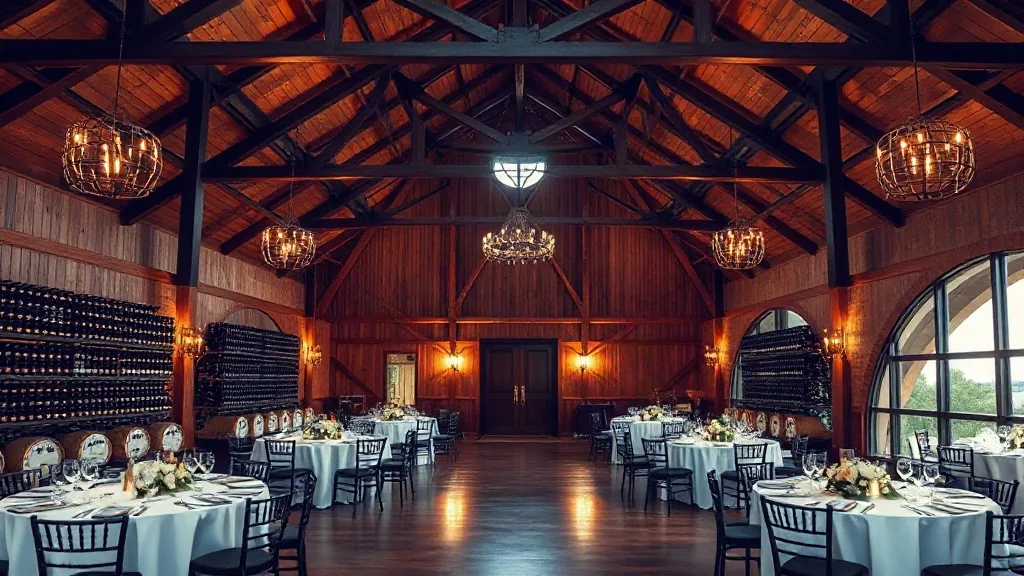
Barrel rooms: The production area where wine ages in barrels. Barrel rooms are cool (55 to 65 degrees year-round), dimly lit, architecturally dramatic, and enclosed. They work for dinners, receptions, and events of 30 to 200 people depending on the barrel room size. The ambient smell (wine, oak, light sulfur) is a sensory feature some guests find evocative and others find overwhelming. Ask your guests before committing to this format.
Outdoor vineyard spaces: The rows of vines, a terrace, a lawn adjacent to the production facility, or a purpose-built outdoor event platform. Beautiful in good weather; problematic in the June heat, October rain, or spring wind. The outdoor format requires weather contingency planning.
Many wineries have both, with the outdoor space serving as cocktail and pre-event area and the barrel room or event hall serving for dinner. This combination works well for 60 to 150 people.
Mandatory wine purchase requirements
Unlike almost every other venue category, wineries frequently require that your event purchase a minimum quantity of the winery’s wine. This isn’t an F&B minimum in the traditional sense; it’s a specific case-count or dollar-amount purchase requirement for wine, separate from any catering costs.
Common structures:
- Minimum wine purchase of $2,000 to $10,000 depending on the winery’s tier and reputation
- Per-person wine minimum of $30 to $75 per guest
- Required purchase of specific labels (often the winery’s premium tier)
This wine purchase typically must be bought through the winery’s tasting room or direct sales program, at retail prices. It doesn’t replace your event catering; it’s in addition to it.
If your event is a dry event or has a significant population of non-drinkers, a winery with a mandatory wine purchase requirement is a poor fit. Confirm the purchase requirement in your first inquiry.
Catering at winery venues
Most wineries do not have full in-house catering operations. They have a tasting room, possibly a cafe or restaurant, and sometimes a preferred caterer relationship.
The three scenarios:
In-house catering: Some destination wineries (particularly in Napa and Sonoma where the wine-and-food experience is central to the brand) have executive chefs and full catering capabilities. This is the exception.
Preferred caterer list: A list of approved outside caterers who have working relationships with the property, know the kitchen (if any) and load-in logistics, and meet the winery’s service standards. This is the most common structure.
BYOC (Bring Your Own Caterer) with approval: Some wineries allow any caterer with appropriate COI and prior approval. More flexibility; more vetting work for you.
Confirm which applies early in your inquiry. Getting 8 weeks into planning and discovering your preferred caterer isn’t on the approved list is a real problem.
COI requirements for agricultural property
Wine estates and vineyards are operating farms. The COI requirements reflect the agricultural use:
- Standard general liability ($1 to $2 million per occurrence) with the property named as additional insured
- Agricultural property damage rider: some wineries require coverage for damage to vines, equipment, or outbuildings beyond standard GL
- Liquor liability rider is almost always required
- Hired auto coverage if shuttle service is part of your event logistics on the property
Ask specifically whether there are agricultural property damage requirements beyond standard GL. A barrel room with $500,000 in inventory or a 50-acre vineyard with established vines represents property value that standard event GL doesn’t fully address.
Shuttle logistics for rural wine regions
Most winery and vineyard properties are located 20 to 90 minutes outside the nearest major city, and most require driving on rural roads that are unsafe after alcohol service. If you’re serving wine at your event, plan for shuttle service from the nearest hotel cluster or city center.
A charter bus for 50 passengers runs $500 to $900 for a half-day contract depending on your market. For 200 guests, that’s 4 buses and $2,000 to $3,600 in transportation before driver gratuities.
Build the shuttle schedule into your event timeline from the start. Stagger departure times to manage crowd buildup at the winery’s parking area, and set a clear last-shuttle departure time so guests who drove know when the shuttle service ends.
If the winery is in a wine region with multiple estate properties (Napa Valley, Willamette Valley, Walla Walla), ask whether they can recommend a local transportation company that already knows the roads and venue logistics. Regional wine-country transportation companies know the venues and the best drop-off points better than a city bus company.
Booking lead time and seasonality
Outside of harvest season blackouts, winery events follow a demand pattern similar to outdoor and garden venues: peak season is late spring and early fall, shoulder season is January through March and November through December.
For popular destination wineries in Napa, Sonoma, or Willamette Valley, book 9 to 18 months in advance for weekend events in peak season. Mid-week events and shoulder-season dates are often available with 3 to 6 months of lead time.
Less well-known wine regions (Virginia’s Loudoun County, New York’s Hudson Valley, Texas Hill Country, Michigan’s Leelanau Peninsula) have more availability and lower pricing at the same quality level. If the wine region itself isn’t part of your event’s brand story, these secondary regions often deliver a better value proposition.
Browse wineries and vineyards for corporate events by state, or compare to country clubs for an alternative high-end environment without the harvest-season constraints.
For the direct format comparison between a winery and a barn for summer retreats, Barn vs Winery for a Summer Corporate Retreat covers the cooling systems and logistics differences. For the board retreat tone decision, Winery vs Country Club for a Board Retreat explains the board-composition demographic that determines which format fits.
What’s your target event month and wine region? Those two factors immediately tell you whether harvest blackout is a risk you need to plan around.