
Marketing summit venues that double as a content set
A marketing summit produces a year of clips if the room can shoot, and produces nothing usable if the ceiling is 9 feet and the walls are hotel-carpet beige. Here's the ceiling height, the wall backdrop, the power, and the load-in access that turn a venue into a content set you didn't have to build twice.
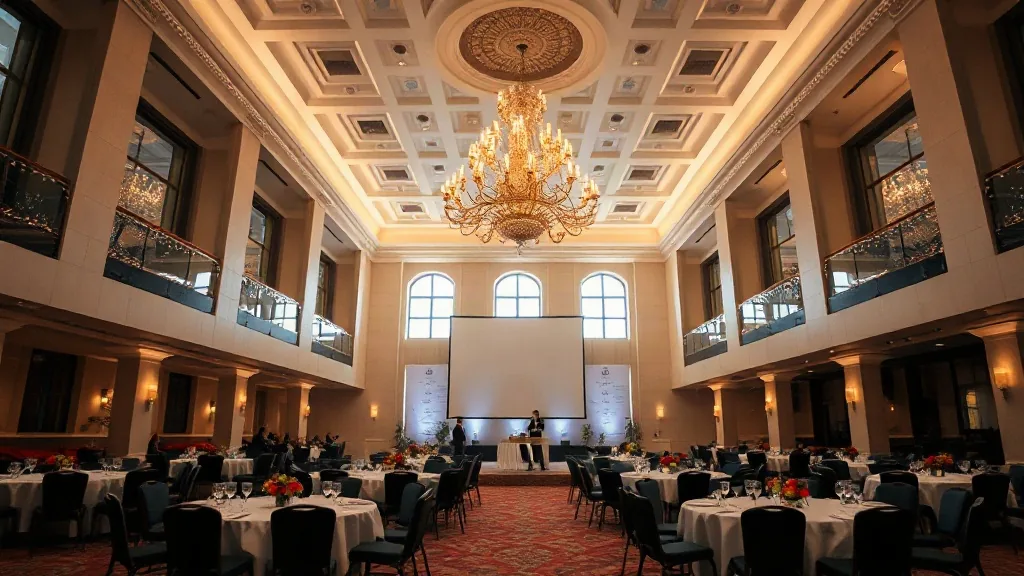
A marketing VP told me her real budget justification for a summit wasn’t the summit. It was the content. One day in the room, done right, gave her team 40-plus short clips, a sizzle reel, headshots for the whole leadership bench, and B-roll to feed a quarter of social. The event was the shoot. The audience was the extras. Once you see a marketing summit that way, you book the venue completely differently.
I came out of AV, so I walk into a room and see what it can shoot before I see what it can seat. Most planners book the marketing summit like a sales meeting, then wonder why the recap video looks like security-camera footage. The failure is upstream, in the room selection, and it’s fixable if you know the four things that actually control whether a space films well.
Ceiling height is the first filter
Lighting a room for camera means getting fixtures up and off the talent, and that needs air above the set. A 9-foot hotel ceiling is a trap. There’s nowhere to hang or stand a light without it being in frame, so everything gets lit flat and front-on, and flat front lighting is why corporate video looks like a hostage tape.
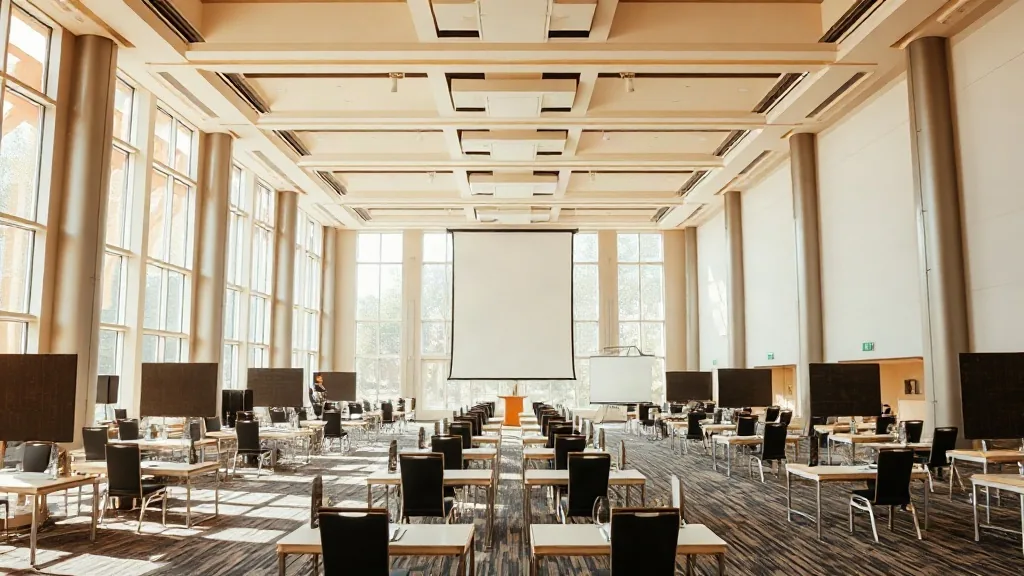
I want 14 feet of clearance minimum, and I’m happier at 18 or 20. A loft or industrial space with exposed ceilings gives me room to backlight talent, throw a splash of color on the back wall, and separate the subject from the background. That separation is the single biggest difference between footage that looks produced and footage that looks like a webinar.
Ceiling height also governs your stage. A riser plus a standing presenter plus a title-safe area above their head eats 10 feet fast. In a low room the camera can’t frame the speaker and the screen together without cutting someone’s head off. If you want the stage to look produced without a broadcast budget, stage design on a mid-market budget that still films well is where I get into the specifics.
The wall is your backdrop, so audit it
Every wide shot in your recap has a wall behind the talent, and most venue walls are working against you. Beige banquet carpet on the walls, sconces at head height, a fire exit sign glowing red over the CEO’s shoulder. On camera those read as amateur instantly.
I look for one clean wall I can control. Exposed brick, board-formed concrete, a matte dark surface, or even a blank white wall I can gel with color. A photo and video studio hands you this by default, because a cyclorama wall, the smooth curved white corner with no visible edge, is the whole product. Point a camera anywhere and the background is already clean.
If the venue’s walls fight me, I build my own with a fabric backdrop or a step-and-repeat, but that costs $1,500 to $4,000 in materials and labor and eats floor space. Finding a room with a wall that already works saves that money and the load-in time, which is why I score walls on the site visit and shoot a phone photo of every angle to check for the exit sign nobody notices in person.
Power and load-in decide whether the crew can work
A content shoot layered onto a summit means a real gear load: camera packages, lighting, sometimes a switcher for live cuts. That draws power and it arrives on carts.
I ask the same two AV questions I always ask. What’s the amperage available in the room, and how does gear get in. A photo and video studio is wired for this and usually has a ground-floor roll-in door. A beautiful rooftop venue might have a killer skyline backdrop and a single passenger elevator as the only way up, which means my crew hand-carries a lighting package up in shifts and the load-in that should take 90 minutes takes four hours. I’ve lived that one. The skyline was worth it. The elevator nearly wasn’t.
For power, a mid-size content setup wants 30 to 60 amps of clean circuits I don’t share with the catering warmers, because a coffee urn on the same circuit as my lights is how a breaker trips mid-keynote. I confirm the circuit map before I sign, not on load-in day.
Light control beats natural light
Marketers love a room with big windows and a view. I like windows too, until we’re rolling. Uncontrolled daylight shifts color temperature all afternoon, so a clip shot at 10am and one shot at 4pm don’t cut together, and by golden hour everything’s orange.
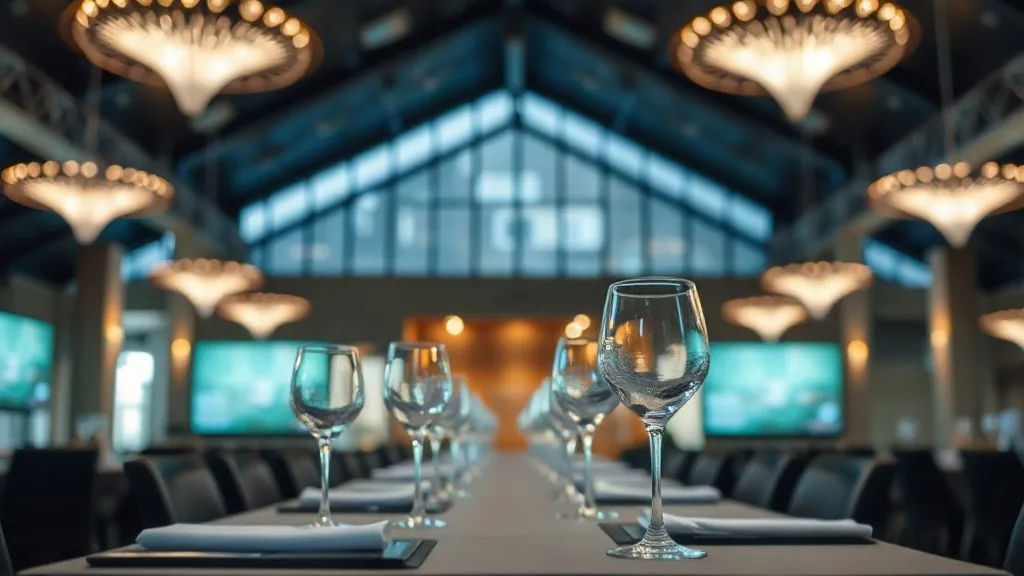
I want windows I can black out. Real blackout, not sheer hotel curtains that glow. A rooftop venue gives me a gorgeous natural backdrop for the reception and the skyline hero shots, and I plan those for a specific window of the day when the light’s right, then move interviews indoors where I control every photon. Using each space for what it does best beats fighting one room to do everything.
Book the room the shoot needs, then seat the audience in it
Here’s the reframe that gets a marketing summit right. Start from the content plan. Decide the shots you need, the backdrops, the interview setups, the stage look. Then find the room that delivers those, and fit the audience into it. Doing it the other way, booking the seating first and bolting a shoot on, is how you end up lighting a beige ballroom and pretending it looks good.
If the audience is small and the shoot is the point, the studio-versus-loft question is worth its own decision, and I worked through it in photo studio vs loft for a product demo event. The same logic applies to a marketing summit that lives or dies on its footage.
For a content-first marketing summit, my ranking is photo studio, then loft, then rooftop for the reception. A photo and video studio is the surest bet if the audience is small enough, because the room is already a set. A loft or industrial space scales to a real audience while keeping the ceiling height and the wall texture that film well. A rooftop venue is your hero backdrop and your reception, planned around the light, not the whole day.
The content is why the CMO approved the budget. Book the room that produces it, and one summit feeds a quarter of your channel instead of generating a single blurry recap nobody reposts.
What’s your content wish list and your audience size? Send me the shots you need and the headcount, and I’ll tell you whether one room can do both or whether you’re splitting the day across two spaces.


