
Save-the-Planet Event Signage Is Corporate Cosplay (Here's the Real Move)
Your bamboo-fiber directional sign flew in from a Chinese printer on a diesel freighter. The carbon math doesn't work and everyone in your industry already knows it. Here's what actually moves the needle.

I want to start with a number: $4,200. That’s roughly what a 400-person corporate conference spends on “sustainable” event signage — recycled substrates, soy-based inks, bamboo standees, seed-paper programs — when you add it all up. I’ve seen the line items. I’ve approved some of them. And I’m here to tell you that spending that $4,200 on visible sustainability theater is one of the least environmentally useful things you can do with conference budget.
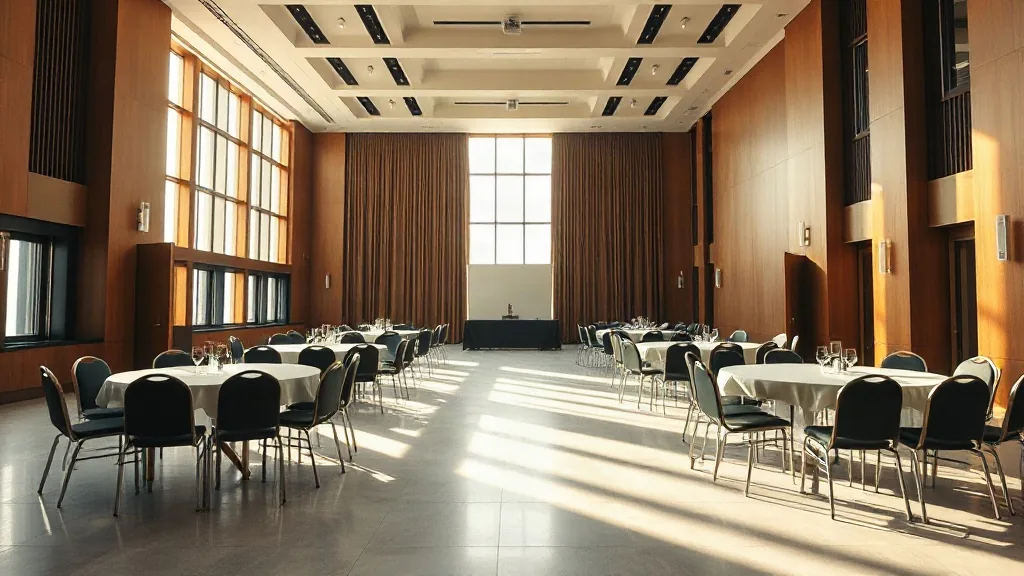
I say “theater” not to be cruel but because that’s precisely what it is. The signage looks virtuous. It photographs well. Your ESG team can put a photo in the annual report. And the actual carbon impact, compared to the real emissions sources at the same event, is so small it barely registers on the scale. Meanwhile the flights your attendees took, the HVAC system running in a 22,000-square-foot ballroom, the food waste from a 400-head buffet — those numbers dwarf your bamboo standees by three to four orders of magnitude.
This is not a niche observation. Event planners who’ve done the math know it. Sustainability consultants who work corporate events know it. The AV vendor who printed your “Zero Waste Zone” banner on a large-format inkjet printer probably knows it too.
So why do we keep doing it?
The optics economy
Here’s the honest answer: sustainable event signage exists to satisfy an optics requirement, not an environmental one. Someone — a VP of Sustainability, a procurement policy, an ESG committee — has decided that the conference must “look sustainable.” The fastest, most controllable way to achieve that visual signal is signage. It’s tangible. It’s photographable. It says “we care” in 48-point font.
This is understandable. Corporate events are political environments and ESG visibility is a real organizational need. I’m not suggesting you blow up your company’s sustainability messaging program over the signage line item. I’m saying: if you’re actually trying to reduce the environmental impact of your event, the signage is the wrong place to spend energy and money.
And if you’re only doing it for optics — fine, own that. But own it, because the pretense that the bamboo standee is “making a difference” is condescending to anyone who’s run the numbers.
What actually costs carbon at a conference
Let me give you a rough breakdown for a 400-person, two-day conference in a major US city:
Attendee travel (flights + ground): 60-70% of total event emissions. If 80% of attendees flew in, you’re looking at somewhere between 80 and 200 metric tons of CO2-equivalent depending on distances. That’s not a rounding error.
Venue HVAC and lighting: 15-20% of total. A large hotel ballroom running full HVAC for two days is burning serious energy. The grid mix in your event city matters more than anything on your signage.
Food and beverage: 8-12%. Animal protein is the main driver. A heavy beef menu at a 400-head dinner generates meaningfully more emissions than a vegetable-forward one. This is a lever.
Waste (including disposables): 3-5%. Real, but small.
Signage and printed materials: Less than 1%. Often under 0.5%.
You can make “sustainable” signage all day and you have moved the decimal by rounding error. You cut one transatlantic flight from the guest list and you’ve moved more than the entire signage program.
The real levers (and why planners don’t pull them)
The problem with real sustainability interventions is that they are harder, more political, and less photogenic than a bamboo standee.
Venue geography. Choosing a venue that’s within driving or train distance for the majority of your attendees cuts emissions more than any other single decision. For a company headquartered in Chicago, hosting in Denver instead of Miami changes the travel math dramatically. But venue choice is often locked in by “where the CEO wants to go” or “where we always go,” and a sustainability argument rarely wins that fight.
Food choices. A vegetable-forward or pescatarian menu instead of a beef-and-chicken banquet plate cuts F&B emissions by 40-60%. But food is political. People notice. “Where’s the steak?” happens at the buffet line, not in the sustainability report. I’ve proposed reduced-beef menus and gotten pushback from VP-level clients who treat it as an attack on Texas.
Attendee travel consolidation. Coordinating group hotel blocks to reduce individual ground transportation, providing shuttle circuits instead of individual Uber trips, booking venue space that’s genuinely walkable from the hotel — these compound. But they require operational lift and coordination that’s invisible in the final event photos.
Shorter events. A one-day conference generates roughly half the HVAC, food, and attendee-travel-day emissions of a two-day conference with the same headcount. This is the most radical lever and approximately no one pulls it because “the agenda needs two days” is a belief that gets treated as immutable.
None of these are as easy to photograph as a seed-paper program. All of them move the needle more than your signage ever will.
What I actually do now
I’ve been doing this long enough that I’ve settled on a framework I can defend:

1. Don’t lie with signage. I’ll still produce event signage. But I’ve stopped writing “Zero Waste” on anything that isn’t actually zero waste, which is almost everything. I’ll say “Please recycle” and point to the bins. I’ll say “This program printed on FSC-certified paper.” What I won’t do is claim environmental virtue the event doesn’t have.
2. Redirect the sustainability budget toward food. The $4,200 that used to go to premium sustainable signage substrates now partly funds a better vegetable-forward menu upgrade, works with the venue’s F&B team on food-waste tracking, or covers composting pickup for the event. These are less visible. They do more.
3. Negotiate HVAC. At most conference hotels, you can negotiate the temperature zone settings and get the ballroom cooling ramped down two hours before the event ends rather than running full blast until 10pm. This is free. It just requires asking. Most planners never ask.
4. Be honest with the client about what matters. When a client asks me to “make the event sustainable,” I now start with a conversation about flights. Where are the majority of attendees coming from? What’s the city within driving or short-flight distance that still meets venue requirements? That conversation is harder than ordering bamboo standees. It’s the one that matters.
5. Drop the performance metrics that don’t correspond to impact. “We diverted 87% of event waste from landfill” is a real number and a real achievement. “We saved 2,400 plastic water bottles” is also real. “We printed our agenda on seed paper” is theater. Know the difference and communicate accordingly.
On the photo problem
Here’s what I keep coming back to: the sustainable-signage economy exists because ESG reporting needs photos and photos need visible props. The bamboo standee is a prop. The composted food waste is not photogenic.
I don’t have a great solution to this. You can photograph a vegetable-forward buffet. You can photograph a “recycle here” station. You can take a wide shot of your venue’s solar panel array if it has one (more conference hotels are installing them; ask). But fundamentally, the most impactful sustainability decisions — venue geography, travel consolidation, menu protein choices — don’t generate Instagram content.
If your organization requires visible sustainability content and you can’t change that requirement, at minimum be specific. “Our venue operates on 40% renewable energy” is specific. “Our catering team composted 340 pounds of food waste” is specific. “We partnered with a carbon offset provider for attendee flights” is at least traceable, even if carbon offsets have their own legitimacy debate.
What you should stop writing: “Eco-friendly event.” “Sustainable conference.” “Zero Waste.” These phrases mean nothing, create expectation you can’t meet, and are one journalist’s inquiry away from being a problem.
The actual move
Stop spending $4,200 on sustainable signage aesthetics. Spend $1,500 on better food composting logistics, redirect $1,200 toward a vegetable-forward menu upgrade, and use the remaining $1,500 to survey your attendees’ origin cities before the next event so you can make a data-driven venue-location recommendation.
Then take a photo of the composting bins. Post it. Write a specific caption: “We composted 280 pounds of food waste from this event, up from 60 last year.”
That’s still marketing. But it’s marketing for something real.
If you’re planning a conference or corporate offsite and want to think through the actual sustainability math before you sign anything, I’m the consultant who will hand you a spreadsheet before I hand you a mood board. Check what’s available in your target city or run a multi-state comparison against your attendee origin zip codes.
Also worth reading before your next planning cycle: my piece on how AV companies quietly over-spec your event uses the same follow-the-incentive logic, and the F&B minimum explainer helps you understand where the real money goes before you try to redirect any of it.
Send me your attendee-origin breakdown and your venue shortlist. I’ll tell you which choice actually moves the needle.


