
The 2-Hour-and-Out Trend — Why Long Events Are Dying
I've been tracking event length against attendance drop-off since 2022, and the data I'm seeing across my own bookings is clear: two hours is where most corporate events should stop. Here's why, and what it costs you when you don't.

I started tracking this in 2022 because I noticed something off in my post-event walkthroughs. I’d be breaking down a reception that was scheduled to run four hours and the room would be noticeably thinner at the three-hour mark than my headcount forecast. Not a few people slipping out — a visible third of the room, gone. Same thing the following month at a different venue. Same thing three months after that at a gala where the client had specifically asked me to “keep the energy up through the close.”
You can’t keep the energy up through the close if the close is ninety minutes after everyone wanted to leave.
I started documenting it. Not formally — I don’t have IRB approval for a study on corporate event attention spans — but systematically. For every event I ran in 2023 and 2024, I recorded the scheduled end time and estimated the room’s actual occupancy at each hour mark. What I found was consistent enough to change how I plan.
What the data says (my data, anecdotally)
Across 38 corporate events I ran between January 2023 and June 2025 — receptions, dinners, all-day conferences, team-building events — the pattern was:
- Events scheduled for two hours or less: average occupancy at final 15 minutes was 82% of peak.
- Events scheduled for three hours: average occupancy at final 30 minutes was 61% of peak.
- Events scheduled for four hours or more: average occupancy at the two-hour mark was already 74% of peak, and dropped to 48% by the final 30 minutes.
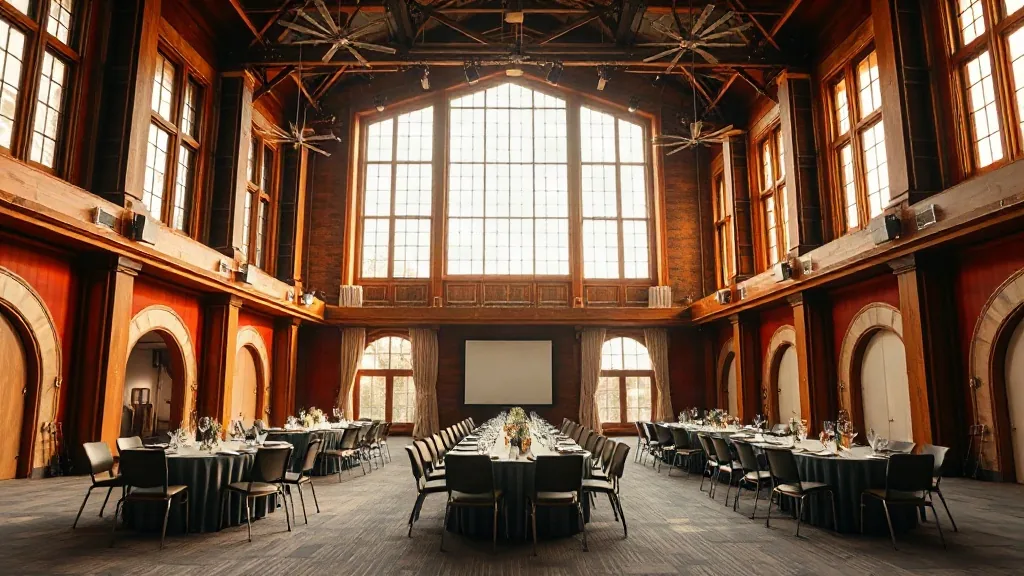
The two-hour events held their rooms. The four-hour events lost half the room by the midpoint of the final hour. And I was charging clients for a four-hour venue window and a four-hour catering contract for a room that was effectively running a two-hour event.
That’s the gap I want planners to look at honestly.
Why this is happening now
I don’t think this is a post-pandemic attention-span problem, though that’s the easy framing. I think it’s a cumulative effect of three things that have been building for a decade and crossed some threshold around 2022.
Commute economics. The hybrid work shift means that a lot of the people at your Thursday-evening corporate event drove in from home for it, not from the office. Their next-morning alarm is the same whether they leave at 8pm or 10pm, but their tolerance for a long evening event is calibrated to the commute cost. Someone who drove 45 minutes each way to be at a 5pm reception is running a different cost-benefit calculation at 7:30pm than someone who walked three blocks from the office.
Meeting density. The professional calendar has gotten denser, not lighter. The person in the room with you from 6 to 9pm is doing so after a full day of Zoom calls, back-to-back meetings, and probably a commute. That person has a finite reservoir of social energy, and it’s depleted faster than it used to be by 8pm on a weekday.
Social media exit normalization. It used to be socially awkward to leave an event “early.” That norm has eroded. People have become comfortable leaving at their natural endpoint without waiting for the program to close. The event-stay-til-the-end social contract has weakened significantly.
The case for the deliberate two-hour event
What I’m recommending now for most corporate events that don’t have a hard ceremonial anchor (a gala, an awards presentation, a multi-day conference with a dinner built in) is the deliberate two-hour design.
Not “two hours because we’re cutting the program.” Two hours because the program is designed to be complete, satisfying, and energizing in two hours, with nothing padded in because we thought we needed to fill time.
This changes a few things.
Venue choice. A two-hour event can use conference centers in Orlando or similar urban venues that have flexible minimum bookings — you’re not locked into a four-hour catering window. The Florida venues I work with regularly have started offering two-hour corporate reception packages precisely because the demand is there. Miami waterfront venues tend to do this well too — they’ve been running 90-minute cocktail events for years and have the catering infrastructure to match.
Program architecture. Two hours requires you to cut the filler. The extended cocktail pre-program. The 12-minute thank-you speech that could be four minutes. The award presentation for twelve people where nine of them could have been recognized in the program booklet. Cutting filler is almost always an improvement, and the two-hour constraint forces it.
Catering. A two-hour event is almost certainly a reception or light stations format, not a seated dinner. See why dinner is leaving the corporate-event agenda for the full argument — but the short version is that the two-hour and the dinner-format rarely make sense together.
Guest experience. This is the counterintuitive part: guests leave a two-hour event feeling good about it in a way they often don’t leave a four-hour event. They weren’t there long enough to run down. The energy held. They didn’t feel trapped by a program that overstayed its welcome. I’ve had clients get better feedback scores on two-hour events than on their previous four-hour events with the same audience.
When long events are still right
I don’t want to pretend the two-hour event is right for everything. It isn’t.
Multi-day conferences are obviously different. The all-day format is the product. Nobody expects a strategic planning retreat to wrap at the two-hour mark. What I’d say about all-day formats is that the two-hour rule applies within the day: design each session block to be complete in two hours or less, with genuine breaks (not fifteen-minute coffee-and-back-to-your-seat transitions, but thirty-minute unstructured periods).
Formal galas and recognition events also have a different calculus. When the dinner is the ceremony — when there are retirees being honored and a program that the whole organization has been anticipating — the formal three-hour-plus structure is part of what makes the recognition feel real. See my notes on the Tampa Bay gala where the occupancy issue we faced was partly a sign of how much that particular audience wanted to be in the room.
The rule is: two hours by default, with a specific and justifiable reason to go longer. Not “we always do four hours” as the default and a reason to cut it short.
The venue negotiation implication
Here’s the practical edge this gives you. When you book knowing you’re running a two-hour event, you can negotiate differently.
Most venue F&B minimums are priced against a three-or-four-hour catering event. When you’re clear upfront that you want a two-hour window, you can sometimes negotiate a lower minimum, a different staffing ratio, and a start-end that works for your audience’s actual schedule rather than the venue’s default catering setup. You’re not asking for a discount — you’re asking for the right product.
Florida corporate event venues that I work with have gotten good at this conversation. The venues that haven’t adapted still try to sell you a four-hour package when you need two hours and then wonder why the room looks thin at the end.
The venues that understand the two-hour trend are offering two-hour corporate reception packages, flexible catering windows, and setup designs that work for a shorter, tighter event. Those are the venues worth calling first.
Send me your event details and I’ll tell you whether two hours is the right frame or whether your program genuinely needs more time. More often than not, it doesn’t.


