
The accessibility walkthrough every planner should run pre-contract
Most accessibility problems are cheap to fix in the walkthrough and expensive to fix on event day. This is the pre-contract route I walk through every venue, the questions that expose the fake accessible spaces, and the two clauses I add before I sign.
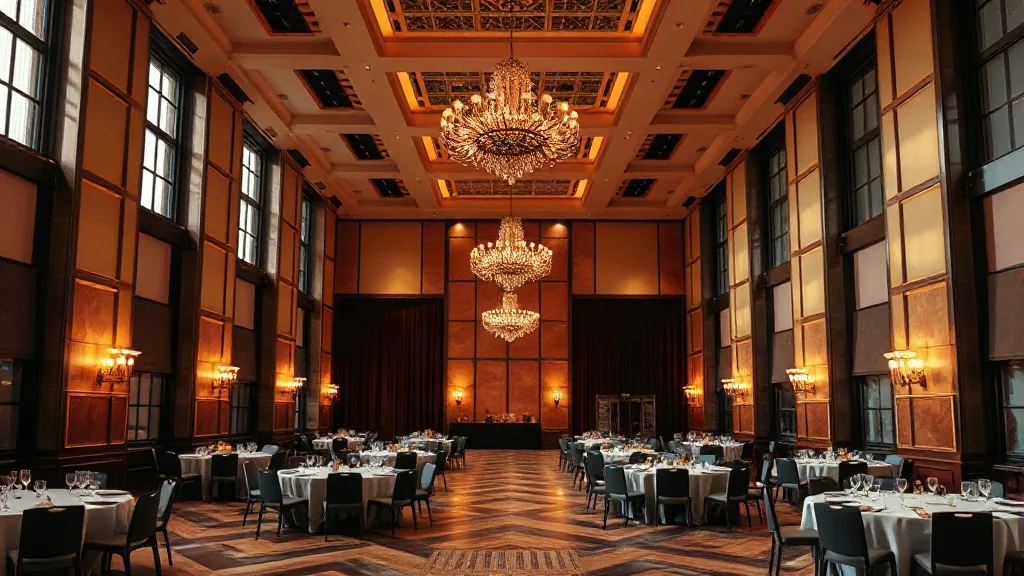
A venue in Atlanta once told me their ballroom was “fully ADA compliant.” On the walkthrough I found the only accessible route to the stage ran through the kitchen, past a 6-inch lip at the loading door, and the day-of fix was a rented ramp that cost $340 plus a rush fee. The building had a compliance certificate. It did not have a path an attendee in a wheelchair could actually use to accept an award. Those are different things, and the gap between them is where planners get burned.
I run an accessibility walkthrough on every venue before I sign, and I treat it as a money exercise, not a compliance one. Every barrier I catch pre-contract is a barrier the venue fixes on their dime or I negotiate out of the price. Every barrier I catch on event day is mine, and it costs three times as much because it is a rush.
Walk the actual attendee route, not the tour route
The sales manager walks you the pretty way. Lobby, grand staircase, the room with the good light. Your attendee with a mobility device does not get that route. Walk the one they get.
Start at the parking. Count the accessible spaces and measure the distance to the nearest step-free entrance. A conference center with 400 seats and four van-accessible spaces has a problem the moment three of them fill. Then trace the full path a seated attendee travels: entrance, registration, the session room, the restroom, the food line, and if there is a program, the stage. If any leg of that route involves a step, a heavy manual door with no opener, or a detour through service corridors, write it down with the location.
The stage is the one everyone forgets. Panels, awards, and Q and A all put people on a riser, and a 12-inch stage with no ramp means half your speakers cannot get up there. Ask where the ramp is stored and whether it meets the 1:12 slope rule. If the answer is “we can rent one,” that is your cost, not theirs, unless you fix it in the contract.
The questions that expose a fake-accessible space
Sales staff say yes to everything. The questions below force a specific answer, and the hesitation tells you as much as the words.
- Where is the nearest accessible restroom to the main room, and how many stalls? “Down the hall and around the corner” for a 300-person event is a bottleneck.
- Is there a working elevator to every level attendees use, and what is your backup if it fails during the event? Older hotels and resorts love to bury the answer to the second half.
- What is the door-clearance width on the main entrance and the restrooms? Thirty-two inches is the floor. Historic buildings often miss it.
- Do you have an assistive-listening system, and does it cover the whole room or just the front? Many venues own a system that has not left the closet since 2015.
- Can you provide a reserved, step-free viewing area with companion seating? If they have never been asked, they will improvise badly.
None of these questions is exotic. What they do is separate the venue that has actually hosted an accessible event from the one that assumes it can wing it. The same discipline I use to compress a site visit into 90 minutes applies here; my route for that is in how to run a venue site visit in 90 minutes, and the accessibility walk folds neatly into it.
Price the fixes before you sign, not after
Here is the math that makes this worth an extra 20 minutes on the walkthrough. A stage ramp rented day-of runs $300 to $500 with a rush fee. A set of accessible-route signs printed the week of the event is $150 you did not budget. An ASL interpreter booked with two days notice is a premium rate, roughly 40 percent over the standard booking. A portable assistive-listening kit rented in a panic is $200 the venue should have covered.
Add those up on a mid-size event and you are looking at $1,000 to $1,500 of avoidable rush cost, all of it because nobody walked the route in advance. Caught pre-contract, most of it either disappears into the venue’s build-out or becomes a line I trade against something else. Ramps, signage, and door props are the venue’s problem to solve if I raise them before I sign. After I sign, the bargaining power is gone.
The two clauses I add before signing
I do not rely on a handshake. Two short additions to the contract move the risk back where it belongs.
First, an accessibility-provision clause. Plain language: the venue represents that the contracted space provides a step-free accessible route from the primary entrance to the event space, restrooms, and stage, and will supply a compliant ramp and assistive-listening coverage at no additional charge. If they balk, that tells me the “fully compliant” line was marketing. My general approach to reading these agreements before signing is in how to read a venue contract before signing, and this clause slots into the representations section.
Second, an elevator-and-equipment contingency. If the elevator serving attendee levels fails during the event, the venue relocates affected sessions to an accessible level at no cost. It sounds unlikely until it happens, and then it is the difference between a smooth pivot and a lawsuit.
The AV overlap nobody plans for
Accessibility and AV run into each other more than planners expect. Captioning needs a clean audio feed, a display the room can see, and a hardline internet drop if the captioner is remote. Assistive listening ties into the same sound board as the mains. If your AV scope does not name these, they show up as change orders. When I brief AV, accessibility items go on the same sheet, and the av walkthrough checklist twenty-seven things I use has captioning and assistive-listening as line items, not afterthoughts. A remote captioner with no dedicated internet drop is a failure you can see coming a month out.
Run the walk, then decide
The accessibility walkthrough is not a favor to a hypothetical attendee. It is a cost-control and risk-control step that happens to also do the right thing. Twenty minutes of walking the real route, five pointed questions, two contract clauses. That is the whole method, and it has saved me four figures more than once.
Send me your headcount, your city, and whether the event has a stage or a raised head table. Those three facts tell me which barriers are most likely at the kind of venue you are looking at, and which ones will cost you if you find them on event day instead of the walkthrough.


