Time zones and the all-hands nobody in Europe can attend
Global all-hands meetings fail when time zones force half the team to log off.
Two years back, I watched a product lead at a 400-person tech firm burn $38,000 on a single all-hands hybrid setup. The room was a San Francisco ballroom, the AV bill covered a multi-camera feed, and the agenda was timed for a 9 a.m. Pacific start. That meant London logged in at 5 p.m., Berlin at 6 p.m., and the two dozen people there were checking out by the halfway mark. The recording got 200 views, most of them from the speaker’s mom, I assume. Nobody said it, but everyone knew the real audience had already gone home. This post is about fixing that math before you sign the venue contract.
Run the clock backward from the tail of your day
The common mistake is to start with the CEO’s schedule and work outward. Flip it. Figure out the latest acceptable local time for your furthest-west European office, then build the day backward. If your German team refuses to start before 8 a.m. local, and your UK office stops caring after 6 p.m. local, the overlap window shrinks fast. A 10 a.m. Pacific start lands at 6 p.m. in London and 7 p.m. in Berlin. That pushes you into dinner and childcare territory. A 9 a.m. start gets you 5 p.m. London and 6 p.m. Berlin, which is still late but survivable for a 60-minute session. For your Europe-only segment, consider a 3 p.m. Pacific start, which puts London at 11 p.m. That sounds awful until you realize you have run the all-hands as a morning thing on the East Coast and an evening thing in California.
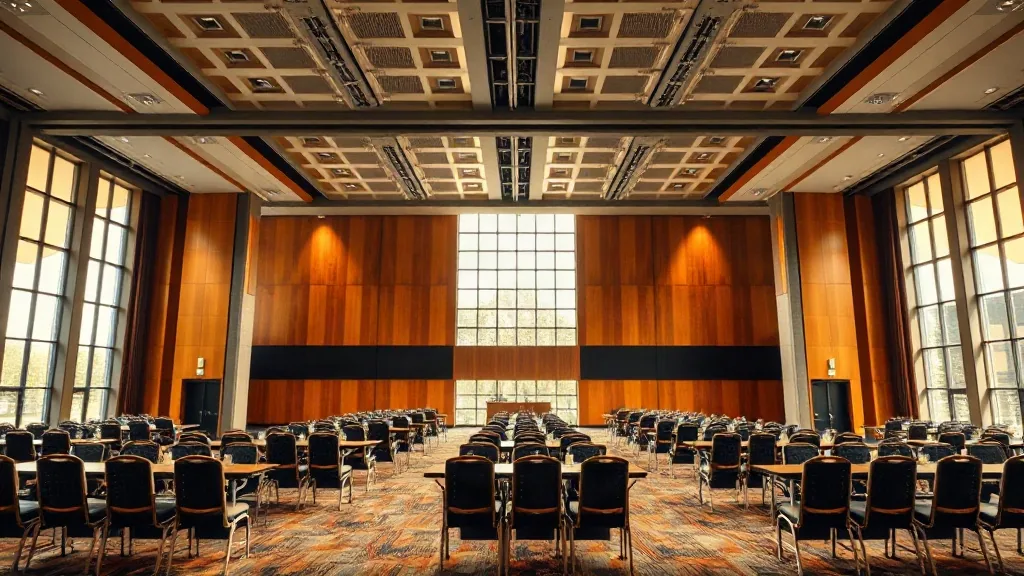
I have a client who now splits the difference structurally. They run two 45-minute blocks: one in the European morning for the Asia-Pacific team, and one in the European late afternoon for the Americas. They use the same pre-recorded content for both, and the live elements are only Q&A and breakout assignments. That costs them about $4,000 more in AV and platform fees for the second live session, but they stopped paying for re-records because the content no longer goes stale. When you look at conference venues, ask the events manager for the room’s built-in broadcast latency and the number of dedicated uplink ports on site. A venue with a decent in-house video conferencing codec, like a dedicated conference center with its own AV crew, saves you an hour of load-in and a separate vendor trip.
The room governs the recording quality, not just the live feel
A quiet room with good sightlines still produces a muddy stream if the microphone plan is wrong. For an all-hands, the talent needs a lavalier and a handheld, plus two boundary mics on the table for panel segments. Many conference centers now route their house audio through a digital mixer that feeds a clean USB output directly to the host laptop. That is worth asking about during the site visit. If the venue says the audio is only available through the house PA, you are going to need a USB audio interface, which typically rents for $75 to $150 a day on top of the room fee.
The other issue is the audience camera. A single wide shot from the back of the room makes remote folks feel like they are watching a security feed. Ask for a camera operator, not a locked-off tripod. A freelancer runs $350 to $600 for a half day. They can hold the shot on the person speaking and cut to the stage screen when the deck changes. If the budget is tight, position the camera closer to the stage than feels natural, about thirty feet back, so faces are recognizable. A room that seats 300 with a low ceiling will give you better close-ups than a cavernous hall that seats 1200, simply because the camera is less likely to get lost in the depth of field. I have shot events in the Dupont Circle area at smaller venues that beat the hotel ballrooms on stream quality for exactly that reason.
Protect the Europe segment and name the time zone out loud
Once the meeting starts, protect the overseas window with a scripted transition. The host should say a specific local time for each region, such as, “For our London team it is 5:40 p.m., for Berlin 6:40 p.m.” That forces a pause and acknowledges the shift. Then move to the Europe-only content first, before anything else, so their attention is rewarded. If finance is walking through a new expense policy, do that in the first fifteen minutes. Put the product roadmap last, since it often runs long and usually benefits from the California crowd staying up.
I know the counter-argument. People say that recording everything solves the problem, but recordings do not get questions answered. The recorded watch rate for internal company updates drops hard after the live date. Plan internal links are useful here, yes. For example, the discussion of audience attention length connects to the 90-minute rule planning tactic of keeping a single session shorter than your physical room’s attention limit. You can also review the tradeoff between a formal conference center and a casual rooftop space for the post-session mixer, where your remote viewers will not be present anyway.
A concrete scheduling tactic is to maintain a rotating time court. One month the all-hands starts at 9 a.m. Pacific for APAC, the next month at 4 p.m. Pacific for Europe. The cost is that your headquarters team gets a weird early or late slot every other month. The gain is that nobody feels subsidiary to a global timeline. My client that runs the split sessions still uses this rotation for the second live block. They find the tax is easier to sell to leadership than a blanket apology to Frankfurt.
Check your holiday calendar and your compliance calendar
A date that is fine in California can be dead in France or Germany. I nearly booked an all-hands on Ascension Day, which is a national holiday in parts of Germany and Switzerland. The room was great, the AV was paid, and then the Berlin office just did not sign on. Always cross-check the local holiday list for your biggest European offices before committing. The second calendar check is for compliance. If you are in pharma, med device, or financial services, the all-hands may count as a promotional or a business meeting, which can trigger reporting or review obligations depending on your industry.
I work with pharma clients regularly, and their compliance teams typically cap the meal value for a covered meeting between $75 and $125 a head. But those numbers move by firm and by year. Even a non-promotional internal event can raise questions if the agenda looks like a sales push and a physician is on the attendee list. Confirm the session structure, the meal threshold, and the documentation requirements with your own legal or compliance team before you announce the date to leadership. I never guess on that part. The room side is easy, the regulatory part is where you get a call from a junior lawyer at 4:45 p.m. on a Friday.
For anyone who needs a venue that handles the technical load without a dozen outside vendors, a conference center with in-house support is the right baseline. I have used dedicated facilities in Eden Prairie, Minnesota, and the Detroit area for smaller product all-hands; the AV tech is already on payroll, so the time zone hassle is the only thing you are battling.
Send me your headcount, your three time zones, and the date you are eyeing, and I’ll tell you where the room sees daylight.