
What Is a Load-In Window: Why Your 9am Event Needs a 6am Vendor Call
A load-in window is the time slot when vendors can access the venue to set up before your event. Most planners underestimate the time required. Here is how to negotiate the window you actually need.

At a conference center in San Jose, I learned what a 6am load-in window actually means when the freight elevator only operates at full speed above 35 degrees Fahrenheit. It was February. The elevator ran at half speed until 7:40am when the building temperature finally stabilized. My AV crew lost 100 minutes of setup time because I hadn’t thought to ask about elevator temperature constraints.
The load-in window is the time block when your vendors are authorized to be in the venue space for setup. It’s not just a logistical detail. It determines whether your event is ready when guests arrive or whether your AV tech is still running cables at 8:45 for a 9am start.
What a load-in window is
A load-in window is the contractually defined time block during which external vendors (AV, catering, florist, staging, photography) can access the event space. The start time is when access is available. The end time is when setup must be complete and the space must be cleared for event purposes.
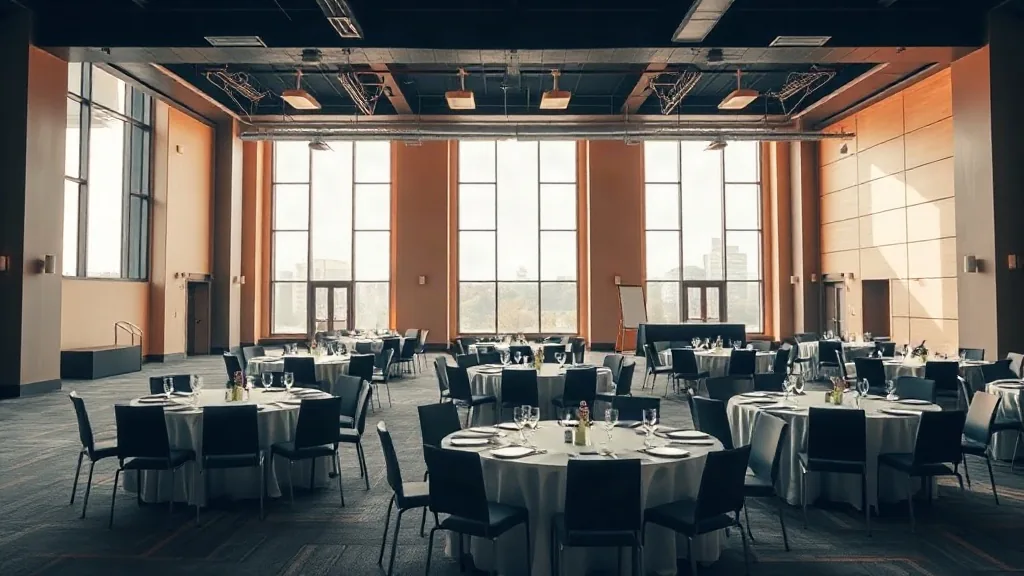
Most venues define the load-in window based on their own operational schedule. A hotel ballroom that hosts a prior event from noon to 5pm on your event day won’t give your vendors access until the prior event’s breakdown is complete, typically 6-7pm. If your event starts at 7pm, you have a maximum 60-minute load-in window. That is not enough time for an AV rig involving a stage, two screens, and a lighting system.
Understanding the load-in window before you sign the contract is the only way to identify this problem while you still have time to fix it.
Typical load-in requirements by vendor type
AV for a basic 200-person conference (screen, projector, wireless mics, house sound): 2-3 hours minimum. Add a stage: another 45-60 minutes. Add theatrical lighting: another 60-90 minutes. A production involving live streaming, confidence monitors, and a video wall: 5-8 hours.
Catering for a plated dinner: venue kitchen staff need 3-4 hours from delivery to service-ready. A buffet with stations needs less time, roughly 2 hours from setup to ready. A full reception with bar plus dinner service may need 4 hours of prep.
Floral and decor: centerpieces and table arrangements for 100 guests typically take 90-120 minutes to place. Installations (hanging, ceiling, backdrop) can add 2-4 hours.
Photography and videography: 30-60 minutes to set up lighting and angles for a ceremony or presentation, minimal for a reception with no formal staging.
Add all the vendors that need simultaneous access and you have a total load-in window requirement. For a well-produced 200-person conference dinner with AV production, you need a minimum 4-hour load-in window. Many hotel events try to run with 90 minutes.
The freight elevator problem
Most multi-story venues have a single freight elevator. Every vendor shares it. On a high-volume event day, the freight elevator creates a bottleneck that adds 30-60 minutes to the load-in of every vendor using it.
At a conference center with 8 simultaneous events, I’ve seen freight elevator queues at 6am with vendors waiting 20 minutes per load. If your AV vendor needs 10 elevator trips to get their equipment to the third floor, that’s potentially 3+ hours of elevator time.
During your venue site visit, ask: “How many freight elevators serve this floor? Is there a loading dock? On the day of my event, how many other events will be loading in simultaneously?” A venue with 3 simultaneous events and 1 freight elevator should raise a flag. A venue with dedicated loading dock access for your floor’s events is better. See how to run a venue site visit in 90 minutes for the full checklist.
How to negotiate a longer window
The load-in window is often negotiable, especially for events that are not back-to-back with other events on the same floor. The negotiation points:
Early access fee: Many venues will extend the load-in window for a fee, typically $200-600 per hour. If your event requires 4 hours of setup and the default window is 2 hours, paying $400 for the extended window is rational if the alternative is a rushed setup.
The day before: For complex events, negotiate access the afternoon or evening before. This is often available at reduced or no cost at venues that don’t have events the prior evening. Get the specific hours in the contract, not a verbal assurance.
Staggered access: Negotiate staggered vendor access so the AV crew goes in first, followed by catering, then florals. This prevents freight elevator congestion and sequencing conflicts. Put the arrival times in the vendor briefing document and communicate them to the venue coordinator.
For the full load-in schedule template, see the load-in schedule for a one-day corporate event.
What to look for in the BEO
The load-in window appears in the BEO timing section, usually labeled “vendor access” or “setup begins.” Confirm this matches your vendor schedule needs before signing.
Also check the breakdown time. The window after the event during which vendors can remove their equipment is often just as tight as the load-in. If the next event in the room starts at 10pm and your event ends at 9pm, your breakdown window is 60 minutes. Tell your AV and catering leads before the event, not after it ends.
Load-in at lofts and industrial spaces
Loft venues and converted warehouse spaces often have the most difficult load-in conditions of any venue type. No freight elevator (or a very small one). Street-level loading only. Parking regulations that limit how long a cargo vehicle can stage outside. Building access hours that may not align with your vendor schedule.
At one San Francisco loft I worked with repeatedly, the freight elevator held 1,500 lbs maximum. A mid-size AV production includes cases that easily exceed 500 lbs per load. Getting the full production into the venue took 6 elevator trips and 90 minutes. The venue was beautiful. The load-in was difficult every time.
Before booking a loft or industrial space, walk the load-in path from the street to the event floor with your AV vendor. Measure the freight elevator if there is one. Count the steps if there isn’t. Production equipment is heavy and awkward. If the path is difficult, budget extra time.
For more on the full operational picture of loft events, see how to book an industrial loft for a corporate event.
The question to ask the venue
“What is the vendor access time on my event day, and how many other events are loading into this venue space simultaneously?” If the answer involves multiple events sharing the same freight elevator, ask specifically: “How do you manage freight elevator conflicts between simultaneous load-ins?” The answer tells you a lot about how organized the venue’s operations team is.
You’re booking at a conference center, loft or industrial space, or hotel. Tell me your event format and vendor count and I’ll help you estimate the load-in window you actually need.


