
How a CFO actually evaluates event ROI and how to answer it
Your CFO is not asking whether the event was fun. She is asking what the pipeline, retention, or productivity return was against a hard cost. Here is the frame finance actually uses and the numbers to bring before she asks.
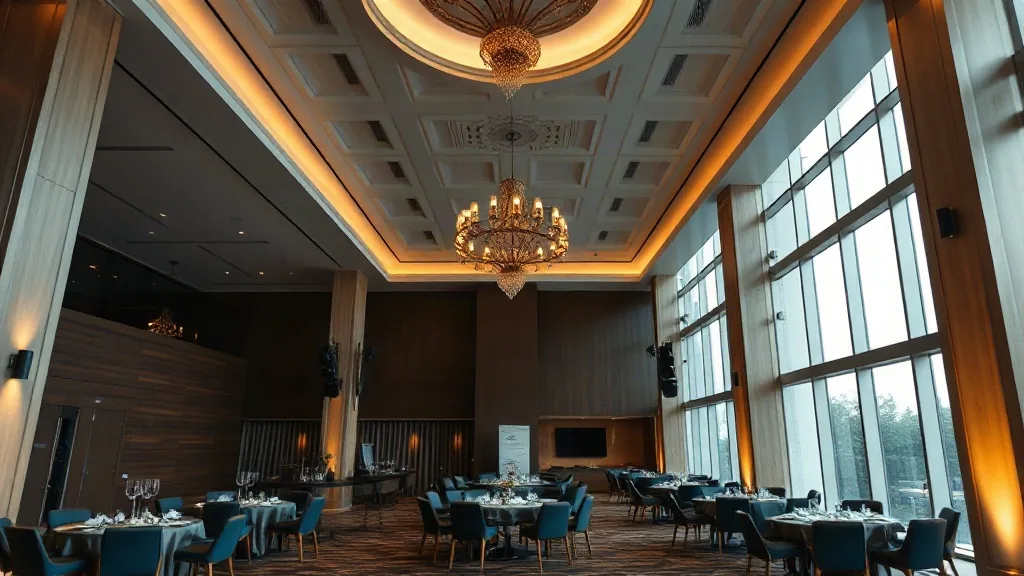
A CFO once handed my client’s event budget back with a single note in the margin: “What is the return on the $240,000?” Not “cut the flowers.” Not “why is AV so high.” Just the one question that every event owner eventually faces and most cannot answer with a straight face. I have sat on both sides of that table now, and the planners who get their budgets approved are the ones who walk in already holding the answer. Here is the frame finance actually uses, so you can bring the number before she asks.
The CFO is running a comparison, not judging your taste
The mistake planners make is treating an ROI question as an attack on the event’s quality. It is not. Your CFO is comparing your $240,000 against every other place that $240,000 could go, a demand-gen campaign, three sales hires, a product feature. She does not care that the gala was elegant. She cares what the company got that it could not have gotten by spending the money elsewhere. Answer the comparison she is actually running, not the compliment you wish she were giving.

That means every event needs a stated purpose that maps to a financial outcome before you spend a dollar. There are really only four, and knowing which one you are running determines how you measure it.
The four event types and the number each one owes
Revenue events. A customer conference, a prospect summit, a field-marketing dinner. These owe pipeline. The number is influenced pipeline generated and, eventually, closed revenue attributed to attendees. If 60 target-account prospects attend and 14 enter an active sales cycle worth an average $85,000, that is $1.19 million in influenced pipeline against your cost. Even at a conservative close rate, the math against a $240,000 spend is easy to defend. Bring the pipeline number, not the attendance number.
Retention events. A user conference for existing customers, a customer advisory board. These owe renewal and expansion. The number is net revenue retention among attendees versus non-attendees. If accounts that attend renew at 94 percent and comparable accounts that do not attend renew at 86 percent, that eight-point gap on your attending book is the return, and you can put a dollar figure on it against the renewal base in the room.
Employee events. A sales kickoff, an all-hands, a team offsite. These owe productivity or retention, which are harder to price but not impossible. The defensible proxies are ramp time for new hires who attended kickoff, attainment against quota in the two quarters after, and voluntary attrition among attendees. A sales kickoff that measurably shortens ramp by three weeks across 40 new reps has a number, and finance respects a proxy honestly labeled as a proxy.
Brand and relationship events. A sponsorship activation, an industry-presence play. These are the hardest, and the honest move is to say so. Do not fabricate a pipeline number for a brand event. Instead measure what it can measure, meetings booked on site, qualified conversations, earned media, and state plainly that the return is longer-horizon. A CFO trusts the planner who admits a brand event is a brand event far more than the one who invents an ROI to fit the ask.
Cost is the denominator, and it is bigger than the venue invoice
ROI is return over cost, and planners consistently understate the cost side, which quietly inflates the ratio and destroys credibility when finance recalculates it. Fully loaded cost includes the venue, F&B, and AV, yes, but also staff time, travel, the sales-team hours pulled out of the field to attend, and the opportunity cost of those hours. A CFO knows the loaded number, so bring the loaded number. Understating cost to make ROI look better is the fastest way to lose the room the following year.
While you are being honest about cost, be honest about contingency. The contingency budget is a lie when it is a vague 10 percent nobody plans to spend, and finance sees through it. Name your risks and price them, or leave the line out.
Bring the number before the event, not after
Here is the move that separates the planners who keep their budgets from the ones who lose them. State the target ROI in the approval request, before the event, so finance signs off on the goal, not just the spend. “We are asking for $240,000 to generate $1 million in influenced pipeline from 60 target accounts, measured at 90 days post-event.” Now the CFO approved a business case, not a party. After the event you report against that stated target, and even a miss is a conversation about assumptions rather than an ambush about whether events are worth it at all. This is the same discipline that makes the event budget approval process that works work, and it starts before you book anything.

Attribution, honestly
The soft spot in every event ROI story is attribution. Finance will ask how you know the pipeline came from the event and not from the campaign running the same month. You cannot prove it perfectly, so do not pretend to. Use a clean method and label it: a comparison of attending versus matched non-attending accounts, or a survey question in the sales cycle asking what influenced the deal, or a simple pre-and-post pipeline delta on the target-account list. A defensible, clearly-labeled method beats a precise-looking number built on nothing. CFOs have seen the fake precision. They respect the honest method.
Where venue choice enters the ROI story
The venue is a cost lever that also moves the return. A conference center that bundles AV and F&B transparently gives you a cleaner, more defensible cost denominator than a hotel or resort where the room rate hides subsidies and the AV markup inflates the number. When the return depends on target accounts actually showing up, an accessible, credible event venue in a city those accounts can reach without a painful trip does more for attendance, and therefore for pipeline, than a cheaper room in a place nobody wants to fly to. The right venue is not the cheapest one. It is the one that improves the ratio, and that is a finance argument, not an aesthetic one.
The planners finance trusts are the ones who think like the procurement manager who hates events before that manager gets involved: purpose stated, cost fully loaded, return measured against a target set in advance.
Tell me which of the four event types you are running and what the company is actually trying to move, pipeline, retention, or productivity. That tells me exactly which number to build your case around. What is the event supposed to return, and to whom?


