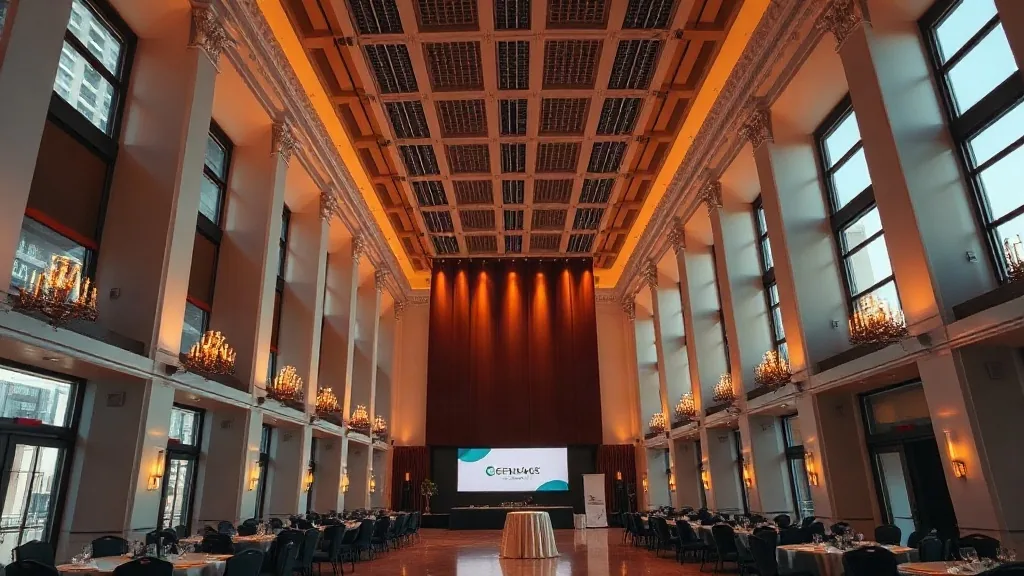
Stadium Club vs Banquet Hall for a 500-Person Gala: What the Layout Does to the Room
Stadium clubs have spectacular views and severe load-in windows. Banquet halls offer modular layouts and standard AV infrastructure. Cost and operational comparison for 500-person galas.

A stadium club gala looks incredible in the video reel. The floor-to-ceiling windows facing the field, the city lights behind the stadium rim, the visual scale of the room: all of it photographs well. Then you try to load in 500 people’s catering equipment through a service entrance that was designed for hot dog vendors.
I’ve done two stadium club galas and four 500-person banquet hall galas in the same city. Here’s the full operational and cost comparison.
What Stadium Club Layout Does to a 500-Person Gala
Stadium clubs are designed around the field view. The seating arrangement, the bar placement, the sight lines: everything faces one direction. For a sports event, that’s perfect. For a gala where you need a stage, a speaker podium, a dance floor, and a catering staging area, that singular orientation creates layout problems.
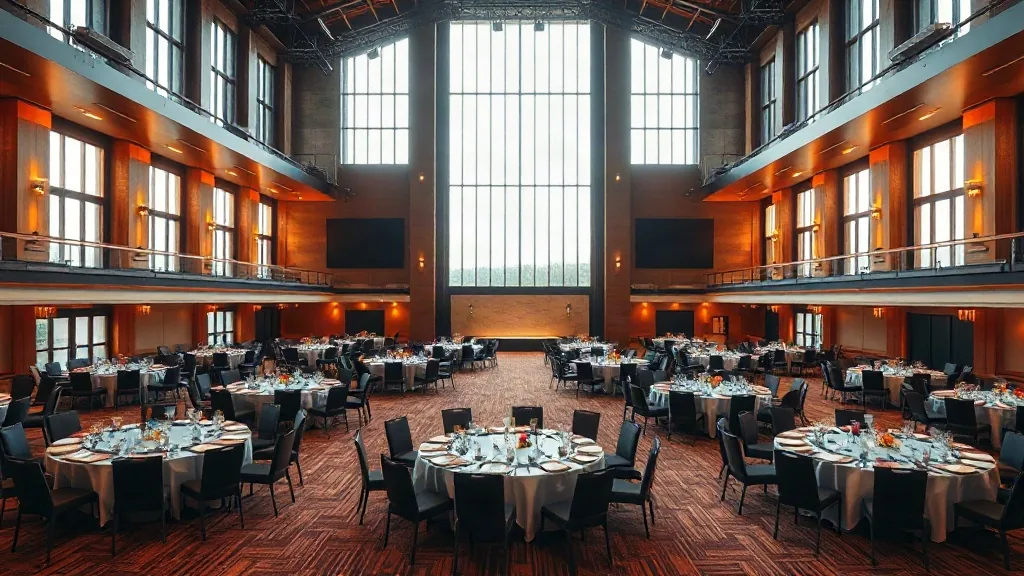
A 500-person gala needs: a head table or VIP section near the front, 50 round tables for general seating, a stage area for presentations and awards, a dance floor (typically 900-1,200 square feet minimum for 500 people), and a bar that doesn’t create a queue blocking the food service flow.
In a stadium club with a long, narrow footprint facing the field, fitting all those elements means either: (a) your stage is at one end with its back to the view windows (which the venue will not allow, because the windows are the product), or (b) your stage is at the center facing the windows, which means half the room has the stage behind them.
Banquet halls are designed for exactly this challenge. The modular floor allows you to place the stage on any wall, configure tables in any pattern, position bars at both ends to reduce queuing, and adjust the dance floor size based on final headcount.
Load-In Windows at Stadium Clubs
Stadium clubs have event access constrained by the venue’s primary use: sports. If the team has a home game within 48 hours of your event, the load-in window may be 4 hours on setup day. If the game is the day before your gala, the club may have a post-game cleanup requirement that limits your setup access until 2pm for a 6pm event.
The specific constraints vary by stadium and by city (every venue’s agreement with the team franchise is different), but the pattern is consistent: you’re working around the team’s schedule, not your own.
For a 500-person gala with full catering, floral, AV, and entertainment, 4 hours is not enough load-in time. I’ve had to negotiate additional setup access at $800-$1,500 per hour at stadium clubs to cover what a banquet hall would give me in a standard 8-hour load-in window at no additional cost.
Cost Comparison for 500 People
| Line Item | Stadium Club | Banquet Hall |
|---|---|---|
| Venue rental | $12,000-$22,000 | $5,500-$12,000 |
| AV (in-house vs external) | $22,000-$38,000 (often must use in-house) | $16,000-$26,000 |
| Extra load-in time (if needed) | $0-$6,000 | $0 |
| F&B per head (stadium caterer pricing) | $115-$160/head | $85-$135/head |
| F&B total (500 people) | $57,500-$80,000 | $42,500-$67,500 |
| Floral and decor | $18,000-$30,000 | $15,000-$25,000 |
| Entertainment (band) | $8,000-$14,000 | $8,000-$14,000 |
| Total | $117,500-$190,000 | $87,000-$144,500 |
The stadium club runs $30,500-$45,500 more at comparable production scope. The F&B premium is part of this: stadium clubs typically have exclusive catering contracts with the stadium’s food service provider, and those providers charge at a premium because they have no local competition for your event.
When the Stadium Club Is Worth It
The views are a legitimate differentiator for certain audiences and events. An annual gala for a sports-adjacent industry (athletics sponsorship, sports medicine, broadcast media) is obvious. Less obvious but also valid: a gala for an organization whose members identify strongly with the home team. A nonprofit’s annual gala in Green Bay serving a membership that’s 80% Packers fans will have a different response to Lambeau Field club access than any banquet hall in the region can match.
The stadium club also works for galas where the unique venue is the fundraising hook. If you’re selling $500 tables and the selling point is “dinner at the stadium,” the venue premium is a revenue driver, not just a cost.
When the Banquet Hall Wins
Any gala where the program is the primary experience: awards ceremonies, extended presentations, CEO remarks, entertainment performance. Banquet halls give you stage flexibility, better sightlines from more seats, and AV infrastructure that’s set up for presentations rather than sports broadcasts.
For 500-person galas at a nonprofit’s largest annual fundraiser, where table sales and auction revenue are the financial engine, the $30,000-$45,000 stadium club premium is hard to justify against a well-produced banquet hall event that achieves the same program goals.
The AV Exclusivity Problem at Stadium Clubs
Most stadium clubs have exclusive AV contracts with the stadium’s in-house AV provider. You cannot bring an outside AV company. This matters because the stadium’s AV system is built for sports broadcasts: LED scoreboards, broadcast-quality feeds, and announcer systems. It is not built for gala production. The staging lights that make a sports moment look dramatic are not the soft wash lighting that makes a gala feel intimate.
Converting a sports AV system to gala production lighting requires the stadium’s AV team to use their broadcast equipment in non-standard ways, which they’re not always willing or able to do. I’ve had a stadium club event where the ambient lighting was either full stadium brightness (too harsh) or full blackout (too dark) because the in-house system had no intermediate gala-appropriate setting.
At a banquet hall with a full theatrical lighting system or even a basic LED wash grid, the lighting control is granular. You create the ambiance you want.
The Floor Plan Reality for 500 Rounds
At 500 guests in rounds of 8 or 10, you need 50-62 tables. In a stadium club’s narrow, field-facing footprint, the tables stack in rows with limited aisle width. The first-row tables see the field view; the back-row tables are blocked by the crowd. Everyone faces the same direction, which means your stage and podium are fighting the windows for the room’s focal point.
A square or slightly rectangular banquet hall can configure 50-62 rounds with 6-foot minimum aisles on all sides, a stage on any wall, and every table at roughly equal viewing distance from the presentation. The sightlines are equitable. At a 500-person gala, equitable sightlines matter for the program’s effectiveness.
Browse stadiums and arenas with event facilities and banquet halls in your city to compare the specific footprints and load-in policies. For the AV scope and timeline questions that distinguish these venues, see how to scope AV for a conference and the load-in schedule for a one-day corporate event.
What’s the primary reason your organization is hosting this gala, and who are the 500 people attending? That question determines whether the stadium’s premium is revenue or cost.