
Dealer and distributor meetings: venues built to move product
A dealer meeting exists to write orders, not to entertain. The wrong room hides your product and buries the order desk. Here is how I lay out the space so the write-ups actually happen before everyone flies home.
The last dealer meeting I ran booked $6.1 million in orders across two days, and $2.3 million of it came off one 40-foot product wall in a room the client almost cut to save $9,000 in drayage. That wall was the meeting. Everything else, the keynote, the awards dinner, the incentive-trip reveal, existed to walk dealers past that wall with an order pad in hand.
I came up through AV and production, and dealer meetings are the events where my old lens pays off. These are not conferences. They are trade shows for one brand, and the room has to be laid out so product gets seen, questions get answered, and orders get written before the dealer’s plane leaves. Miss any of those three and you paid to fly 300 buyers in for a slideshow.
The room is a funnel, not a ballroom
Most planners treat a dealer meeting like a general session with tables. Wrong shape. I lay it out as a funnel: general session for the numbers and the new-line reveal, then a controlled release into a product hall, then order-writing stations at the far end where a dealer cannot exit without passing a rep.
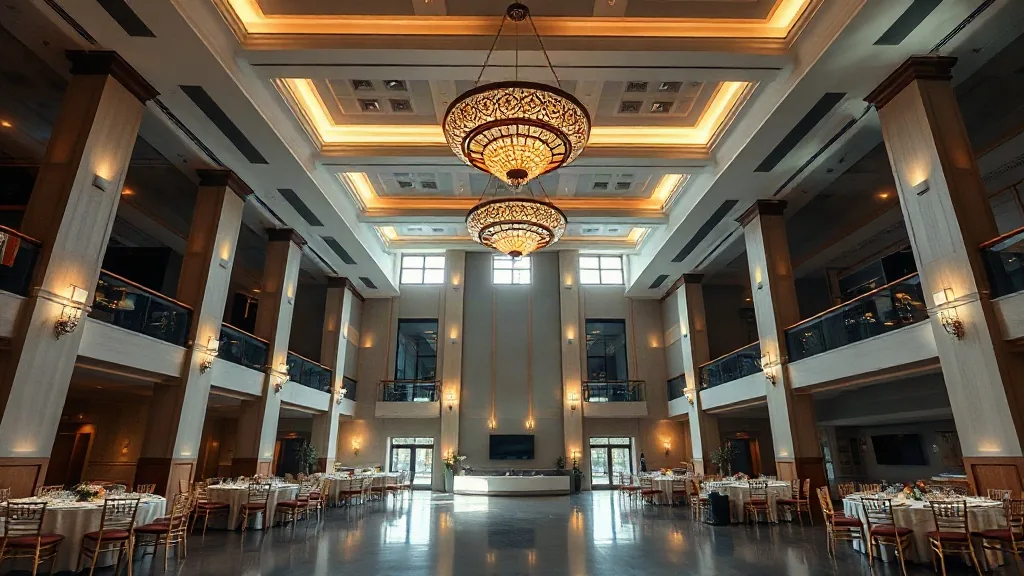
The product hall needs ceiling height and power. A hotel ballroom with 11-foot ceilings and two floor boxes will strangle a real product display. This is where a convention center exhibit hall earns its cost, because it gives you 20-foot clearance, distributed floor power, and a loading dock that takes a 53-foot trailer without a fight. For a mid-size line a large conference center with dock access does the job for less.
Freight, drayage, and the number that surprises finance
The line item that blindsides first-time dealer-meeting planners is drayage: the charge to move your product from the dock to the booth and back. On a full product line it runs $85 to $145 per hundredweight in union convention markets. I have seen drayage on a heavy line hit $22,000 by itself. Budget it early, weigh your crates honestly, and ask the venue for the exclusive freight contractor’s rate card before you sign, not after your trucks arrive.
If your product is light and small, a hotel or conference center with a real dock saves you the convention-center freight regime. If your product is heavy machinery or full-size units, the convention center’s infrastructure is cheaper than the workarounds a smaller venue forces on you. Weigh the actual freight before you pick the room.
Order-writing needs its own zone
The mistake that kills conversion is treating order-writing as an afterthought at the registration desk. I build a dedicated order zone: eight to twelve stations, each with a rep, a laptop on the order system, hardwired internet, and a printer. Hardwired, not wifi. When 300 dealers hit your order system in a two-hour window, hotel wifi folds, and a dealer who cannot get their order confirmed on the spot goes home to “think about it,” which means they do not order.
I put the order zone between the product hall and the only exit. Physical layout drives behavior. A dealer who has to walk past a smiling rep and an open station is far likelier to write than one who can slip out a side door. Lock the side doors during order hours. Fire code permitting, of course, and I confirm that with the venue in writing.
The reveal still matters
Dealers came to see what is new, and the new-line reveal is your emotional peak. This borrows straight from launch staging: hold the flagship product dark, build the general session toward it, and reveal it live with the reps who can talk spec. I stage this the way I would a product launch event, because a dealer who feels the excitement writes a bigger opening order. Then I release them into the hall while that feeling is hot.
The reveal-to-order gap should be minutes, not hours. Every hour between “here is the new line” and “here is where you order it” bleeds intent. Same principle that drives a sales kickoff run of show: energy is perishable, so spend it fast.
City choice moves attendance and cost
Where you hold the meeting decides who shows up and what it costs. A central, easy-fly city fills the room. Dealers are small-business owners who will not burn two connecting flights and a lost sales day to attend. I lean toward the same logic I laid out comparing Chicago versus Nashville for a national sales kickoff: direct flights, reasonable hotel rates, and a walkable block so dealers are not scattered across a metro.
For the room block, a hotel or resort attached to or across from your meeting space keeps dealers on site and in the funnel. Dealers who scatter to cheaper hotels miss the evening receptions where half the relationship-building happens, and relationship is what turns a one-year dealer into a ten-year one.
Capture every conversation at the product
The order desk closes the dealers who are ready. The follow-up closes the ones who are not, and you only get that follow-up if you captured the conversation. I badge-scan at each product zone so every rep knows which dealer lingered at which line and for how long. A dealer who spent nine minutes at the new compact model and did not write is a phone call on Monday, not a lost cause. Without capture, that dealer disappears into the crowd of 300 and your reps guess. I run a simple scan-and-note system, one tablet per product zone, and I make the reps log the objection they heard, because the objection is the script for the follow-up call. A dealer meeting that books $6 million in the room often books another $1.5 million in the two weeks after, and every dollar of it traces to a note someone took on the floor.
The two-day rhythm that works
Day one: general session and reveal in the morning, product hall opens after lunch, order zone live until the evening reception. Day two: hall opens early for the dealers who wanted to sleep on it, order zone stays hot until noon, then a closing lunch and the incentive-trip announcement to send them home motivated. I keep the order zone open until the last possible hour, because the biggest orders often come from the dealer who walked the hall three times before committing.
Track the write-up rate hour by hour. If orders stall, move a rep to the hall floor and start conversations at the product instead of waiting at the desk. The layout gets them close; the rep closes.
Tell me your product’s freight weight, your expected dealer headcount, and whether you are revealing a new line this cycle. Those three numbers decide whether you need a convention hall or a conference center, and how I lay out the funnel that turns the visit into orders.


