Lead retrieval systems and why sponsors complain about all of them
A 14-year industry veteran explains why every lead retrieval system disappoints sponsors.
Let me be honest about what this is. I’ve spent 14 years in this industry, first as an AV tech carrying scanners in a Pelican case, now as a production consultant who has to explain to a sponsor why their $45,000 booth spend generated 70 leads and none of them made it past the sales team’s inbox. The system isn’t broken. It was never designed to work the way sponsors think it does.
Lead retrieval is a rental business. The hardware is a commodity, the software is licensed, and the margins live in the per-scanner fee that gets buried in the booth invoice. You’re not buying a solution. You’re renting a process that started in the 1980s with a photocopied lead card and a box of business cards.
The core complaint I hear from sponsors is that the data is cold by the time they see it. They scan a badge, the booth staff hands them a mimosa, and by Thursday afternoon the file lands in their CRM as a CSV. No notes. No conversation history. No indication that the person on line six spent 20 minutes asking about their API integration and was actually qualified to buy.
The badge scanner is a bottleneck, not a solution
The hardware matters less than the seating chart. A scanner that uses Bluetooth to talk to your exhibitor app will work about 90 percent of the time in a convention hall with 300 other Bluetooth devices fighting for airspace. The other 10 percent, the badge doesn’t read, the app crashes, or the battery dies at 2pm on a Tuesday because the exhibitor staff left the scanner in a hot booth all morning.
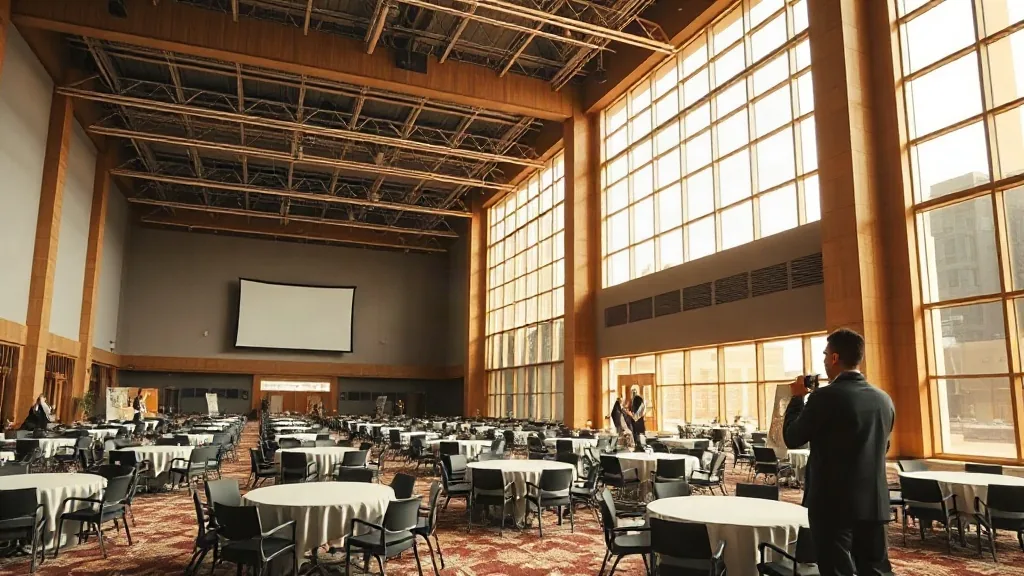
I’ve deployed systems in convention centers from Jersey City to Park City, and the environment changes the physics. Big steel buildings like the Javits Center in Manhattan kill RF signals in ways that a carpeted ballroom in Wyoming never will. If you’re in a 1970s-era hall with concrete pillars and a loading dock that smells like diesel, you’re fighting physics.
The bigger issue is the follow-up. A lead is only as good as the person who calls it. You need a specific callback within 48 hours that references the exact problem they described at the booth.
Most shows cap lead retrieval at about 20 fields per scan. The good systems let you add custom fields for qualification questions, but you have to train your staff to ask the question first and scan second. In my experience, about 60 percent of booth staff scan first and never ask a single qualifying question. The result is a lead list that’s 70 percent people who wanted a free stress ball.
Why the exhibitor app partnership usually fails
I worked a show in Dallas last year where the event app required attendees to opt into sharing their badge information. About 35 percent of attendees opted out. The exhibitors scanning with their phones got a subset of the data, and they had no way of knowing who declined. The sponsor spent $30,000 on a booth, staffed three people, and left with fewer verified leads than the exhibitor next door who used a $400 off-the-shelf scanner and a clipboard.
Some venues are better equipped than others. The convention centers in South Carolina that I’ve worked tend to have newer infrastructure because they’re competing for tourism business. The centers in Alaska have older systems, but they also have fewer concurrent events, so the network congestion problem barely exists. You have to match your technology plan to the actual building, not to the marketing brochure.
What sponsors actually say about the data quality
The most common complaint I hear is not about the hardware. It’s about the complete lack of context. A lead file from a premium retrieval system gives you the attendee’s title, their company, and their address. It does not tell you whether they were engaged for two minutes or 40 minutes. It doesn’t tell you if they were drunk at the happy hour.
I’ll concede that the real-time integration is more expensive, and the premium package on most event scanners is rarely worth the upsell. The base package gives you the data you need. The workflow is where you win.
Venue infrastructure decisions are more important than the software license
A planner who chooses the venue without checking the signal coverage is going to have sponsor problems regardless of the scanner brand. You need a site survey. I’ve walked the floor plans of dozens of convention halls, and the sweet spot for signal varies by building construction.
Some rules of thumb. A convention center built after 2005 tends to have distributed antenna systems and Wi-Fi 6 infrastructure. The newly renovated centers in Park City have the infrastructure installed during construction, and the difference shows.
I tell sponsors to ask for the floor plan with the access point locations marked. If the venue won’t share that, they’re hiding something. And I tell them to budget for a backup cellular hotspot at the booth, because the venue Wi-Fi will always prioritize the show’s needs over the exhibitor’s. This is a non-negotiable point in my pre-show checklist. It costs about $150 to rent a hotspot for three days, and it has saved more than one exhibit manager from a complete data loss.
The other question is the scanner rental caps. Most venues and general service contractors have a maximum number of scanners they can support simultaneously, usually tied to their Wi-Fi capacity. If you’re expecting 200 active exhibitors all scanning at lunchtime, you’ll exceed the typical cap and the network will throttle the least profitable vendors, which is the small booth on the aisle.
My operational practice is to stagger the scan times. Tell exhibitors that the busiest scanning window is between 11am and 1pm, and recommend they take lunch breaks in shifts to reduce load. It sounds ridiculous, but it improves data capture rates by an order of magnitude.
Budgeting the lead retrieval line item
The pricing structure is designed to confuse. You’ll see a per-scanner rental of $200 to $400 for a three-day show, plus a badge fee per attendee scanned that runs between $1.50 and $4. Some venues bundle the lead retrieval in the exhibitor package cost, which is an accounting trick that hides the real price.
When you add it up, a standard 10x10 booth should budget between $600 and $1,200 for basic lead retrieval, plus the CRM integration fee if you use the exhibitor app. The premium packages with custom qualification questions and real-time analytics start around $1,500 and go up from there, and I have seen no evidence that they generate a single additional sale.
What deserves the money is the follow-up automation. A small investment in a CRM that logs leads the moment they’re scanned, with automatic email triggers, is worth more to your sales pipeline than any hardware upgrade.
If your compliance team is in the mix, and they usually are for healthcare and financial services, check the rules on data collection and retention. Most pharma clients I work with cap dinner expenses and require lead names to be transferred only through compliant channels, but the scanning hardware itself is neutral. Ask your compliance or legal team to confirm the specifics before you sign the contract, because the requirements vary by firm and change frequently.
The real issue is that sponsors want a promise that no lead retrieval system can deliver. They want to know which attendees will buy, and the scanner only tells them who walked by. Better questions at the booth, honest staff engagement, and a fast follow-up are the difference between a lead and a sale. The hardware is just the pencil that writes the first draft.
So tell me about your upcoming show. What’s your expected booth headcount and budget range, and how many staff will you have working the floor during peak hours?