On-site badge printing versus pre-printed: the throughput math
Compare on-site badge printing against pre-printed to cut registration line delays.

I’ve spent about $4,700 extra on one registration line because I trusted a venue’s free Wi-Fi to run three badge printers. That was in Atlanta, at a tech summit with 1,200 attendees, and the network melted at 9:15 a.m. The line backed up past the coffee station, and I had to send a runner to buy a cellular hotspot from a nearby Best Buy.
If you’re booking space for registration, the first question isn’t about the carpet. It’s about whether your badges come out of a printer on-site or arrive in a box from a fulfillment house.
The real bottleneck is rarely the printer itself
A decent thermal badge printer will spit out a badge in about six to eight seconds. The hard part is the person standing in front of you. That interaction takes ninety seconds on a good day.
So the throughput math starts with the human, not the hardware. If you have one check-in agent and one printer, you’re doing about 40 badges an hour. Two agents can share a printer because the printer is always waiting on the next person to finish. For a line of 800 attendees over a two-hour morning window, you need about ten agents.
What kills an on-site setup is the data path. You’ll want a wired connection for your printers, not just a strong signal. A single ethernet cable per printer is the cheapest insurance you can buy. If the venue insists that Wi-Fi is fine, ask them to put that in writing.
For a mid-tier affair, say 300 to 600 people, I’m often printing on-site. The cost of renting four printers with two operators runs about $2,800 to $3,500 for a day in a major market. That includes the stock, the ribbon, and the labor to set up and tear down. Pre-printed badges have a replacement cost. On-site has a reprint cost, which is basically just a few clicks.
Pre-printed badges shift the queue to data accuracy
Pre-printed badges are faster at the actual check-in point. The attendee walks up, you scan their QR code, you hand them a badge that was already in an alpha-sorted box. That hand-off takes about fifteen seconds, so one agent can process 150 people an hour without breaking a sweat.
The problem is the days before the event. My experience with tech companies is that registration data keeps moving until about 36 hours out. If you print five days out, you’re cutting a set that is already stale. If you print two days out, you’re paying rush fees at the fulfillment house.
Here is the dirty secret of fulfillment houses: they charge per badge, per insert, and per sort. A basic print, laminate on a card, and sort into alpha order runs about $2.50 to $4.00 per badge with a minimum order. For a 1,000-person event, you’re looking at $3,500 to $4,000. Most contracts have a 10% overage clause, but order too many and you’ve eaten the cost.
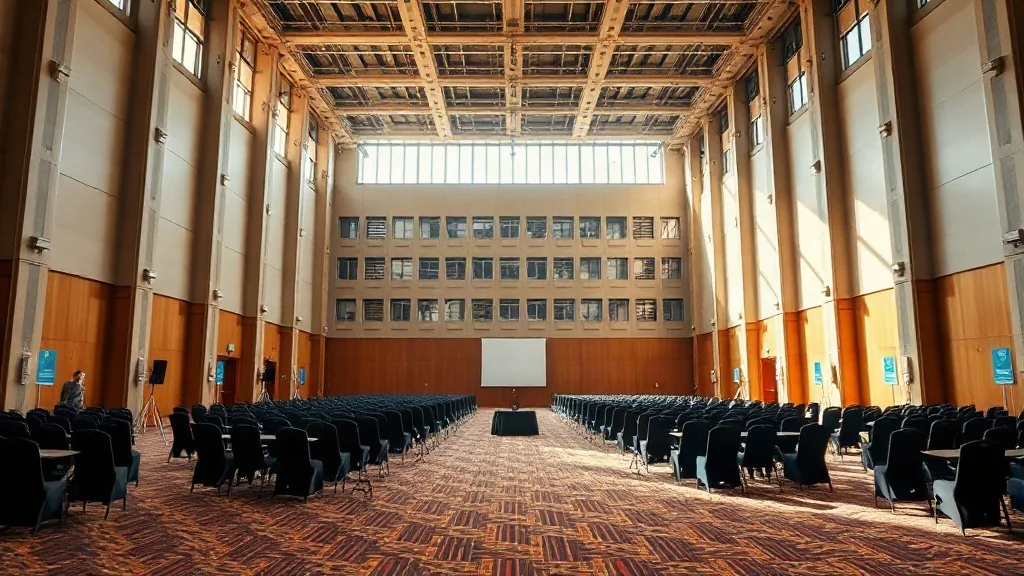
I’ve done pre-printed for events at larger venues where the registration area is wide and the flow is fast. Think of a conference where you have 2,000 people and a four-hour arrival window, like a tradeshow or a broad keynote day. You can set up twelve lanes of pre-printed check-in and process a crowd in under an hour. On-site printing with that many lanes would demand a fleet of printers and a serious network infrastructure that most venues can’t handle.
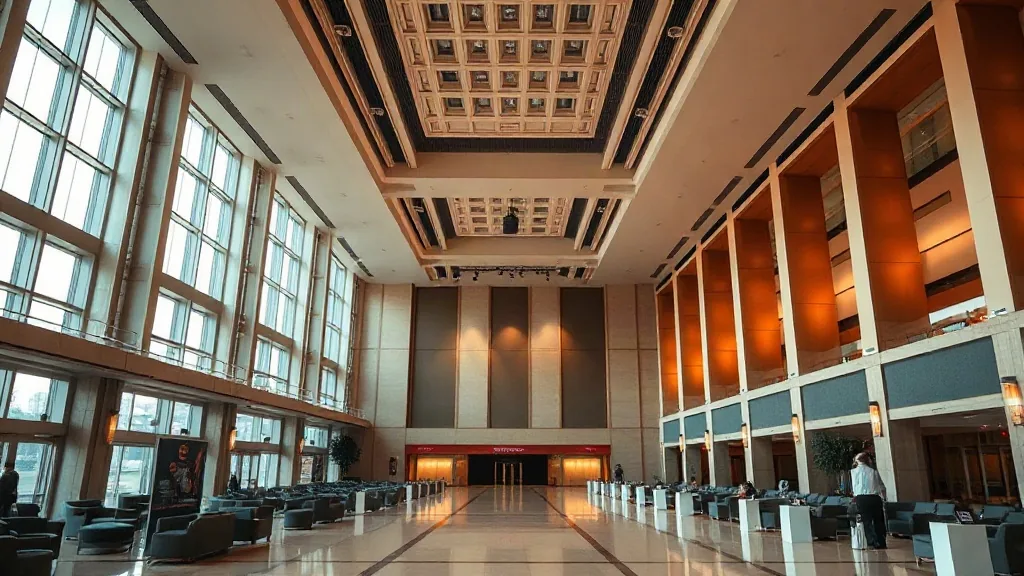
Look at the venue’s floor plan before you choose. If the registration point is a narrow hallway, you want the shortest transaction time, and that favors pre-printed. I’ve run big events at convention centers in Kentucky where the lobby space was exceptional, and at smaller houses like a convention center in Evanston, Illinois where the check-in was tucked behind a stairwell.
The hybrid approach works when the schedule has spikes
My favorite plan, and the one I push for most corporate annual meetings, is a split. Print the high-confidence, pre-registered attendees ahead of time, and print on-site only for the late registrants, VIPs who arrive without a badge, and any walk-ins your registration policy allows.

Consider the spike. You’ll have 80% of your arrivals in the first hour and a half. That crowd wants speed. The stragglers and the VIPs who stroll in at 10:45 want attention. You can dedicate two fast lanes for the boxed badges and two slower lanes for the printing. Your agent count is the same, but you’ve matched the tool to the traffic pattern.
This is where I also make a decision about badge quality. On-site thermal printers route a plastic card with a monochrome or near-monochrome print. They look fine for most corporate work, but they don’t carry a full-color logo with the depth that a pre-pressed card has. If a client is doing a luxury brand retreat, they want the heavyweight PVC card with a matte finish, and they’ll accept the 12% reprint rate for lost ones at the welcome dinner.
Renting a printing station for a smaller event of 150 people, like a board dinner or a workshop, is often overkill. I just used a standard office badge printer, the kind that costs about $600 to buy, at a client site in Berkeley, California. We printed as people walked in, and it was fine, because nobody was in a rush.
Your registration database decides which option actually works
I have a bias to admit. I used to run the production side of a registration company, so I know how the backend payment structures work. My bias is that most event software wants to sell you the hardware or the print service because that’s a recurring revenue line for them.
Before you pick, ask your registration platform for the export format. Pre-printed badges need a clean, static CSV or a direct integration. On-site printing needs a live API link so the badge reflects a session change made at the front desk. If your platform only gives you a nightly sync, you can’t do real-time on-site printing without a manual override.
This matters more for pharma and financial clients because of how they label sessions. Those clients often restrict which session a badge prints on to manage access control. Their compliance teams usually dictate that dinner and hospitality functions are capped at a certain value per attendee, and the badge is part of the tracking record. Confirm the details with your compliance officer before you commit to a budget for those meal functions.
The other angle is data protection. A pre-printed badge sitting in an unsecured box in the loading dock is a liability. I cover sharp emission of data in a good guide on event badge and attendee data privacy, because you should know who touched the print file.
My default advice for a first-time client is this: if you’re under 500 attendees and your schedule is loose, print on-site. If you’re over 1,500 and you have a tight keynote window, pre-print. In the middle, ask me what the queue looks like.
So what’s your headcount, what date is the event, and do you have the venue floor plan in hand yet? Send me those three things and I’ll tell you which printer rental quote to ignore.