Union labor venues: what the house crew must load in and what you may touch
Union labor venues define crew duties and attendee touch limits before your event starts.
I’ve lost count of the late nights arguing over a $4,800 overtime bill for a four-hour load-in that should have taken two. The argument wasn’t with the venue. It was with my own client, who didn’t understand why their own staff couldn’t just plug in a laptop and start presenting. That’s the thing about union houses. The rules look arbitrary from the outside, but they’re the result of decades of negotiated agreements, and they’re enforced to the letter. You need to know what the house crew handles, what you’re actually allowed to touch, and where the line sits so your next event doesn’t bleed money to labor minimums. Let’s get into the specifics.
Why the jurisdiction lines exist and what they mean for your budget
The perspective shift is important. You aren’t renting a room and doing the rest yourself. You are renting a venue and its staff, and the staff is a contractual condition of entry into the building. I’ve seen planners try to argue that if they don’t technically need a hand, they should be able to carry their own box of paper to the registration desk. A good friend of mine works at a large convention center on the west coast, and we’ve traded enough stories to know that some houses will make you wait for a crew member to bring a case of literature from the loading dock door to the table. That drives people mad, but the rule exists to keep the door for handling freight open. When you start treating the crew as the cost of doing business instead of an unexpected fee, your budget forecasts get a lot closer to reality. For a bigger piece, check my guide on how to read the personnel sections in my post about convention centers because the language there is consistent across most facilities.
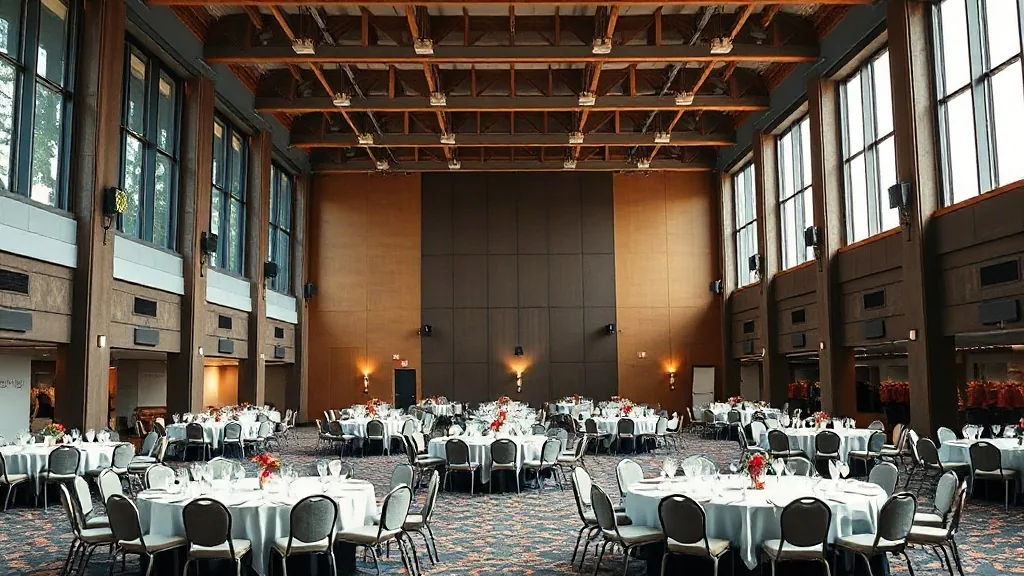
What the house crew protects and what jobs are actually table stakes
The second protected area is rigging, and it costs more than you think. I’m not talking about pointing chain motors on a full concert rig. I’m talking about flying a single 10 x 10 foot banner, or hanging a projection screen from the building’s points. That job belongs exclusively to the house rigging crew, and it requires a very specific process. They have to review the rigging plot, check the building steel, and then access the points with their own gear. I booked a tech conference last spring where the client wanted to hang twelve large format banners. We estimated the rigging labor at $1,800 on the proposal. The actual bill after the crew dealt with column interference and a longer than expected tuning process came in just over $2,900. The load in went smooth, but the variance ate the catering contingency.
Nobody is trying to scam you. The house crew is bound by the same union rules as the rest of the facility, and those rules often state that a carpenter must be used for any work on fixed seating, for installing any decking, and for moving chairs. Wait until your first client asks you to rearrange a classroom setup for a 400 person general session on the second night of the show. That shift is four crew, two hours, likely a 100 percent overtime rate if it goes past 5 p.m., and you are looking at a wall of money that no site visit quote ever described. This is real work, and it creates real savings if you plan your sessions to avoid reconfigurations. Spend the little extra time on how to run a venue site visit in 90 minutes specifically to ask the general manager what the minimum daily crew is for your specific date, because that number is the one they are hesitant to put on paper.
Where the house jurisdiction stops and what you are able to do yourself
You are also generally allowed to bring in your own operating personnel. That means the people who will run the audio console, the lighting console, or the projection clicker for your presentation. The house provides the infrastructure, meaning the speakers, the dimmers, and the screens, but the operating personnel is on your side of the ledger. You confirm this in your vendor contract before signing by checking the “labor jurisdiction” clause which will clearly list operator roles versus load in roles. This is why you can bring a laptop to connect to the main pro monitor in the green room, why your AV proposal lists an engineer that costs you $150 an hour to work beside the house electrician, and why your production manager can point a camera themselves. They aren’t a protected classification.
I want you to understand the value of app-level savings. My production budget on a three-day regional sales meeting last October was $21,500. The original venue quote had a line for “producer labor” listed at a flat rate of $2,800, which they claimed was for all content operation. When I read the clause carefully, I realized that producer labor they quoted was actually the technical crew call they anticipated for someone hitting the slides. We removed that line and brought our own tech, saving just over $1,400 of easy budget. That money paid for the photographer for the after party, and the client noticed the difference in the coverage. The trick is to look at your rental agreement for the words “operator” or “show caller” because in certain venues, the role is recognized as belonging to the house, even if you use your own guy. That is the discrepancy that bites you.
General session flow and the strategy that saves the most hours on the clock
Communicate the union rules to your client and your other vendors on the advance call. A lighting contractor who doesn’t do a lot of union work will show up with their own hammers and screwdrivers to set up truss, and they will stop cold at the dock when they are told they can’t use them. Their “we can do it” attitude cuts into their daily mileage because they have to wait for the house carpenter. Conversely, a big agency with dealer and distributor meetings under their belt already knows to schedule the graphics install during the free access period and respects the trade. You need every vendor aligned on what they are there to do. Plan well enough to consolidate room turns, because a single ballroom flip from a banquet reset into a theater seating session for the award show will cost you a second minimum call.
Review the local specifics. Your venue list has reliable data on facilities that run a house crew or on occasion a relaxed arrangement, and that makes a real difference to your budget and tone. For reference, the basic rule of thumb that has never failed me is this: you can talk about the content all you want upstream, but at the dock door, the house is the boss. It’s not an adversarial relationship, it is a relationship with real boundaries. When you concede the jurisdiction and build your schedule on top of it, the crew becomes one of your fastest and most reliable production partners, because they know the building as well as you know your registration list. The opposite happens when you test the line, as you’ll engage every department head for a ruling and stall the event by an hour waiting for a shop steward.
So what’s your show looking like for the fall? Send over your headcount and your biggest anticipated freight piece, and I can tell you if the labor minimum is built into your current contract fit or if you are two crew short before you ever send the first floorplan. My read is you’ve got a spec sheet in a drawer that is missing a line for the riggers. Let’s fix that before it costs you a week of margin.