Per-person cost benchmarks by city tier and what drives the spread
A Chicago venue priced $189 per head with no afternoon coffee; real cost drivers are room rebates, food minimums, and negotiation leverage.
I sat through a rate call last month where a Chicago venue quoted me $189 per attendee for a full day, and that number included no coffee service after 10 a.m. and no wireless mic for the panel. The client had asked me for a ballpark on day one, and I gave them a range of $190 to $260. If you’re reading this to benchmark your own city, here is what I pay attention to after 14 years of doing this, and it has very little to do with the city’s skyscraper count.
Your budget number splits less by geography than by three drivers you can actually negotiate: room rental rebates, food minimums that hide the real cost, and labor clauses that nobody reads until the invoice arrives. A good day rate for a Fortune 500 offsite in Manhattan can touch $320 per head. That same content in a solid secondary market like Minneapolis or Austin runs $140 to $190. Go to a true third-tier city, and you might pay $95 to $135, but you will spend that savings on flights or you will lose it to a venue that knows exactly one hotel brand.
City tiers, and what the per-person number includes
Tier one is the big six: New York, San Francisco, Chicago, Boston, Washington D.C., and Los Angeles. For a standard 90-person corporate day with breakfast, two coffee breaks, plated lunch, and basic AV, I budget $260 to $330 a head in those cities. That number includes your AV package, the room, the food, and service charges, but not tax and not any rigging over 12 feet.
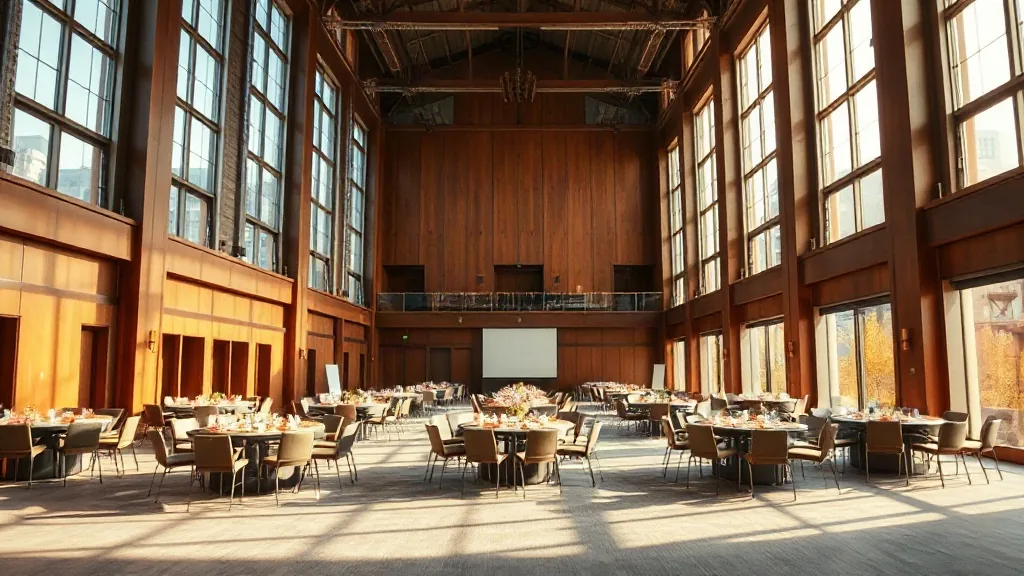
Tier two is where most of the tech and agency work I do lands. Think Seattle, Denver, Austin, Atlanta, and Phoenix. Full day rate there runs $160 to $220 per head. My home base of Atlanta sits right at the low end, and honestly, the quality gap between the Atlanta Marriott Marquis and a tier-one hotel brand is close to invisible once you are in the room.
Then you have tier three. This is where the value actually lives: markets like Greenville, North Carolina, or McMinnville, Oregon. You can see the kind of money you are working with in the Greenville corporate venue market here. A genuine tier three city gives you a room rate of $95 to $140 per head, a group sales team that answers the phone, and a hotel that still views a 75-person client dinner as a big night.
Tier four is true rural or exurban, where I point anyone whose attendees will drive. Budget $80 to $115. The catch in those places is not the room rate. It’s the lack of a second hotel within a mile, which forces you to shuttle, and that shuttle runs $1,800 to $3,000 for a weekend. After one event near Lakewood, New Jersey, where the local venue was flawless but my guest room block fell apart because the hotel had only 68 rooms, I stopped recommending those spots for anything over 60 attendees. I still list a few workable options in the Lakewood hotel and event venue options, but only for smaller groups.
Food minimums, service fees, and AV bill-backs inflate the real price
The venue quotes you $180 a head all-inclusive. You do the math, that is $180 times 100 attendees, $18,000. Then the banquet event order arrives, and the food and beverage minimum is $21,000. You are not paying $180. You are paying $210 because the room rental you thought was included actually has a confidential credit threshold that nobody explained in the site tour.
That food minimum is the first driver of the cost spread, and it varies wildly by city tier. In tier one, banquet minimums at a decent hotel property run $15,000 to $30,000 for a weekend day. In tier three, that minimum drops to $6,000, and I have spent entire events in Scottsdale for less than one evening in San Francisco. The Scottsdale resort venue page here lists several properties where contract minimums are openly negotiable in the summer months, usually for 15 to 20 percent under what they quote in peak season.
The service charge is the second driver, and it is where the real percentage hides. A 22 percent service fee is standard on food and beverage in major markets. That service fee is not gratuity. It goes to the house. Then the venue tacks on 7 to 10 percent in administrative or set-up fees. That means for every $100 of food you buy, you are paying around $135 before tax. In tier two and three, I often negotiate the service charge down to 18 percent just by asking, and honestly, no planner asks.
AV is the third driver and it is the one that ruins a careful budget. Most urban venues force you to use their in-house partner, who quotes $4,500 to $8,000 for a day of standard corporate AV. Thirty percent of the time, that partner does not have the right projector for your deck, or the room has pillars at the 10 and 2 o’clock positions and the standard package does not include a second screen. That is how a $140 a head event becomes $190. Spend time reading the notes on green rooms and speaker room extras before you sign, because that is the section of the contract where you can get the AV add-ons included at no charge.
Why you can get offsite in an upper tier city at mid-tier prices
A major conference city like Detroit will crater between events. I have done winter offsites there in early January, a city that calls itself a top tier market for a select five weekends a year, and you can book good space at $150 a head. See what that market holds on the best hotels and resorts in Detroit page if you can tolerate a post-holiday timeline.
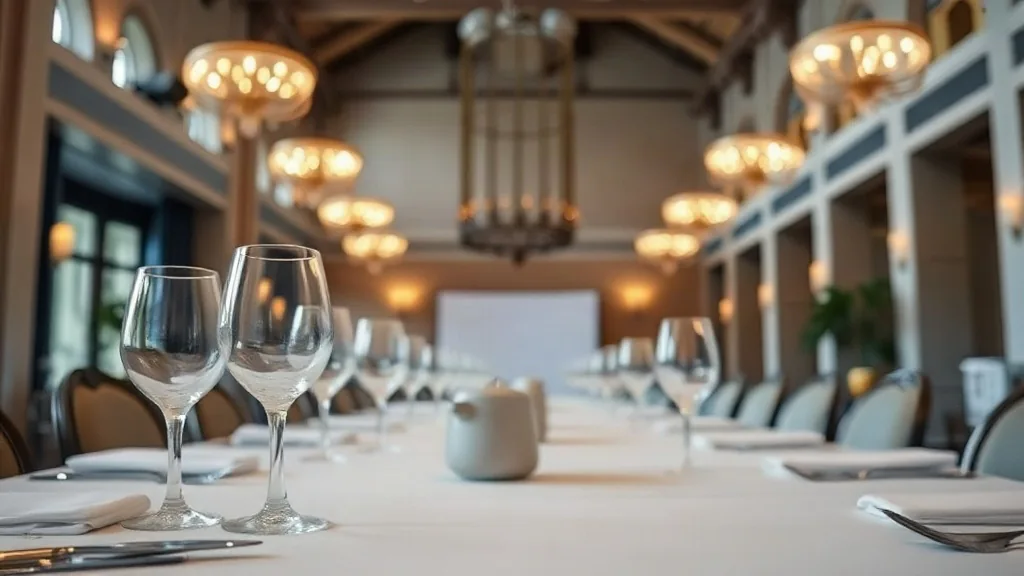
Wedding season is the real lever. Corporate bookers who avoid June through October in urban centers pay a 30 to 45 percent premium in Q4 because every company waits until then to do their annual event. If you can move your annual gathering to March or November, you might hold the line at tier two pricing in a tier one city.
Practical savings that a standard city comparison never names
Ask for room rebates specifically. A venue will apply a discount to the AV or F&B charges rather than reduce the room rental list price, because their commission structure treats room rate as sacrosanct. A rebate of 5 percent on food is common in tier three cities and rare in tier one unless you represent a pharma or tech recurring account. In practice, what most of my pharmaceutical clients are told internally caps dinner at $95 to $150 a person, and entertainment legislation under the federal physician payment rules means the venue has to send an itemized invoice that lists alcohol separately. Confirm all of that with your compliance team because those internal policies vary firm to firm.
The labor clause is where the hidden fees live in tier one. Union cities assess a nominal fee of $10 to $15 per person just to let a freight elevator or a set-up crew enter. If the venue requires union electricians for power hookup, the bill for a 200-person event surges by $2,000 to $6,000. There is a detailed failure mode on that exact subject in the freight elevator failure analysis, and it illustrates why my first question to any tier one venue is who moves the lectern.
My final tip concerns the calculation you should run for at least five venues in every tier you consider. Take the quoted number, multiply food by 1.32 to cover service and tax, add AV at 70 percent of the quoted city average, and add a daily coffee and water charge that some venues bill as a convenience cost. You will get closer to the true number within minutes.
Give me your headcount, the month you are targeting, and whether you need sleeping rooms, and I can tell you in an email reply whether we’d better look at tier two pricing or spend our time negotiating the micro-fees in your home market.